
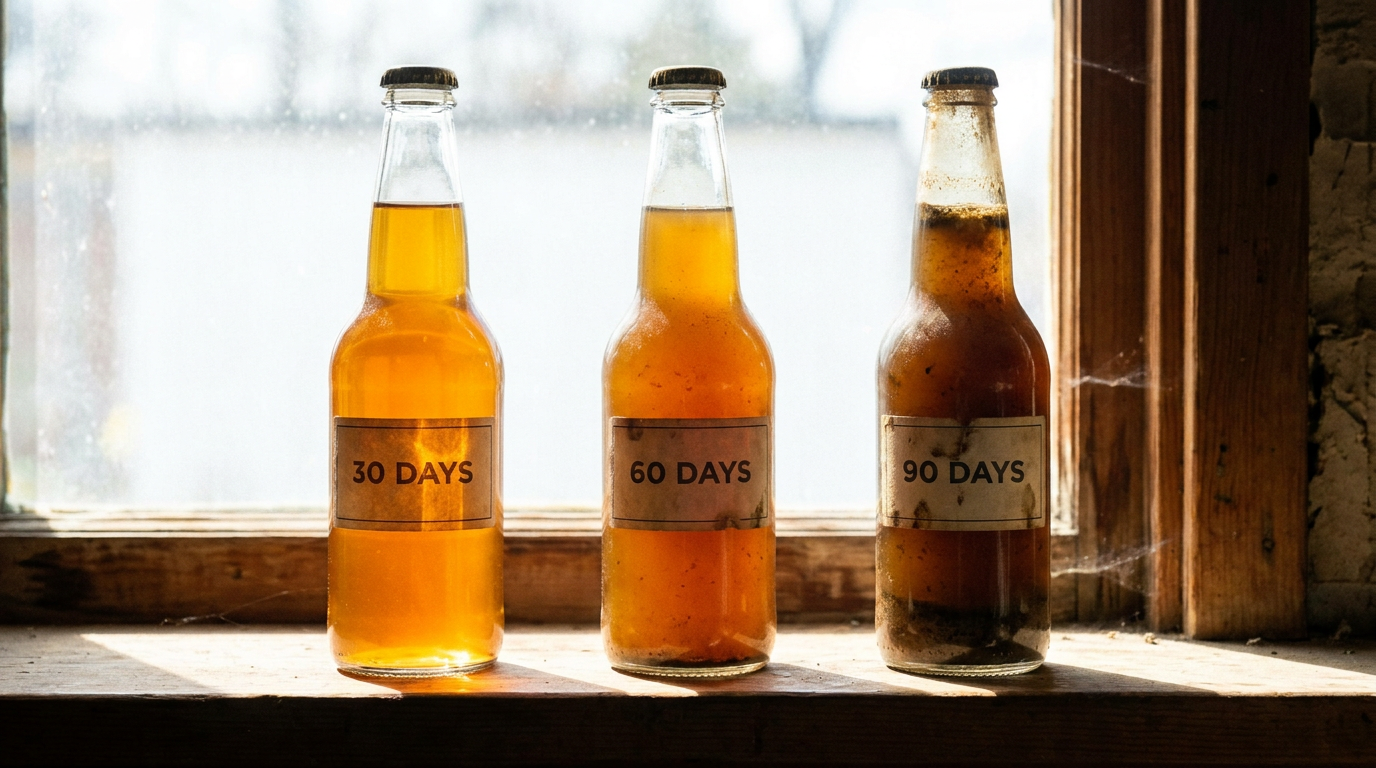
You have a formula you love. The co-packer is booked. A retail buyer has stopped saying "interesting" and started saying "when." Ninety days later you pull a bottle from the stability shelf and something has changed. The product has separated into two visible layers. The citrus top note that made the whole thing sing has flattened into something vaguely candy-like. The color has drifted toward amber. Or the pH has crept up two tenths of a point, which sounds like nothing until you understand what those two tenths do to your safety basis and your regulatory classification.
Your formula looks perfect in the lab. Then it sits on shelf for 90 days. Here's what happens next.
This is the most common failure pattern in packaged beverage development, and it comes from a single sequencing error. Founders treat beverage shelf life and stabilityMenu Collective has been formulating packaged beverages since 2016, and the patterns in this article repeat across nearly every project that arrives already formulated. The same four failure modes. The same pH conversation. The same moment where someone realizes the package was a formulation variable all along.
The cost of getting the order wrong is specific and it compounds. A reformulation after a failed co-packer trial. Scrapped inventory sitting in a warehouse you are paying for. A launch window that slides past the seasonal reset. And the one that hurts most: a retailer relationship that does not survive a second date slip, because buyers forgive one delay and remember the second one permanently.
as a box to tick before production. It is not a box. It is a design constraint you formulate against from the very first bench trial, in the same breath as flavor, cost, and sourcing.
So this piece covers what actually degrades in a beverage and why, the pH 4.6 line and what it genuinely triggers (which is narrower than most people think), why clean label makes stability harder and how to design around it, why package and process are one decision rather than two, how to test honestly instead of optimistically, and a framework for building stability in from day one. That last part reflects rather than abstract advice.
how we design, develop, and deliver beverages
Designing for stability starts with knowing precisely what goes wrong. That is where we turn first.
What Actually Degrades in a Beverage Over Time
A beverage does not fail one way. It fails in cascades. The emulsion destabilizes slightly, which changes light scattering, which changes perceived color, which changes how the flavor reads. Or the pH drifts, which shifts anthocyanin color expression, which a consumer interprets as "old." Understanding the four failure modes separately gives you the vocabulary to diagnose them. Understanding that they interact is what makes you good at this.
Here are the four, with what each looks like in practice, what usually causes it, and where you will see it first.
1. Microbiological failure. What it looks like: visible growth, gas production, bulging or pressurized packages, ropiness, cloudiness in a product that should be bright, off-odors on opening. Common root cause: insufficient hurdle stack for the pH and water activity of the system, post-process contamination, or an underspecified thermal process. Where it shows up first: in the warmest units in the warehouse and in the outliers of your fill run, not the average.
Water activity is the term to understand here. Water activity is the amount of unbound water available for microbial growth, measured on a scale from 0 to 1.0. Pure water sits at 1.0. Dried and cured products sit low enough that microbes cannot function. Almost every beverage sits well above 0.85, which means moisture is doing no preservation work for you at all. FDA's lays out the principle plainly. In a beverage, pH and process carry the entire load.
technical guide on water activity in foods
A related misconception deserves killing. Sugar is not a preservative at beverage concentrations. Osmophilic yeasts, the ones adapted to high-sugar environments, tolerate exactly the conditions founders assume are protective. A 12 Brix juice blend is a growth medium, not a barrier. High sugar reduces water activity meaningfully only at syrup and concentrate levels, far above where any drinkable product lives.
2. Chemical failure. What it looks like: browning, flavor flattening, vitamin claim shortfalls at end of life, cardboard or metallic notes, loss of top notes. Common root cause: oxidation, thermal load during processing, light exposure, metal ion catalysis. Where it shows up first:Maillard browning shows up in protein and dairy systems and in anything hot filled or retorted, where reducing sugars and amino groups react under heat to produce brown pigments and cooked notes. Ester hydrolysis is the citrus killer. The bright, lifted top notes in a citrus system are chemically fragile esters, and they are the first thing to go. Your product does not become bad. It becomes dull, which is commercially worse because nobody complains, they just do not repurchase.
Oxidation is the broad category and it is relentless. Flavor compounds oxidize. Vitamins oxidize. Colors oxidize. Ascorbic acid degradation is doubly painful because vitamin C frequently plays two roles at once: it is a label claim you must hold to end of shelf life, and it is an antioxidant quietly protecting other components. When it degrades, you lose the claim and the protection simultaneously.
in aroma volatiles and in your most fragile analyte, usually vitamin C.
Light deserves its own note because most founders underestimate it badly. Riboflavin acts as a photoinitiator, absorbing light energy and driving reactions that generate volatile sulfur compounds. The peer-reviewed work on documents this clearly. The point that surprises people: light does not merely fade your color. It creates new off-aromas that were not there before. A clear bottle under retail lighting is running a chemical reactor.
photodegradation of riboflavin and light-struck off-aromas
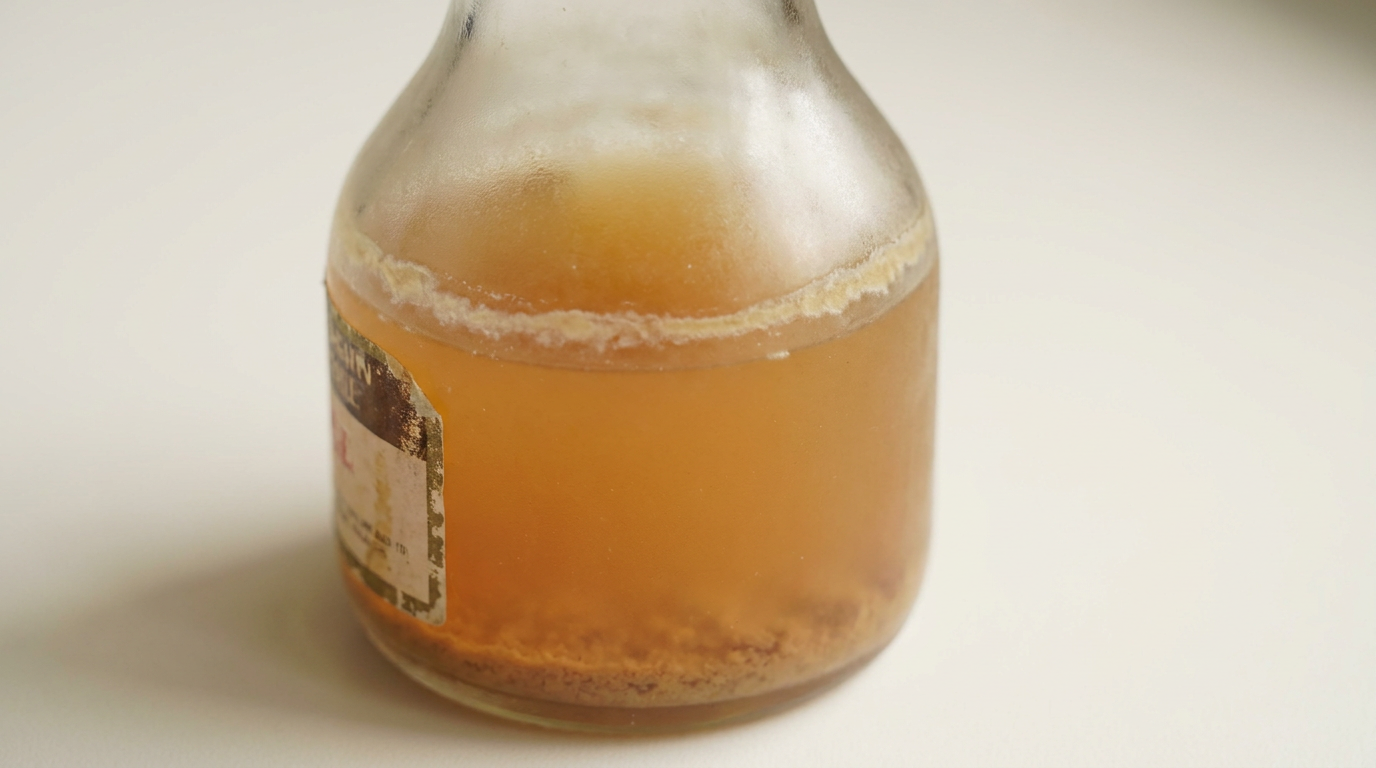
3. Physical failure. What it looks like: sedimentation, creaming, ringing at the neck, emulsion breakdown, protein aggregation, cold haze, visible flocculation. Common root cause: insufficient emulsion stability, density mismatch, inadequate stabilizer system, protein destabilization under heat or over time. Where it shows up first: in the neck of the bottle and at the bottom of the container, visible without opening.
Physical failure carries reputational weight beyond the technical fault, because it is the one consumers photograph. Nobody posts a picture of a two-tenths pH drift. Everybody posts a picture of a separated bottle. In protein systems this is particularly demanding. The covers how protein aggregation and heat-driven quality change interact, and the same physics apply to plant proteins with their own added complications around solubility and mouthfeel.
Journal of Dairy Science review on shelf-stable dairy protein beverages
4. Sensory failure. What it looks like: nothing measurable. That is the problem. Common root cause: the accumulated small effects of the three modes above, each individually within spec. Where it shows up first:This is the quietest and most commercially dangerous failure mode. Flavor fade, off-note development, shifts in sweetness perception as acids and sugars rebalance, gradual color loss. A product can pass every microbiological test and every analytical specification and still be a product nobody wants to drink a second time.
in a trained panel, or in your repeat purchase rate six months after launch.
Analytical specifications tell you whether your product is still safe and still within numeric limits. They do not tell you whether it is still good. Those are different questions, and only one of them determines whether you get a reorder.
That distinction reframes stability entirely. It is not only a safety problem to be cleared. It is a brand problem, because the version of your product a consumer meets in month nine is the version that decides whether your brand means anything to them. Every failure mode listed here is a packaged, ready-to-drink problem specifically, which is why they surface constantly in .
RTD beverage development
Of all the variables driving these failure modes, one number sits above the rest, because it governs both microbiological safety and regulatory status at the same time. That number is 4.6.
The pH 4.6 Problem: Where Safety Meets Regulation
Start with the microbiology, because the regulation only makes sense once you understand what it is protecting against.
Clostridium botulinum is a spore-forming pathogen. The spores are extraordinarily durable and survive ordinary processing conditions that kill vegetative cells easily. Assume they are present. The control strategy is not elimination, it is prevention of germination and toxin production, and in beverages the primary controlling barrier is acidity.
Now the part almost nobody explains, and the part that demonstrates whether someone actually understands the regulation or is repeating it. Research established that C. botulinum does not grow at approximately pH 4.8 or below. FDA did not adopt 4.8. It built in a deliberate safety margin and set the regulatory discriminating value at 4.6. That two-tenths gap exists to absorb measurement error, ingredient variability, and imperfect mixing in real production.
FDA did not pick 4.6 arbitrarily. Growth stops around 4.8. The extra two tenths is the safety margin, and it belongs in your specification too.
Understanding that margin changes how you write specifications. If the regulator built in a buffer against real-world variation, your specification should reflect the same logic rather than treating 4.6 as a cliff edge you can walk right up to.
What the acidified foods definition actually says
Per , an acidified food is a low-acid food to which acid or acid foods are added, having a water activity greater than 0.85 and a finished equilibrium pH of 4.6 or below.
21 CFR 114.3
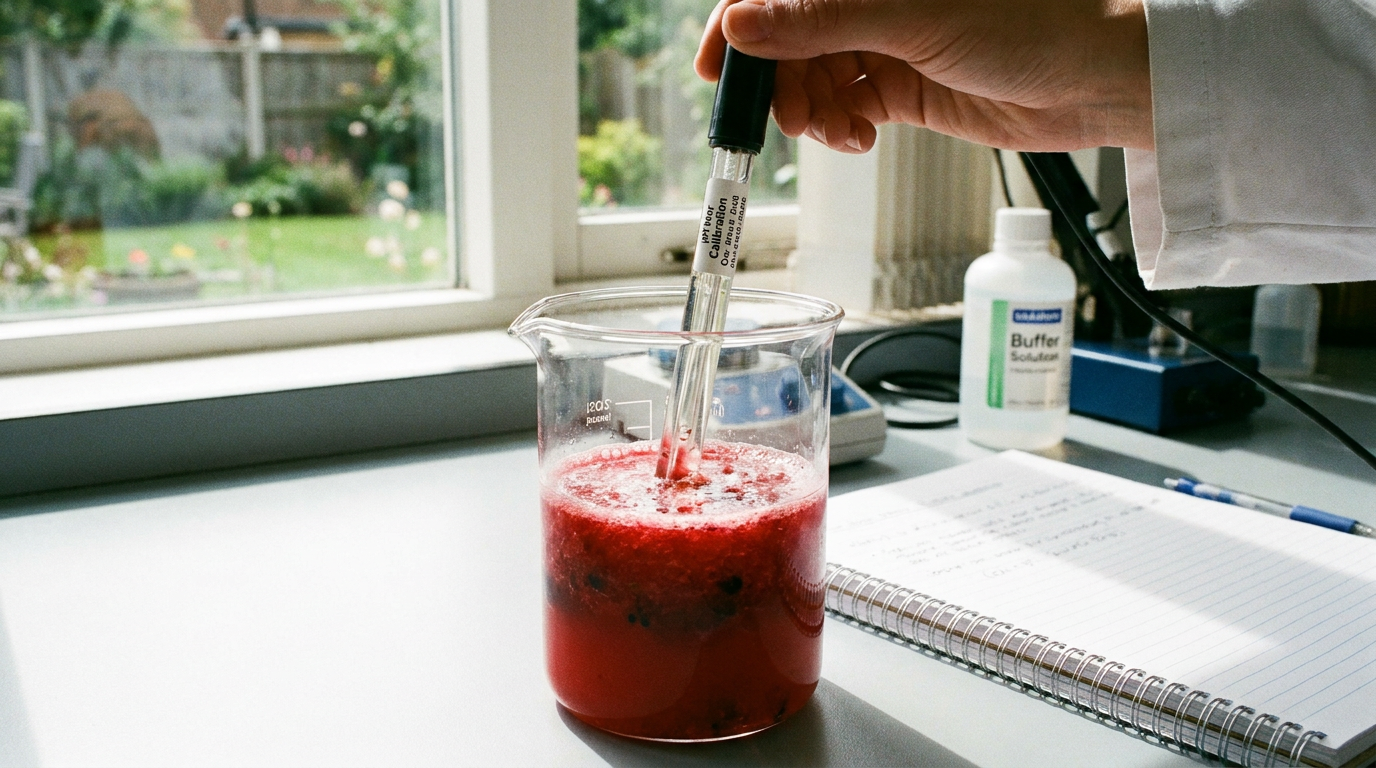
Read the phrase finished equilibrium pH slowly, because founders routinely measure the wrong thing at the wrong moment. Equilibrium pH is the pH the product reaches after all components, liquid and solid, have equilibrated in the sealed container. It is not your batch tank reading. It is not the pH you measured twenty minutes after blending. If you have particulates, botanicals, fruit pieces, or anything that continues exchanging acid with the liquid phase, your tank reading and your equilibrium reading are different numbers, and only one of them is the regulated one.
The carve-out that changes who this applies to
Here is where a great deal of published advice gets sloppy, and where you should be careful about what you have read elsewhere.
21 CFR 114.3 explicitly excludes several categories from the acidified foods definition, including carbonated beverages, jams and jellies and preserves, acid foods containing only small amounts of low-acid food where the finished equilibrium pH does not differ significantly from the predominant acid food, and foods stored, distributed, and retailed under refrigeration. The companion definition of low-acid foods in the same section also carves out alcoholic beverages.
So separate two ideas cleanly and keep them separate:
- That physics does not care about your category. It applies to your carbonated product and your refrigerated product exactly as much as it applies to a shelf-stable still beverage.
- The acidified foods filing obligation has category exclusions. Not every drink below pH 4.6 requires a scheduled process filing.
Conflating those two produces two opposite errors. Some founders file when they do not need to, burning time and money. Others hear "carbonated beverages are excluded" and conclude that acidity does not matter for their product, which is a far more dangerous misreading. The exclusion is regulatory scope, not a suspension of microbiology.
Where filing does apply, here is the chain
Under , the sequence runs like this:
21 CFR 108.25
- Register the facility using Form FDA 2541 not later than 10 days after first engaging in the manufacture, processing, or packing of acidified foods. This produces your FCE (Food Canning Establishment) number.
- File the scheduled process using Form FDA 2541e not later than 60 days after registration, and before packing any new acidified product. Filings are made per product and per container size.
- Submit through FDA Industry Systems. FDA's page on Establishment Registration and Process Filing for Acidified and Low-Acid Canned Foods walks the actual submission pathway.
Know the sibling forms so you can self-identify quickly. 2541d covers the low-acid retorted method. 2541e covers the acidified method. 2541f covers water activity and formulation control. 2541g covers low-acid aseptic systems. If you cannot immediately say which of those describes your product, that is the first conversation to have, and it should happen long before you book production time.
A quick orientation sequence
Use this to orient yourself, not as regulatory advice. A process authority makes the actual determination.
- Is your finished equilibrium pH at or below 4.6?
- Is your water activity above 0.85? (For a beverage, almost certainly yes.)
- Is the product carbonated, refrigerated through distribution and retail, or alcoholic?
- Was the low-acid component added to an acid base in only a small amount without materially shifting pH?
Yes to questions 1 and 2 with no to questions 3 and 4 points toward acidified foods classification and a 2541e filing. Any yes in questions 3 or 4 points toward an exclusion, while leaving your microbiological obligations completely intact.
Why a range beats a target
A product formulated to sit at pH 4.5 with no tolerance range defined is one ingredient lot variation away from drifting to 4.65. Juice acidity varies by harvest. Botanical extracts vary by lot. Buffering capacity shifts with mineral content in your water. That drift changes your safety basis, your regulatory classification, and your required process, and it does so after you have already booked the co-packer and quoted a launch date to a buyer.
Now the commercial exposure, stated in the way founders actually feel it.
This is the practical reason to specify a range, not a number. "pH 4.2 to 4.4, validated for stability and safety across the full range" survives contact with real ingredients. "pH 4.3" is a hope.
A process authority establishes and validates the scheduled process. This is normal, expected, and entirely routine. A good beverage development partner coordinates it as part of the workflow rather than treating it as an obstacle discovered at the end. Our Founders often try to solve the pH and preservation puzzle while simultaneously stripping out the very ingredients that made preservation manageable. That is the clean label tension, and it deserves its own section.
non-alcoholic michelada platform built for Fuego Rojo
is a working example of a shelf-stable acid system taken from concept to commercialization across six flavors, where pH strategy and process validation were designed together rather than sequentially.
Clean Label and Hurdle Technology in Beverages
Let us be honest about the tension rather than pretending it does not exist.
Consumers want short, recognizable ingredient decks. That preference is real, it is durable, and it is not going away. At the same time, natural ingredients are, as a category, less stable than their synthetic counterparts. Both of those statements are true at once. The job is not to argue with the market. The job is to design around the constraint.
Here is what "less stable" means concretely:
- Botanicals bring variable composition lot to lot. Growing conditions, harvest timing, extraction efficiency, and storage all move the actives and the flavor compounds. Variable composition means variable flavor and variable stability behavior, which means your stability data from lot one describes lot one.
- Real juice brings sugars, enzymes, particulates, and pH variability into a system where you are trying to control all four.
- Anthocyanins, the pigments behind most reds, purples, and blues from natural sources, shift color with pH. The same pigment reads vivid and bright at one pH and dull purple-gray at another. If your pH specification has a range, your color has a range. Those are linked variables and you should specify them as linked.
- Natural colors fade under light in ways certified synthetic colors do not. Combine that with the riboflavin photochemistry discussed earlier and clear packaging becomes a formulation decision rather than a marketing preference.
The subtraction founders do not realize they are making
Now the most common and most serious error in this whole territory: removing a synthetic preservative without replacing the hurdle it was providing.Founders experience preservative removal as a subtraction from the label. It is a subtraction from the preservation system. Sodium benzoate was not decoration. It was load-bearing. When it comes out, something has to take its place, and if nothing does, the product does not fail immediately. It fails at day 70 in a warm warehouse, which is exactly when you have inventory in the field.
The same logic applies in a place people rarely think about. Removing ethanol removes a meaningful antimicrobial hurdle. As has grown, this has become one of the most underdiscussed technical challenges in beverage development. A spirit at 40% ABV is self-preserving. The non-alc version of that same flavor profile has to rebuild that protection from other barriers entirely.
the non-alcoholic spirits category
Hurdle technology, explained plainly
The practical answer is hurdle technology. Rather than relying on one aggressive preservation measure, you combine several milder barriers that together prevent spoilage while preserving sensory quality. The concept traces to , and it remains the most useful mental model in preservation science.
Lothar Leistner's work on the hurdle concept
Picture it as a series of modest fences rather than one enormous wall. A microorganism might clear any single fence. Clearing all of them in sequence, in a depleted state, is what becomes impossible. The elegance is that milder barriers do less damage to flavor, color, and nutrients than one severe intervention does.
Your available hurdles in a beverage system:
- pH. The most powerful and usually the cheapest.
- Water activity. Limited utility in most beverages, but real in concentrates and syrups.
- Thermal process. Hot fill, tunnel pasteurization, aseptic, retort.
- Natural and permitted antimicrobials. Discussed below with the regulatory detail attached.
- Packaging barrier. Oxygen and light exclusion.
- Cold chain. Powerful, expensive, and a distribution commitment rather than a formulation one.
Each hurdle you add lets you dial back the others. Tighten pH slightly and you can soften your thermal process, which protects your top notes. Improve your oxygen barrier and your antioxidant system lasts longer. This is the actual craft of the work.

DMDC: a regulation written on hurdle logic
Dimethyl dicarbonate, often known by the trade name Velcorin, is worth understanding in detail because it is the clearest real-world illustration of hurdle thinking that exists in U.S. food law.
Under , DMDC is permitted at up to 200 ppm in wine, dealcoholized wine, and low-alcohol wine, and up to 250 ppm in ready-to-drink teas, in certain carbonated and noncarbonated beverages with added electrolytes and essentially no juice, and in carbonated dilute beverages containing not more than 50% juice.
21 CFR 172.133
Now the detail that makes it interesting. The regulation requires that the beverage's viable microbial load already be reduced to 500 microorganisms per milliliter or less before DMDC is added, through means such as heat treatment or filtration.
Read that again, because the regulation is written on hurdle logic explicitly. DMDC is not a rescue for a contaminated product. It is the final hurdle, applied after other barriers have already done the heavy work of reducing the load. The regulator did not write a permission to use one strong agent. The regulator wrote a permission to use one agent as part of a system. If you understand why that condition exists, you understand hurdle technology.
Natamycin: get this one right
This is where a lot of published content is simply wrong, and correcting it matters.
Under , natamycin is approved as a direct food additive for use on cheese only, at a maximum of 20 ppm in the finished product. That is the entire codified scope of 172.155. It is not a beverage authorization and citing it as one is an error.
21 CFR 172.155
Beverage applications of natamycin proceed through GRAS notificationWhy belabor a distinction this fine? Because this is the exact category of detail that separates a product that clears regulatory review from one that gets sent back. If your ingredient rationale cites the wrong authority, someone downstream will catch it, and that someone will usually be your co-packer's quality team on the week you were planning to run.
instead, at levels not exceeding roughly 5 ppm in the finished product. GRAS Notice No. 578 covers use in ready-to-drink teas, fruit-flavored energy drinks, sport and isotonic drinks, and fruit-flavored beverages at that level, and received a "no questions" response from FDA. That is a real and usable pathway. It is simply a different pathway, with different documentation, than a direct additive listing.
The reframe
Clean label is not a constraint that fights stability. It is a constraint you formulate against, in exactly the same way you formulate against cost targets, sourcing limitations, and process capability. Nobody treats a cost target as an insult to good formulation. A clean deck is the same kind of input.
This matters especially for functional products, where an active must hold its label claim to end of shelf life rather than at fill. Several of the depend on actives that degrade measurably over time, which makes overage strategy and stability data inseparable from the claim itself. Our Hurdle technology includes two hurdles founders almost always decide last and should decide first. Those are the package and the process.
cannabis blend formulation work for Lyre'sfunctional beverage trends that are actually sticking in 2026
sits squarely in that territory, where homogeneity and active stability over time are the central design problems rather than afterthoughts.
Package and Process Are One Decision, Not Two
Here is what the package is actually doing to your product.
Founders routinely finalize the formula, fall in love with it, and then go shopping for a package based on shelf presence, cost per unit, and what the co-packer already runs. That order is backwards, and it is the most consequential sequencing error in beverage development after treating stability as a final gate.
The same formula in a can, a PET bottle, and glass will deliver three different shelf lives and three different sensory outcomes. Not slightly different. Meaningfully, commercially different.
Flavor scalping
Flavor scalping is the migration of aroma compounds out of the beverage and into the packaging material itself. This is not spoilage. Nothing has gone bad. Your flavor has physically left the drink and entered the wall of the bottle.
Nothing has gone bad. Your flavor has physically left the drink and entered the wall of the bottle.
The magnitude surprises people. The peer-reviewed Fifty percent versus two percent. Same liquid. Different wall.
review of flavor scalping in packaged foods
documents that nonpolar terpenes such as d-limonene, the compound carrying much of the character in citrus systems, are absorbed heavily by polyolefins like LDPE, with reported citrus flavor losses around 50% within days. PET under comparable conditions lost only about 2 to 3%.
Cans are not exempt, they are simply different. Liner chemistry varies between suppliers and formulations, and the study on shows that different linings bind aldehydes such as octanal, nonanal, and decanal to differing degrees. Those aldehydes are exactly the compounds carrying fresh, bright, citrus-adjacent character. Two co-packers running the same can format with different liner suppliers can give you two different products.
binding of volatile aroma compounds to can linings
Oxygen ingress
OTR, or oxygen transmission rate, is the rate at which oxygen permeates a package. It is the number to ask for and most founders never do.
There are three separate oxygen sources and they get conflated constantly:
- Dissolved oxygen already in the liquid at the moment of fill.
- Headspace oxygen trapped in the container at seal.
- Ongoing ingress through the package and the closure across the entire shelf life.
You can manage the first two with deaeration and nitrogen dosing. The third is a materials decision. Research on establishes that PET has a materially higher OTR than glass or aluminum, which are effectively barriers.
oxygen permeability of plastic bottles for oxygen-sensitive beverages
The detail that catches people: the closure is frequently the dominant pathway, not the container. Work on demonstrates that closure selection measurably changes flavor outcomes over time. You can specify a beautiful high-barrier bottle and then undo the entire benefit with the cap liner, which is usually chosen on cost by someone who was never told it was a formulation variable.
closure impact on flavor composition during bottle aging
Light exposure
Covered earlier in the chemistry, worth restating as a package decision. Riboflavin acts as a photoinitiator, and light in roughly the 350 to 520 nm range drives reactions producing volatile sulfur off-notes. Anthocyanins photodegrade independently. Clear glass on a brightly lit retail shelf is a formulation variable, not an aesthetic choice made in isolation. If the brand requires clear packaging, then the formula has to be built to survive it, with light-stable colorants, adjusted antioxidant systems, and honest testing under lit conditions.
Metal ion interaction
Trace metals, particularly iron and copper, catalyze oxidation reactions. They arrive through water, through ingredients, and occasionally through processing equipment. Chelation strategy is part of the package and process conversation because the exposure profile depends on both.
The process options, as trade-offs rather than a ranking
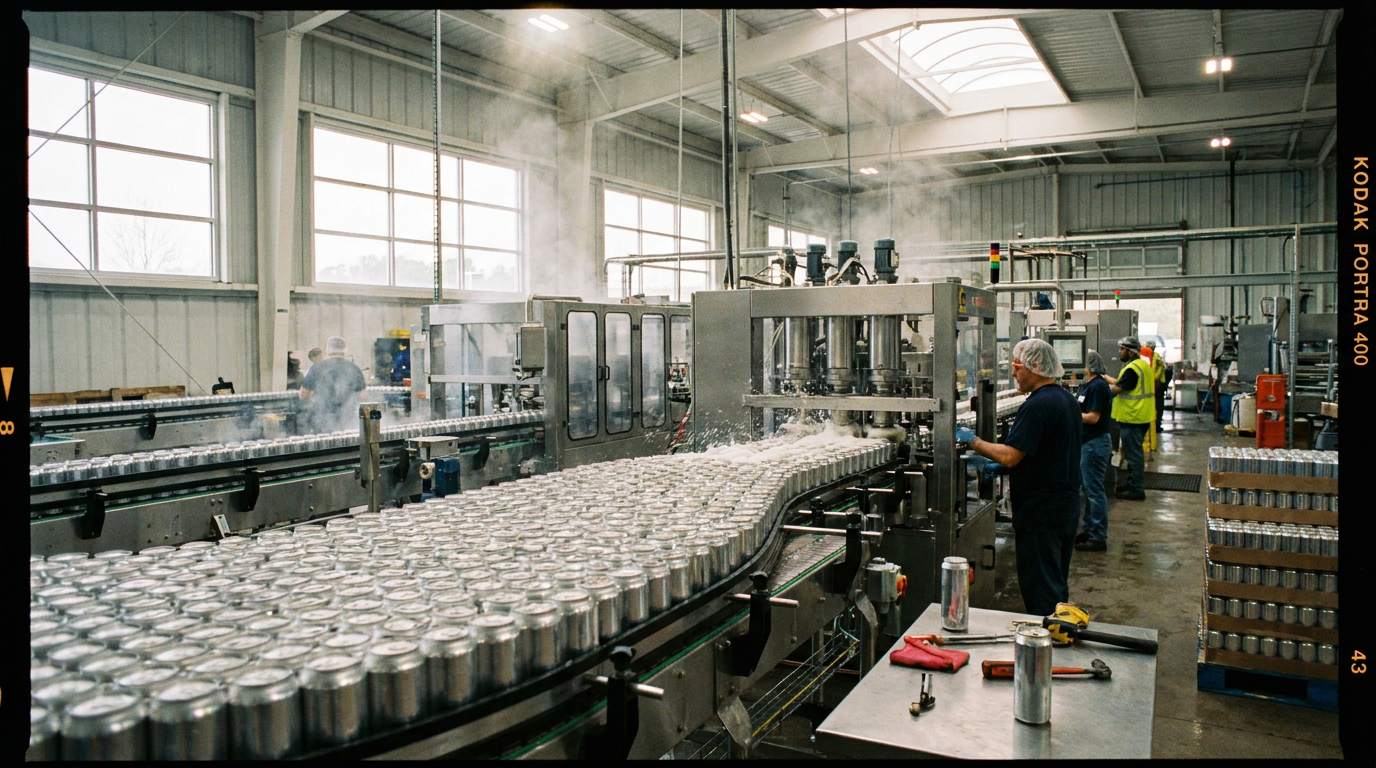
There is no best process. There is only the right process for a target shelf life, a sensory profile, a budget, and the co-packers who will actually take your volume.
High pressure processing (HPP). Typical shelf life: roughly 2 to 3 months refrigerated, longer only with additional hurdles. Sensory impact: minimal. Excellent flavor, color, and nutrient retention because it is non-thermal. Relative cost: higher per-unit tolling. Best fit: premium fresh-positioned products with cold chain distribution and compatible flexible packaging. The review of gives grounded expectations rather than vendor optimism.
shelf-life extension of beverages by high pressure processing
Tunnel pasteurization. Typical shelf life: varies with formulation, commonly several months. Sensory impact: some volatile aroma loss, possible color darkening. Relative cost: moderate. Best fit: beer, juice, and products already in heat-tolerant packaging where the format is fixed.
Hot fill. Typical shelf life: commonly 3 to 12 months ambient. Sensory impact: cooked notes, some top-note loss. Relative cost: low to moderate, and widely available. Best fit: acid systems where cost and co-packer access matter and the flavor profile tolerates thermal load. Requires heat-stabilized packaging, which is its own specification.
Aseptic. Typical shelf life: commonly 6 to 12 months ambient. Sensory impact: better than hot fill because the thermal exposure is short and sharp. Relative cost: higher capital and tolling, more limited co-packer availability. Best fit: products needing ambient distribution with better sensory retention than hot fill delivers, at volumes that justify the run.
Retort. Typical shelf life: often a year or more ambient. Sensory impact: the most severe, both sensory and nutritional. Relative cost: moderate per unit at volume. Best fit: low-acid and neutral pH systems where there is no acid barrier to rely on, such as dairy and protein products.
Cold fill with preservatives. Typical shelf life: depends entirely on the preservative system and pH. Sensory impact: the gentlest on aroma of any option. Relative cost: low. Best fit: products where preservatives are acceptable on the label. This sits uneasily with clean label goals, which connects straight back to the previous section and is exactly why these decisions cannot be made independently.
The instruction
Choose the package and the process alongside the formula, not after it. Run all three as one interlocking decision from the first bench trial.
And be realistic about the last constraint. If a co-packer cannot run your process at your volume, your achievable shelf life is defined by their capability, not by your ambition. Manufacturing partner selection and scale-up realities are covered in our , and they belong in the conversation early. Our Once package and process are settled alongside the formula, the remaining question is how you prove the product holds. That brings us to testing.
RTD cold brew shandy formulation for Amani Coffeehonest roadmap for starting a beverage company
is a working example of a packaged format where process and package selection actively shaped the finished product rather than being applied to it.
Accelerated vs Real-Time Stability Testing
Both approaches are legitimate. Neither is sufficient alone. Understanding what each actually tells you is what separates a useful beverage stability testing program from an expensive ritual.
Accelerated shelf life testing holds product at elevated temperature, commonly 100°F or 104°F, to compress time and produce a fast directional signal. Real-time testing stores product under intended distribution and storage conditions for the full intended shelf life.
Where accelerated testing earns its place, and where it lies to you
Accelerated testing gives you fast, genuinely useful directional signal on chemical and physical change. Browning, sedimentation, vitamin degradation, pH drift, and emulsion breakdown all show up faster at elevated temperature, and the ranking of formulations usually holds. If formula A browns less than formula B at four weeks accelerated, formula A is usually the better bet at ambient too.
Where it becomes unreliable is sensory driftAccelerated data also does not satisfy every retail buyer or every quality requirement. Some buyers will accept it for a launch decision. Some will not. Know which kind you are dealing with before you build your timeline around an assumption.
. The reactions that dominate at elevated temperature are not always the reactions that dominate at ambient over twelve months. Accelerated conditions can push a system into a degradation pathway that never meaningfully occurs in real distribution, producing a scary result for a product that would have been fine. It can also miss slow reactions that need real time to express. Both errors are expensive in opposite directions.
Where real-time testing earns its place, and why it gets cut
Real-time testing is the truth. It is also 6 to 18 months, and that timeline sits directly on top of most founders' launch plans. Which is exactly why it gets cut, and exactly why it should not be.
Stability testing is usually the longest pole in the development timeline, a point we make in detail in our answer to . Founders who understand that early plan around it. Founders who discover it late compress it, and compressed stability programs are how you end up with a product that fails in the field rather than on the shelf in your lab.
how long it takes to develop a beverage product
The working answer: run both in parallel
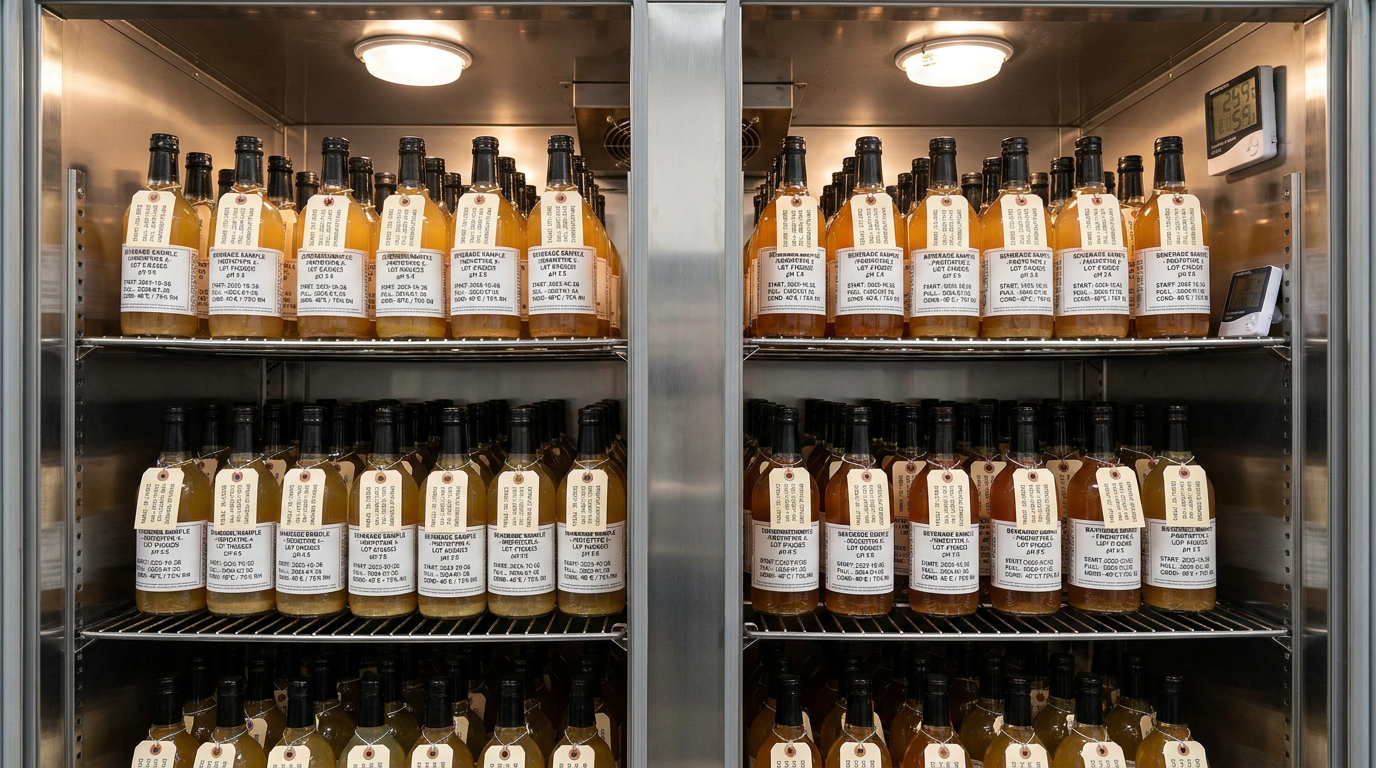
Here is what the industry actually does, stated plainly rather than idealized. You run accelerated and real-time simultaneously. Launch decisions ride on accelerated data. Real-time confirms behind the launch and either validates your call or gives you early warning while there is still time to act.
Saying this openly builds more trust than pretending every product gets eighteen months of real-time data before it ships. Almost none do. The discipline is not in refusing to launch on accelerated data. The discipline is in having the real-time program running so you find out early rather than through customer complaints.
What it costs
In our experience across client programs, here is the realistic budget range:
Accelerated testing plus a limited real-time program: roughly $8,000 to $25,000.
Full real-time programs: roughly $12,000 to $40,000, and higher for multi-SKU and multi-format portfolios.
Now the three mistakes that produce most stability failures.
Frame this clearly against the alternative. A reformulation after a failed co-packer run costs multiples of the entire testing budget once you add scrapped inventory, lost production slot fees, re-testing, and the delayed revenue. This is not the line item to cut. It is the line item that protects every other line item.
Mistake 1: Finalizing the formula before choosing the package
Decide the package early enough that your stability testing runs in the actual commercial package. Testing in lab glassware and then launching in PET means your data described a product you are not selling.
This is the callback and it is worth the repetition. The package is a formulation variable, not a container you pour a finished product into. A formula optimized in glass and then moved to PET is a different product with a different oxygen exposure profile and a different scalping behavior. A formula optimized without a decision on clear versus opaque has not accounted for photochemistry at all.
Mistake 2: Treating stability testing as a final gate rather than a parallel workstream
This is the sequencing argument of the whole article expressed as a workflow decision.
If stability runs in parallel from early development, failures are course corrections. You learn at week six that your color system drifts, and you adjust while adjusting is cheap. Same information, radically different cost, entirely determined by when in the sequence you went looking for it.
If stability is the last gate before production, every failure is a restart. You go back to the bench, reformulate, and start the clock again from zero, with a co-packer slot booked and a buyer waiting.
Mistake 3: Testing only the perfect lab batch
The pilot batch made on a good day by the person who developed the formula is the least representative sample you will ever produce. It was made with carefully selected ingredient lots, precise weighing, patient mixing, and full attention. Commercial production is none of those things.
Test at the edges instead:
- The edges of your tolerance range. If your specification is pH 4.2 to 4.4, test at 4.2 and at 4.4, not at 4.3. Test high-Brix and low-Brix. Test with the ingredient lot that came in at the bottom of its assay range.
- Under abusive temperature. A hot truck in July. A pallet staged near a loading dock door. A DC without climate control.
- Under real distribution conditions. Including vibration, temperature cycling, and a lit retail shelf if that is where the product will live.
Then commit to test to failure as a discipline. Deliberately push the product past its limits until it breaks, and document exactly how and where. Knowing your product survived one 90-day hold tells you very little. Knowing it holds to 14 months ambient but breaks at 16, that emulsion stability is your first failure mode, and that it appears above 95°F sustained tells you how to build your specification, your distribution requirements, and your shelf life claim. You cannot control a boundary you have never located.
For readers who want deeper public-domain background on shelf stability principles, the Naming mistakes is only half the value. Here is the framework that prevents them.
Shelf-Stable Food Safety guide
is a solid resource.
Designing Beverage Stability In From Day One
Stability is a design input, not a final exam. Everything below follows from that single reframe, and it maps onto how we sequence work: Design, Develop, Deliver.
1. Set the shelf life target during Gold Standard definition. The Gold Standard product is the benchmark you are building toward, the reference that every iteration gets measured against. If your Gold Standard does not include a shelf life target, a distribution model, and a storage condition, it is incomplete. "Twelve months ambient in a 12 oz can through unrefrigerated DC distribution to convenience retail" is a Gold Standard. "Tastes amazing" is a wish with no engineering content. The difference determines whether every subsequent decision has a criterion to be judged against. This is the foundation of .
how we design, develop, and deliver beverages that actually work
2. Choose package and process alongside the formula. Run these three as one interlocking decision from the first bench trial. Identify candidate packages early, confirm which co-packers run them at your volume, and formulate into that reality. When the package changes, treat it as a formulation change and revalidate, because it is one.
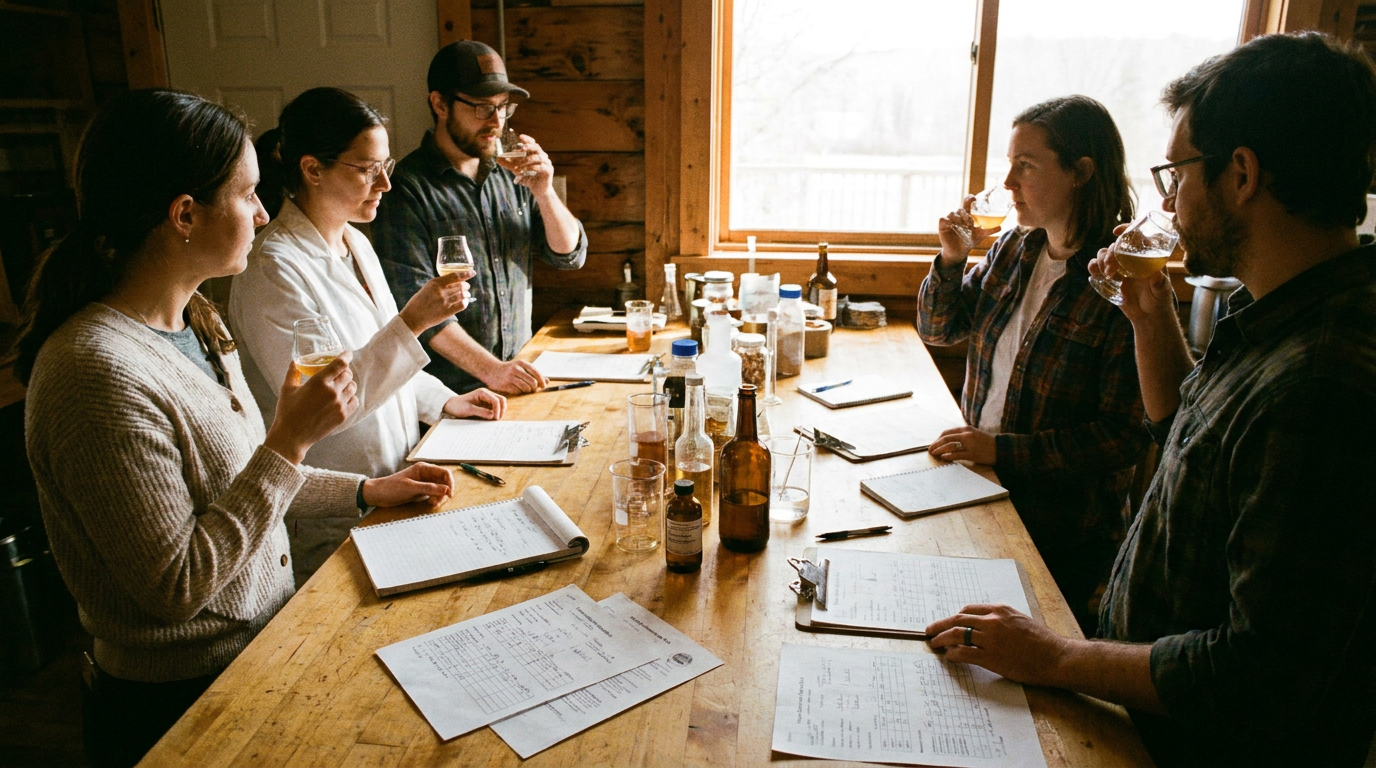
3. Build a stability protocol covering analytical and sensory endpoints. Analytical tells you whether the product is safe and in specification. Sensory tells you whether anyone still wants it. Specify both, with defined endpoints and defined pass criteria written down before testing begins. Pass criteria negotiated after you see the data are not pass criteria, they are rationalizations, and everyone in the room knows it.
4. Define the specification as a tolerance range, not a single ideal number. Every input varies. Every process varies. A specification of "pH 3.8" is a wish. A specification of "pH 3.6 to 3.9, validated for stability across the full range" is engineering. Apply the same logic to Brix, viscosity, color values, and active concentration. This is the callback to the pH 4.6 section, and it is the single highest-leverage habit change most teams can make.
5. Test to failure. Deliberately push past the edges so you know exactly where they are. Document the failure mode, the condition that produced it, and the time to failure. This becomes the foundation of your specification, your distribution requirements, and your ability to answer hard questions from buyers and co-packers with data instead of confidence.
Stability Questions to Answer Before You Book a Co-Packer
- What is our target shelf life, in what package, under what storage and distribution conditions?
- What is our finished equilibrium pH specification, expressed as a range rather than a target?
- Does our product fall inside or outside the acidified foods definition, and who is making that determination?
- Which hurdles are carrying preservation, and what replaced anything we removed from the label?
- What is the OTR of our chosen package and closure, and have we tested in the commercial package rather than lab glassware?
- What are our analytical and sensory pass criteria at end of shelf life, written down before testing?
- Do our label claims, including any actives or vitamins, hold at end of life rather than at fill?
- Can our chosen co-packer actually run this process, at this volume, in this package, on our timeline?
If you can answer all eight with specifics, you are ready to book production. If you cannot answer three or more, booking production is premature and expensive.
Documentation is an asset, not paperwork
One practical point that gets undervalued. Stability data is not only an internal engineering tool. Retail buyers ask for it. Co-packers ask for it. Process authorities require it. Insurers and distributors want to see it. Having it organized, complete, and legible shortens every downstream conversation you will have for the next two years, and it signals a level of operational seriousness that changes how partners treat you.
How we work alongside you
Menu Collective was founded in 2016 by Stuart McCarroll, who brings 45+ years of experience across the global food and beverage industry, and that experience shapes how we sequence this work. We build alongside you: assembling the right experts for the specific project, defining the Gold Standard with shelf life built into it from the outset, and moving from concept to commercialization with stability designed in rather than discovered late. We are collaborators rather than a report-delivery service, and the is exactly the difference between advice and a product on shelf. Our span the full arc, and work like the shows what that looks like carried through to market. Collaborators including Starbucks, 7-Eleven, Red Robin, Dairy Farmers of America, and Goose Island have built with us on that basis.
upscale hard seltzer development for Che-Cheservicesdifference between a consultant and a collaborator
The founders who succeed are not the ones who avoid stability problems. They are the ones who find them early.
The Real Lesson in Those 90 Days
You now know what happens in those 90 days and why. Microbes finding conditions your hurdle stack left open. Esters hydrolyzing and taking your top notes with them. Oxygen arriving through a closure nobody specified. Riboflavin catching light on a retail shelf and generating off-aromas that were never in your formula. An emulsion slowly losing the argument with gravity. And underneath all of it, a set of small changes that each pass specification while collectively producing a drink nobody reorders.
Go back to where we started. The formula that looked perfect in the lab, and the 90 days that followed.
The central argument holds: beverage shelf life and stability is not a test you pass. It is a constraint you design against from the first bench trial.The founders who transcend the industry norm are simply the ones who went looking sooner.
Here is the encouraging part, and it is genuinely true. Stability problems are solvable. Every one of them. They are expensive and slow only when they are discovered late, after the co-packer is booked and the buyer has a date. Found early, at the bench, with time to iterate, they are not crises at all. They are just formulation work, which is the part we all signed up for.
The through-line is short enough to remember. Know your four failure modes and expect them to cascade. Respect pH 4.6 as the microbiological line for every product, and understand separately which categories the acidified foods filing obligation actually reaches. Replace every hurdle you remove. Choose your package and your process alongside your formula rather than after it. Test honestly at the edges instead of comfortably in the middle.
Let's Talk
Bring us your formula, your target shelf life, and the questions you have not been able to answer. Whether you are pre-formulation and want stability built in from the first trial, or you are holding a formula you are not certain will hold for twelve months, that is a conversation worth having now rather than after a co-packer run.
We build alongside you, from concept to commercialization. Reach out for a free consult at , call (630) 642-0721, or find us at 1210 W Lake St, Chicago, IL 60607. If you want to understand scope first, our page lays out how design, development, and delivery fit together.
servicesmenucollective.com/contact