
RTD isn't just a trend. It's where the beverage industry is going.
The numbers tell the story before anyone opens their mouth. The global market for ready to drink beverages was valued at roughly $805 billion in 2025, and it keeps climbing through 2026 and beyond. That is not a niche. That is the center of gravity for the entire industry.
If you run a portfolio at a national CPG, the RTD shelf is where your growth targets live. If you're a founder with one great recipe and a conviction that it belongs in a can, the RTD shelf is where your opportunity lives. Same shelf. Same moment. Very different playbooks.
RTD beverages have rewritten how people drink. The cocktail moved out of the bar. The latte moved out of the cafe. The wellness routine moved out of the blender. All of it landed in the cold vault, packaged, portable, and ready the second the tab cracks.
This article gives you the full picture. What RTD actually means. Why the category keeps outgrowing everything around it. The four formats leading the charge in 2026. The formulation and packaging decisions that quietly make or break launches. And a real roadmap for entering the category without learning every lesson the expensive way.
Let's start with the question more people ask than any other, answered in plain English.
What Does RTD Stand For? A Plain-English Definition
A few familiar examples of what is an RTD beverage in practice:
Alcoholic RTDs cover the drinks that used to require a bartender. Canned cocktails. Hard seltzers. Spirit-based RTDs built on vodka, tequila, whiskey, or rum. Flavored malt beverages. Wine-based spritzes. The common thread is a bar-quality drink that arrives finished, portioned, and consistent every single time.
Non-alcoholic RTDs cover the drinks people reach for all day long. Bottled and canned coffee. Brewed teas. Functional drinks built around hydration, energy, protein, or gut health. Better-for-you sodas. Kombucha. Protein shakes. If it delivers a finished drinking experience without a kettle, a blender, or a barista, it belongs here.
The category splits into two big families, and it helps to keep them straight from the start.
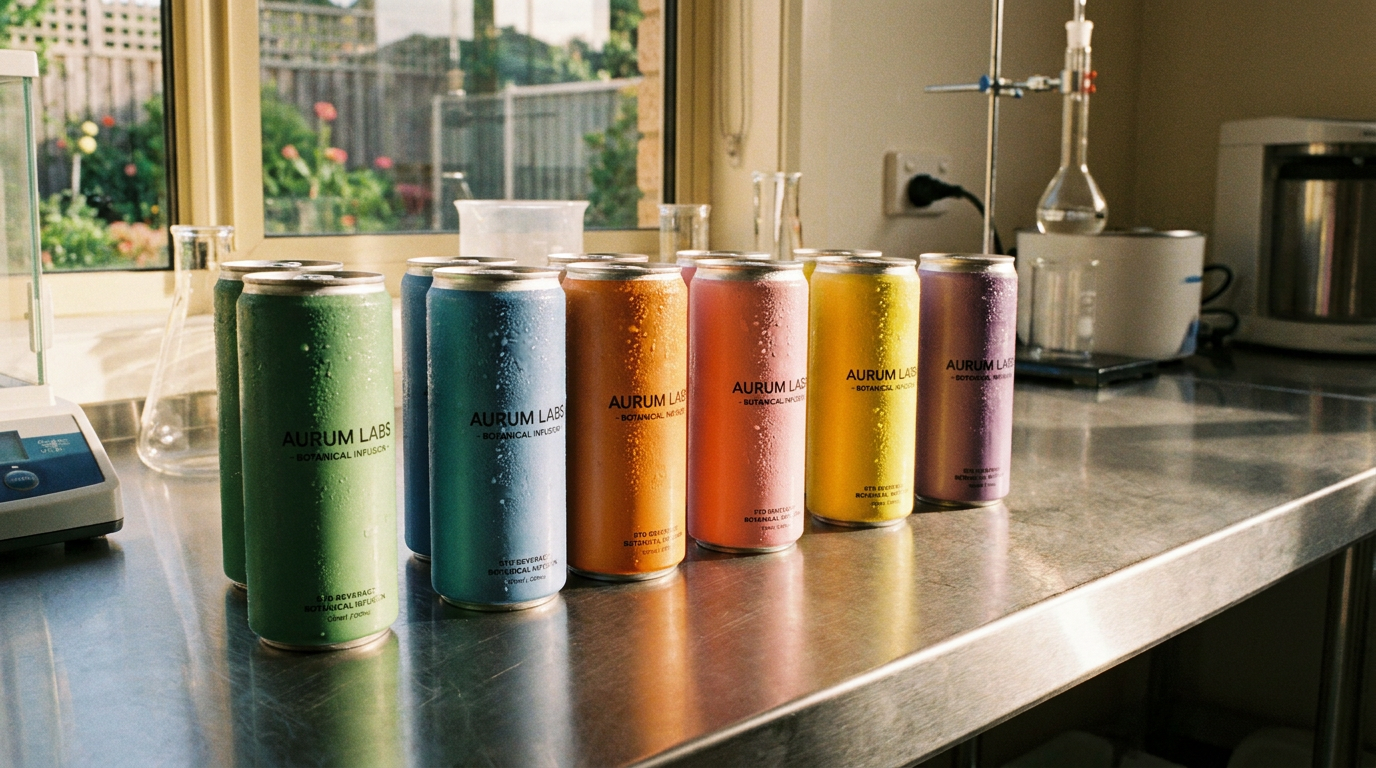
RTD stands for Ready-to-Drink. An RTD beverage is any drink that is packaged, shelf-ready, and consumed straight from the container with no mixing, brewing, or preparation required. Crack it open and drink it. That's the entire promise, and it's the reason the format has taken over the beverage aisle.
- A canned cold brew coffee from the grab-and-go cooler
- A tequila paloma in a slim 12-ounce can
- A prebiotic soda with five grams of sugar
- An electrolyte hydration drink in a resealable bottle
- A hard seltzer variety pack headed to a tailgate
- A protein shake in an aseptic carton
The formats themselves span cans, bottles, cartons, and pouches, with slim cans dominating the premium end of the shelf. The slim can has become shorthand for modern, better-for-you, and worth a second look, which is why so many new brands launch in it.
Why does the format matter commercially? Four reasons, and they compound. Convenience wins the purchase occasion. Portability wins the occasions that never existed before, from beach days to airplane carts. Consistency wins repeat purchase, because the tenth can tastes exactly like the first. And single-serve pricing wins margin, because consumers pay a premium for a finished experience they didn't have to make.
And the commercial reality behind this simple definition is enormous. According to Knowing what RTD means is the easy part. Understanding why the category keeps outgrowing the rest of the industry is where strategy actually starts. That's next.
ready-to-drink beverages market data from Fortune Business Insights
, the global RTD market reached $804.87 billion in 2025 and is projected to hit $847.69 billion in 2026. When a definition describes an $800 billion commercial reality, it stops being trivia and starts being strategy.
Why RTD Is Winning: The Market Forces Behind the Category's Rise
Start with the anchor number. The global ready to drink market stood at roughly $805 billion in 2025 and is growing at a mid-single-digit compound annual rate through the next decade. For a market that large, mid-single-digit growth is not modest. It means tens of billions of dollars in new value created every single year, and every one of those dollars is up for grabs by brands positioned in the right formats.
Every few years, a category stops behaving like a category and starts behaving like a direction. That's what RTD is doing right now, and the data backs it at every level.
Now look at what's happening inside beverage alcohol, because the contrast is stark. Total beverage alcohol sales are slipping. Beer volume is soft. Wine is fighting for relevance with younger consumers. And yet, per , spirit-based RTDs are up more than 30 percent in US dollar sales. NIQ now calls RTD "the fourth category" of beverage alcohol, standing alongside beer, wine, and spirits as its own pillar. Inside an otherwise flat industry, RTD is the growth engine.
NIQ's mid-year report on ready-to-drink beverage alcohol
RTD is not stealing occasions from other categories. It is creating new ones.
That distinction matters more than any single statistic. A canned margarita at a barbecue isn't necessarily replacing a beer. It's often replacing nothing at all, because the person drinking it wasn't going to build a cocktail from scratch in someone's backyard. A functional soda at 3 p.m. isn't stealing a coffee occasion. It's inventing an afternoon ritual that didn't exist five years ago. Occasion creation is how categories grow structurally instead of cyclically, and RTD is the best occasion-creation machine the beverage industry has built in a generation.
The Consumer Forces Pushing RTD Forward
Four consumer currents are converging on the cold vault at the same time, and each one reinforces the others.
Convenience culture has matured into an expectation. Consumers no longer see convenience as a compromise on quality. They see it as table stakes. The brands winning in 2026 deliver bar-quality, cafe-quality, and smoothie-bar-quality experiences in a package that requires zero effort. The bar for "good enough from a can" has been raised so high that it now competes directly with made-to-order.
Premiumization moved home. The pandemic taught consumers to recreate premium experiences at home, and that habit never left. A $4 canned cocktail reads as a bargain against a $16 bar cocktail. A $3.50 functional soda reads as an affordable daily luxury. RTD sits in the sweet spot where premium perception meets accessible pricing, which is exactly where repeat purchase lives.
Moderation and wellness are reshaping what goes in the glass. Younger consumers drink less alcohol overall, and when they do drink, they want to know exactly what they're getting. Clear ABV labeling, real ingredients, and transparent nutrition panels are winning. On the non-alcoholic side, the same instinct drives demand for functional benefits, from gut health to hydration to clean energy. RTD formats deliver that transparency on the front of the can.
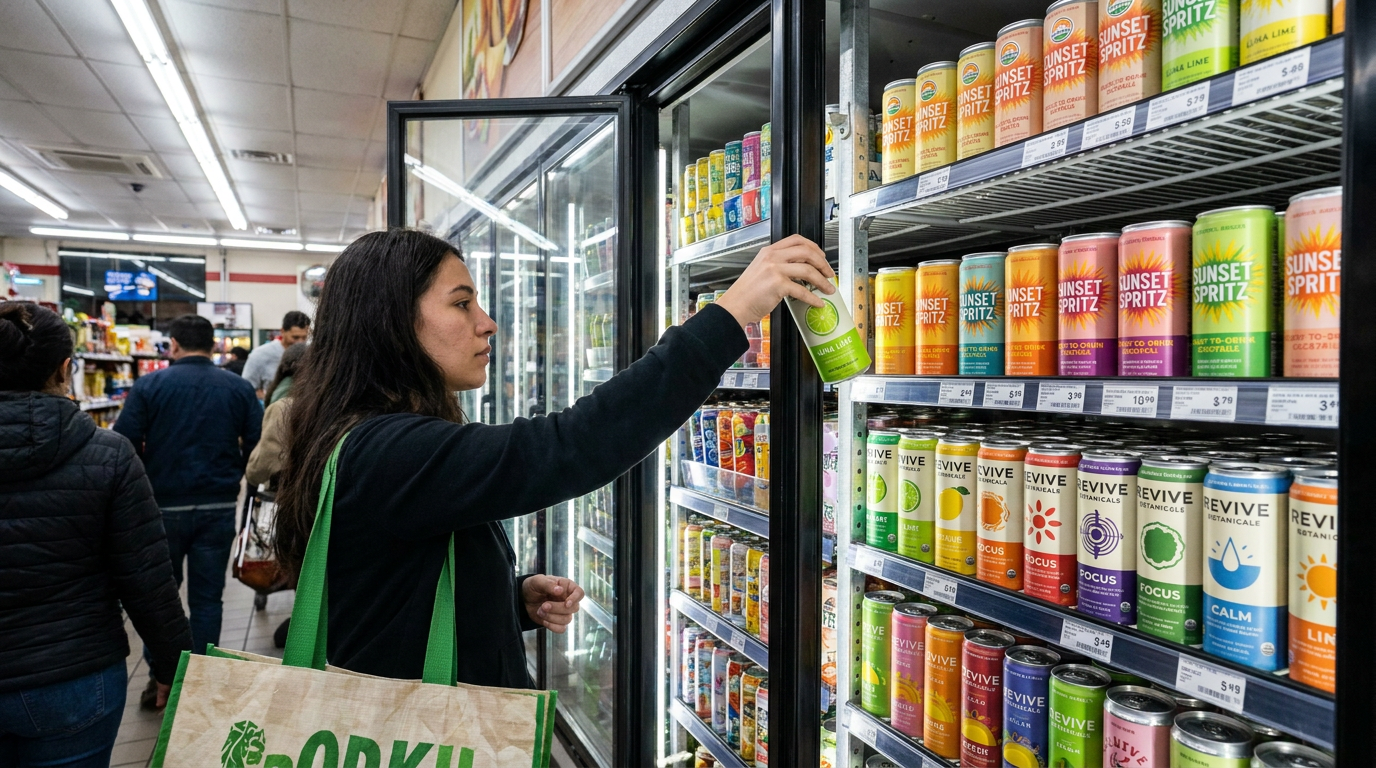
The cold vault has become a discovery aisle. For Gen Z and younger millennials, the convenience store cooler works the way the app store works. New brands, new flavors, new functions, refreshed constantly. Low commitment, single-serve trial, instant gratification. Legacy brands built loyalty over decades. New RTD brands can build trial in a single afternoon, one cold can at a time.
The Retail Forces Pulling RTD Forward
Single-serve RTD delivers some of the best margin economics in the store. A cold, immediate-consumption beverage commands a price premium that ambient multipacks never touch, and retailers know it. Convenience chains have expanded cold-vault footage aggressively, and grocery has followed by carving RTD cocktail sets out of space that used to belong to slower-moving categories. Shelf space is the scoreboard of retail conviction, and the scoreboard says RTD.
Consumers push. Retail pulls. And right now retail is pulling hard.
Then came the validation moment that turned every remaining skeptic. In March 2025, . Read that number again. Nearly two billion dollars for a functional soda brand that barely existed a decade earlier. When the second-largest food and beverage company on the planet pays that price for a functional RTD, it's not making a bet. It's making a statement: this is the future of the soft drink aisle.
PepsiCo announced its acquisition of prebiotic soda brand Poppi for $1.95 billion
Major cultural occasions amplify the pattern. We've written before about So RTD is winning overall. But "RTD" is a big tent, and the growth is not evenly distributed inside it. The sharper question every operator asks is which formats are actually driving the numbers. Here are the four that are.
what the 2026 FIFA World Cup means for beverage brands
, and the through line is unmistakable: when tens of millions of people gather to watch, host, and celebrate, RTD cocktails and premium canned formats surge, because they fit the occasion better than anything that needs a shaker or a corkscrew.
The Four RTD Formats Winning in 2026
Category-level enthusiasm doesn't build a business. Format-level precision does. These are the four RTD formats with the strongest momentum heading through 2026, with the data to benchmark where your concept fits and where the whitespace still is.
Functional RTDs: Where Wellness Meets the Cold Vault
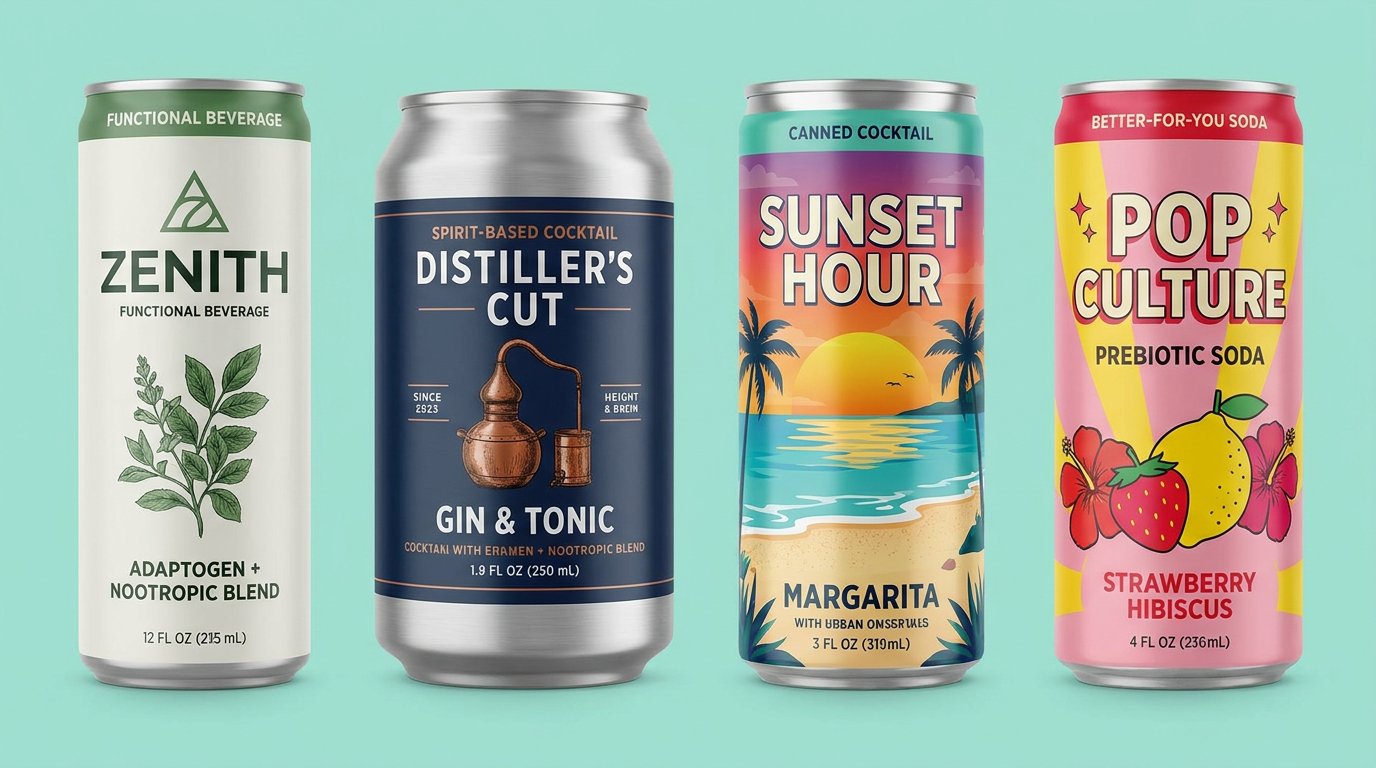
The functional beverage market grew from $175 billion in 2025 to a projected $193 billion in 2026, a roughly 10.5 percent compound annual growth rate according to . That makes functional the largest of the four growth formats by a wide margin, and it's still accelerating.
360iResearch's functional beverage market analysis
The functional umbrella covers five major benefit platforms, each with its own consumer and its own formulation challenge:
- Prebiotics and gut health, the platform that produced Poppi and Olipop and reset consumer expectations for what a soda can be
- Adaptogens, ingredients like ashwagandha and L-theanine positioned around stress and calm
- Protein, moving beyond gym culture into everyday nutrition with RTD shakes and protein waters
- Hydration, electrolyte-forward drinks that took the sports drink playbook and rebuilt it with cleaner labels
- Nootropics, cognitive-focus blends targeting the workday occasion that coffee alone used to own
Here's what winners in this format get right: function never comes at the cost of flavor. This is the lesson etched into every functional success story and every functional failure. Consumers will try a drink because of the benefit on the front of the can. They will only rebuy it if it tastes genuinely good. The graveyard of functional beverages is full of products that led with the science and treated taste as an afterthought. The winners formulate taste-first, then engineer the function into a liquid people actually crave.
RTD Cocktails: Spirit-Based Products Take the Lead
The global market for RTD cocktails sits near $3.7 billion in 2025 and is expanding at a roughly 14 percent compound annual growth rate, per What winners get right in this format: authenticity and ABV clarity. The consumer buying a spirit-based RTD cocktail is often a cocktail drinker first and a convenience shopper second. They know what a good paloma tastes like. They check the ABV. They read the ingredient panel. Winning products respect that sophistication with real spirit bases, honest flavor systems, and labels that state exactly what's inside at exactly what strength. Vagueness reads as compromise, and compromise doesn't get rebought.
Grand View Research's ready-to-drink cocktails market report
The defining dynamic inside RTD cocktails is the shift from malt-based to spirit-based. The first wave of the category rode malt bases because of tax and distribution advantages. But consumers have traded up. They want the real thing: actual tequila in the margarita, actual vodka in the mule, actual whiskey in the highball. "Made with real spirits" has become one of the most powerful claims on the front of a can, and brands built on malt bases are feeling the squeeze.
. Fourteen percent annual growth is remarkable in any consumer category. In beverage alcohol, where the overall pie is shrinking, it's extraordinary.
Canned Cocktails and the Broader Canned Alcohol Boom
Zoom out from cocktails specifically to canned alcohol broadly, and the scale becomes clear. The canned alcoholic beverages market was worth $88.25 billion in 2025 and is projected to reach roughly $99.6 billion in 2026, about 13.3 percent growth in a single year, according to What winners get right in this format: bar-quality flavor systems. The benchmark is not the other cans in the cooler. The benchmark is the drink a good bartender would make. Products formulated against that standard win trial, win repeat, and win the shelf reviews that drive velocity. Products formulated against the "good enough for a can" standard get delisted.
Fortune Business Insights' canned alcoholic beverages market report
The competitive bar in canned cocktails has risen dramatically. Three years ago, a decent margarita in a can was a novelty. Today it's the baseline. The products winning now deliver genuine bar-quality complexity: layered citrus, balanced bitterness, aromatic top notes, and finishes that don't collapse into sweetness. That's not a marketing achievement. It's a formulation achievement, and it separates the brands that survive their second year from the ones that don't.
Canned cocktails sit at the premium heart of that boom. The can has won the format war for a simple stack of reasons: it chills faster, travels lighter, protects the liquid from light, recycles more efficiently, and presents a 360-degree billboard for the brand. Bottles still have their place in premium and gifting occasions, but the growth is overwhelmingly in aluminum.
.
Better-for-You Sodas: Small Shelf, Outsized Momentum
The fourth format is the quiet overachiever. Low and zero sugar sodas posted 12.6 percent dollar growth, and per What winners get right in this format: sweetener systems that do not taste like compromise. This is the entire ballgame. Consumers have decades of experience with diet sodas that taste like diet sodas, and they can detect the artificial-sweetener signature in one sip. The breakthrough brands of the last five years won by blending sweetener systems, often combining small amounts of real sugar or juice with stevia, monk fruit, or allulose, tuned so precisely that the finished drink tastes like indulgence rather than substitution. Get the sweetener system right and everything else follows. Get it wrong and no amount of branding saves the product.
SPINS' State of Beverage analysis
This format overlaps with functional (Poppi and Olipop live in both worlds), but it deserves its own lane because the core promise is different. Better-for-you soda isn't primarily selling a benefit. It's selling soda, the full nostalgic pleasure of it, without the 40 grams of sugar. Root beer, cream soda, cherry cola, orange, grape. Familiar flavors, reformulated for the way people want to drink now.
, diet and alternative sodas hold just 6 percent of non-alcoholic category share while driving 27 percent of its growth. Read that ratio again. Six percent of the shelf. Twenty-seven percent of the growth. That's the definition of outsized momentum, and it's why every major retailer is expanding the better-for-you soda set.
Picking the right format is half the battle, and it's the visible half. The other half happens in the lab and on the filling line, where formulation and packaging decisions quietly determine which products survive contact with reality. We've built RTD products across every one of these formats, including a , and the technical side is where we've watched more launches get won or lost than anywhere else. Let's go there.
cold brew shandy that fused coffee and beer into one canned liquid
Formulation and Packaging: Where RTD Products Are Won or Lost
Here's a truth the trend pieces never tell you: most RTD failures don't fail at the concept stage. They fail at the execution stage, in decisions about pH, processing, liners, and shelf life that were made too late, made by default, or never consciously made at all. If you want to develop an RTD beverage that wins, this is the part of the process that deserves your closest attention.
Shelf Stability Is the First Gate
The pH question is just as consequential. High-acid beverages, generally below pH 4.6, resist dangerous microbial growth and open the door to gentler, cheaper processing. Low-acid beverages, including most dairy-based and many protein-based drinks, require far more aggressive processing to be safe. Your recipe's acidity isn't a flavor detail. It's a regulatory classification, a processing mandate, and a cost structure, all in one number.
That last choice shapes everything downstream. A cold-chain product can carry more delicate ingredients and fresher flavor profiles, but it demands refrigerated distribution from filler to shelf, which narrows your co-packer options, raises your logistics costs, and limits which retailers can carry you. An ambient-stable product travels anywhere and slots into any channel, but it has to withstand heat, time, and light without degrading, which constrains the formulation itself. Neither answer is wrong. Choosing by accident is.
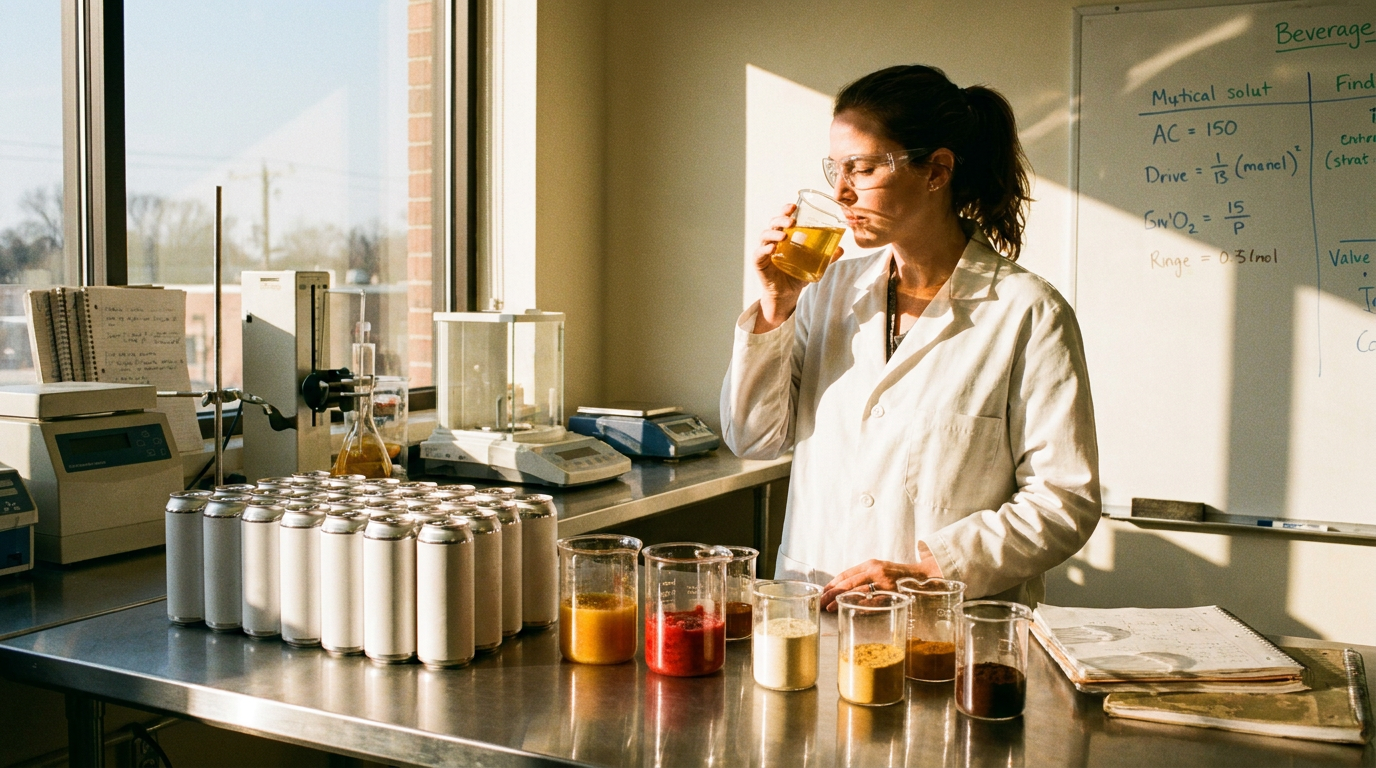
Before flavor, before branding, before anything else, an RTD product has to survive its own shelf life. Shelf stability is governed by a handful of interlocking variables: pH, water activity, preservative systems, and the fundamental choice between cold chain and ambient distribution.
Choosing a Thermal Process Without Getting Lost in the Science
Every commercially packaged RTD goes through some form of stabilization, and the three dominant thermal approaches each fit different products. You don't need to be a food scientist to make this decision well. You need the plain-English version, which goes like this:
- Hot-fill heats the beverage itself, then fills it into the container while hot, so the liquid sterilizes its own package. It suits high-acid products like juices, teas, and many functional drinks. It's the most accessible option in cost and co-packer availability, but the heat exposure limits which delicate ingredients survive the trip.
- Tunnel pasteurization fills and seals the package first, then passes the sealed container through a heated tunnel. It's the standard for carbonated and alcoholic products, which is why it dominates canned cocktails and hard seltzers. The sealed-package approach preserves carbonation while achieving stability.
- Aseptic processing sterilizes the product and the package separately, then unites them in a sterile environment. It's the gentlest on delicate ingredients, which makes it the go-to for dairy, proteins, and sensitive botanicals, but it carries higher costs and meaningful minimum-run thresholds that can challenge early-stage brands.
Neutral industry explainers like and go deeper on the machinery, but the strategic point is simple: the processing method is not a detail you delegate after the recipe is done. It's a decision that belongs inside the formulation conversation from day one, because it determines what your recipe can contain, what your product will cost, and which co-packers can run it.
this breakdown of hot-fill versus aseptic trade-offsthis comparison of aseptic and hot-fill packaging
Flavor Systems Under Heat and Time
Professional RTD development accounts for this from the start. Formulations are built with processing in mind, overages are calculated for ingredients that degrade, and accelerated shelf-life testing simulates months of aging in weeks so problems surface before launch instead of after. The bench sample is the beginning of the work, not the end of it.
Thermal processing changes liquids. Citrus notes flatten and can develop cooked characteristics. Delicate botanicals fade. Sweetener systems shift in perception as the flavor around them evolves. Functional ingredients degrade at different rates, which matters enormously when the amount on your label is a legal claim. And all of that happens again, slowly, across months of shelf life, in trucks and warehouses and store shelves that are never as climate-controlled as your lab.
Here's the challenge that humbles more first-time founders than any other: the product that tastes great on day one must taste great at month nine.
The Can Liner Conversation Nobody Has Early Enough
Liner specification belongs in the formulation conversation, not as an afterthought discovered during a shelf-life panel. The right liner for your specific liquid is a question your development partner and your can supplier should answer together, early, with your actual formulation in hand.
Acidic formulations, hop-forward formulations, and citrus-forward formulations can all interact with can liners over time. The consequences range from flavor scalping, where the liner literally absorbs aroma compounds out of your beverage and mutes the flavor you worked so hard to build, to corrosion risk in aggressive formulations, which threatens the package itself. A margarita-style canned cocktail with real lime and real agave is exactly the kind of liquid that demands liner scrutiny.
Every aluminum can carries an interior polymer liner that keeps the liquid and the metal apart. Most founders never think about it. They should.
Packaging Is Strategy, Not Decoration
A 7.5-ounce slim can and a 16-ounce tallboy are two different businesses. The slim can signals premium, supports a higher price per ounce, fits the multipack occasion, and lives comfortably in grocery and club. The tallboy signals value and boldness, wins the single-serve convenience occasion, and carries a completely different margin structure. Between them sit the 12-ounce sleek and standard formats, each with its own channel logic and price architecture. Your format choice determines your price point, your channel fit, your shelf presence, and your cost of goods, all before a single consumer tastes the liquid.
Finally, the package itself. Can size, format, and label real estate are not aesthetic choices. They're business-model choices.
This is why we start every project by defining the Gold Standard product first: the exact taste, function, and experience the product must deliver, established before scale-up begins. Then we engineer the scalable formulation that protects that Gold Standard through processing, packaging, and shelf life. When we developed These decisions are hard to sequence alone, and the order you make them in matters as much as the answers themselves. Which brings us to the real question: how should a brand actually enter this category?
an upscale hard seltzer platform for Che-Che
, every one of these decisions, from flavor system to processing to package, was sequenced around protecting the product the founders fell in love with. That sequencing is the difference between a launch and a scramble.
How to Enter the RTD Category: Design, Develop, Deliver
Insight without a roadmap is just entertainment. So here's the roadmap, structured around the framework we use to take every product from concept to commercialization: Design, Develop, Deliver.

Design: Start With the Gold Standard
And validate the concept against a real consumer occasion, not a trend headline. Who drinks this, when, instead of what? If you can't answer that in one specific sentence, the concept isn't ready for development. When you can, everything downstream gets easier, because the occasion informs the format, the format informs the package, and the package informs the price.
Design is also where you pick your format lane deliberately, using exactly the kind of data covered earlier in this article. Functional RTD, spirit-based cocktail, canned cocktail, better-for-you soda: each lane has its own growth rate, its own competitive intensity, its own regulatory pathway, and its own consumer. Choosing a lane because the data and your concept genuinely align is strategy. Choosing a lane because a headline said it was hot is how me-too products get made.
That answer is your Gold Standard product, and defining it precisely is the single highest-leverage act in the entire development journey. Not "a great canned margarita." The specific margarita: the ratio of lime brightness to agave depth, the salt perception, the finish, the mouthfeel, the ABV, the moment it's built for. The Gold Standard is the product you will spend the rest of the process protecting, so it deserves rigor, tasting rounds, and honest debate before anyone touches scale-up.
Everything begins with a deceptively simple question: what exactly must this product taste like, do, and feel like in the consumer's hand?
Develop: Engineer the Formulation That Survives Reality
And select processing and co-packing based on the formulation, never the other way around. This ordering sounds obvious. It's violated constantly. Founders sign with a co-packer because of a relationship or a price, then discover the facility's process forces formulation compromises that erode the very product they set out to make. The liquid leads. The infrastructure follows.
Address regulatory requirements early, because they're not uniform across the category. Alcohol formats bring formula approvals, label approvals, and a compliance framework that varies by base and by state. Functional products bring their own scrutiny around ingredient status and the claims on your label. Every functional promise on the front of the can needs substantiation behind it. Discovering a regulatory wall at month eight is a costly way to learn what a conversation at week two would have surfaced.
The core work is translating the Gold Standard into a scalable, compliant formulation. That means recreating the bench-top magic with commercially available ingredients, at commercial volumes, through commercial processing, at a cost of goods that leaves room for everyone in the chain to make money. It's equal parts science and stubbornness, and it's iterative by nature: formulate, process, taste, adjust, repeat, until the scaled product honors the original.
Development is where the Gold Standard meets the physics and regulations of the real world, and where the craft of beverage development earns its keep.
We work with you and alongside you to bring your passion to life in a product.
Deliver: Build the Route to Market Alongside the Product
Pricing architecture has to work at every level of the chain simultaneously: a shelf price the consumer accepts, a margin the retailer requires, a distributor cut where one applies, and a remainder that sustains your business. Working backward from a realistic shelf price to a required cost of goods, before finalizing the formulation, saves brands from the most painful discovery in CPG: a beloved product that can't be sold profitably.
Channel strategy comes first. Direct-to-consumer, natural and specialty retail, conventional grocery, convenience, club, on-premise: each channel has its own economics, its own pack-size logic, and its own timeline. The right starting channel for a functional soda is rarely the right starting channel for a spirit-based RTD, and alcohol formats add a three-tier distribution system with its own rules and relationships.
A great liquid with no route to market is a hobby, not a brand. Delivery is where the product becomes a business, and the strongest launches build this phase in parallel with development, not after it.
The Mistakes That Sink RTD Launches
We've watched enough launches from the inside to name the failure patterns plainly:
- Chasing a trend without a differentiated flavor point of view. The market doesn't need another me-too product in a hot format. It needs a specific, opinionated liquid that gives consumers a reason to switch.
- Underestimating minimum order quantities and co-packer lead times. Co-packer schedules book out months ahead, and minimum runs can mean tens of thousands of cans. Cash flow plans built on optimistic timelines break.
- Treating packaging as decoration instead of strategy. As covered above, the format decision is a business-model decision. Brands that choose a can size for looks alone discover the economics later, and later is expensive.
Every one of these mistakes is avoidable with the right sequencing and the right partner at the table. That's the role we play. We're collaborators, not outside advisors who hand you a deck and disappear. Menu Collective builds with you, drawing on more than 45 years of experience and collaborations with brands like Starbucks, 7-Eleven, and Goose Island, applying the same creative and commercially astute development process whether the client is a global icon or a founder with one great recipe. Our walk through what Design, Develop, Deliver looks like in practice, and the proof lives in the work: we took , and you can browse You've now got the map. But long reads always leave a few specific questions standing, so here are the fast, direct answers.
more beverage case studiesFuego Rojo from a backyard michelada recipe to a six-flavor non-alcoholic platform ready for co-packingbeverage development services
across formats and categories to see the range.
RTD Beverage FAQ: Quick Answers for Brands and Founders
What does RTD stand for?
RTD stands for Ready-to-Drink. It describes any beverage that is packaged for immediate consumption with no preparation required: no mixing, brewing, or blending. The term covers both non-alcoholic drinks like canned coffee and functional sodas, and alcoholic drinks like canned cocktails and hard seltzers.
What is the fastest growing RTD category?
Spirit-based RTD cocktails are among the fastest growing, up more than 30 percent in US dollar sales per . Functional RTDs are growing at roughly 10.5 percent annually on a far larger base, making them the biggest absolute growth opportunity.
NIQ's ready-to-drink category data
How do you develop an RTD beverage?
Three steps. First, define the Gold Standard product: the exact taste, function, and experience it must deliver. Second, engineer a scalable, compliant formulation matched to the right processing method. Third, build the route to market with channel strategy, pricing architecture, and distribution planned alongside the product itself.
Are RTD cocktails the same as canned cocktails?
Not exactly. Canned cocktails are a subset of RTD cocktails. The broader RTD cocktail category also includes bottled cocktails, multi-serve pouches, and other formats. In practice, cans dominate the category's growth, which is why the two terms are often used interchangeably in conversation.
How long does it take to develop an RTD product?
It depends on four variables: formulation complexity, processing method, regulatory pathway, and co-packer scheduling. A straightforward high-acid non-alcoholic product moves fastest. Alcohol formats add formula and label approvals. Aseptic products add processing lead time. Realistic timelines run from several months to over a year, and honest partners scope this at the start.
For ongoing category analysis beyond this article, our tracks where the beverage industry is heading, format by format.
Trends and Insights blog
The Bottom Line: RTD Is the Direction, Not the Detour
Which leaves one closing thought. The gap between a great idea and a great product is execution, and execution is a team sport. The founders and brand teams winning in RTD right now aren't the ones with the most original ideas. They're the ones who built the right team around a good idea and executed it with precision, from concept to commercialization.
The strategic picture is just as clear. The category is huge and growing. Four formats are pulling ahead of the pack. And the winners are decided in formulation and packaging, in pH decisions and processing choices and liner specifications, long before launch day arrives.
We opened with a claim: RTD isn't just a trend, it's where the beverage industry is going. Every dataset in this article backs it. An $800 billion global market for RTD beverages that keeps compounding. Spirit-based cocktails growing 30 percent inside a flat alcohol industry. Functional drinks, canned cocktails, and better-for-you sodas each pulling ahead on their own steep curves. A two-billion-dollar acquisition that told the whole industry where the smart money sees the future.
Have an RTD concept you believe in? Let's create something new together. From concept to commercialization, Menu Collective builds alongside you every step of the way. Book a Free Consult or call us at (630) 642-0721, and let's talk about what your product could become.