
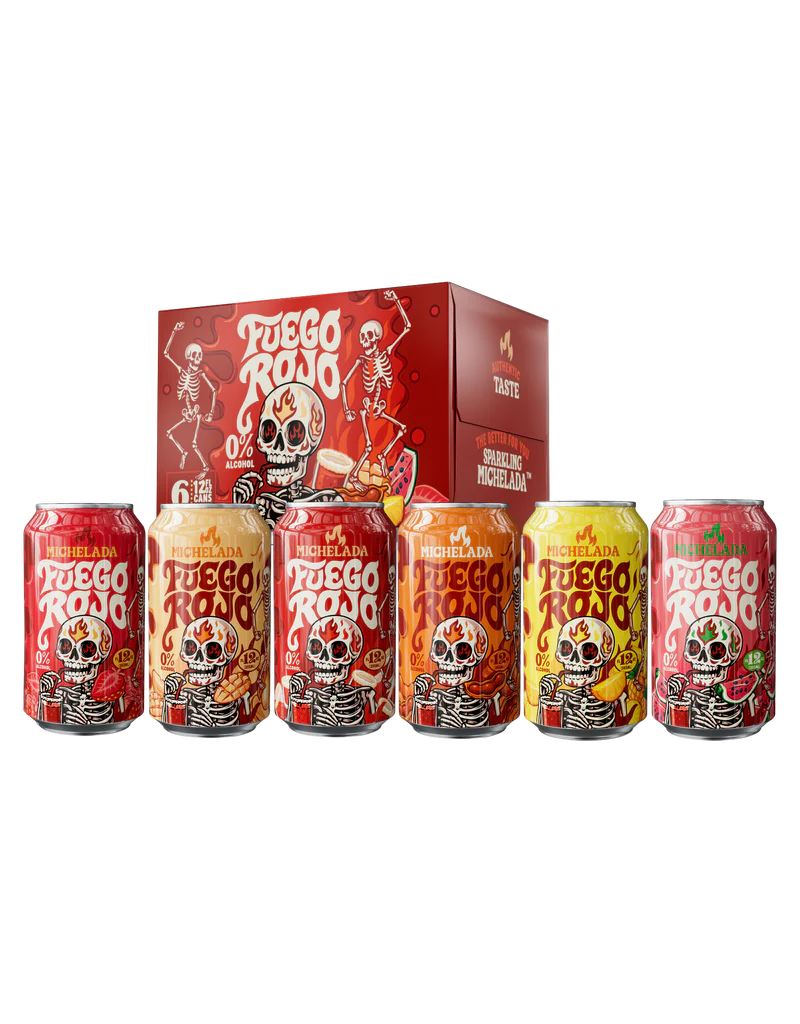
Picture a Chicago backyard on a Saturday afternoon. The grill is going. Someone’s turned up the music just a little too loud. There’s laughter, trash talk, the smell of carne asada drifting through the warm air — and somewhere in that beautiful chaos, someone is asking for a michelada. That moment, repeated across generations and backyards and family gatherings, is exactly where Fuego Rojo was born.
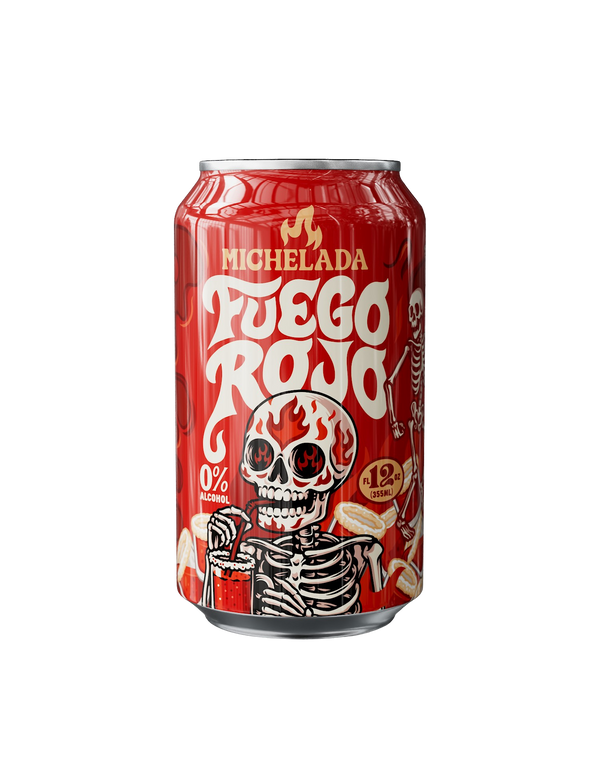
Fuego Rojo is a sparkling non-alcoholic michelada made with tomato, citrus, chile, and spice — crafted by founder Freddy Morales to preserve not just the flavor of the drink, but the ritual behind it. When Freddy brought his brand to Menu Collective, he didn’t just have a product idea. He had a cultural mission, a deeply personal origin story, and a vision that stretched well beyond a single SKU. What he needed was a true beverage development collaborator — someone who could help him design, develop, and deliver a full six-flavor non-alcoholic michelada platform, from the mangonada to the Tamarindo del Infierno, without losing a single drop of authenticity along the way.
This is the full story of that collaboration. It documents the Design → Develop → Deliver journey that took Fuego Rojo from a beloved backyard ritual to a commercially available, six-flavor, ready-to-drink platform — and it shows exactly what it looks like when a beverage development company stops consulting and starts building alongside a founder who has something real to say.
But first — what exactly is a non-alcoholic michelada, and why does it matter right now?
The Rise of the Non-Alcoholic Michelada Category
What a Michelada Actually Is — And Where It Came From
Before you can understand why Fuego Rojo matters, you have to understand the drink it was born from. A michelada is a traditional Mexican beer cocktail built on a base of cold beer, fresh lime juice, chili sauces, spices, and — always — a salt-and-chili-rimmed glass. It’s savory, spicy, bright, and unapologetically bold. It is one of the most culturally specific drinking experiences in the world, and it belongs to the people who grew up with it.
The word itself carries two popular origin theories, both of which are worth knowing. The first traces the name to the phrase mi chela helada — “my ice-cold beer” in Mexican slang — a portmanteau that captures the casual, communal spirit of the drink. The second points to a man named Michel Ésper at Club Deportivo Potosino in San Luis Potosí, Mexico, who in the 1960s reportedly began doctoring his beer with lime, salt, and sauce in a way that left a permanent mark on the country’s drinking culture. As Wikipedia’s entry on the michelada notes, both stories live comfortably alongside each other — because the michelada has always been a drink that belongs to everyone who loves it, not to any single person or place.
The classic drink’s architecture is precise in its imprecision. There’s no single correct recipe. Heat, acid, salt, and carbonation are the four pillars — and within those pillars, every family, every city, every bartender has their own version. That’s part of what makes it so culturally durable. And it’s also part of what makes formulating a commercial, shelf-stable non-alcoholic version of it such a genuinely complex challenge.
Why the Non-Alcoholic Version Is Having Its Moment
A non-alcoholic michelada replicates the savory, spicy, citrusy sensory architecture of the original — delivering the full ritual experience without the alcohol. It’s not a compromise. Done right, it’s an expansion of the drink’s possibilities: something you can reach for at noon or at midnight, something that works as a standalone refresher or as a base for tequila or cerveza when the moment calls for it.
The timing couldn’t be more relevant. According to multiple market research reports, the global non-alcoholic beverage sector is growing at a CAGR of approximately 7%, with the non-alcoholic RTD segment expanding rapidly on the back of a clear, sustained consumer shift. Millennials and Gen Z are moderating alcohol consumption at rates that would have seemed unlikely a decade ago — not because they don’t want to enjoy themselves, but because they’ve realized that flavor and social ritual don’t require alcohol as an entry fee. The sober-curious movement isn’t a trend; it’s a generational recalibration. And the brands that are winning in this space are the ones that lead with culture and complexity, not just the absence of alcohol.
Fuego Rojo represents exactly that kind of brand. As their own positioning puts it: “Made for flavor lovers, not seltzer drinkers.” This is not a beverage that asks you to give anything up. It’s built on the conviction that the michelada experience — the savory depth, the citrus brightness, the slow build of heat — is worth having on its own terms. The brand exists at the intersection of a real consumer shift and a real cultural tradition, and it occupies that space with genuine authority.
For anyone searching for a michelada drink, a michelada mix, or a ready-to-drink non-alcoholic option that goes beyond flavored sparkling water, Fuego Rojo is an answer to a question the market has been asking for years. We explored why this category is genuinely and lastingly relevant in our Functional Beverages in 2026 trend report — and the sober-curious RTD space is among the most exciting signals we’re tracking.
That’s the category. Now let’s talk about the brand that’s redefining it from a Chicago backyard.
Fuego Rojo: Born in Backyards, Built for Everyone
The Founding Story That Lives in the Can
The best brands are built from lived experience. Fuego Rojo is no exception. Freddy Morales didn’t set out to build a beverage company. He set out to hold onto something he loved — and in doing so, he created a product that holds that feeling for everyone who reaches for it.
As the Fuego Rojo About Us page tells it directly: “Fuego Rojo was born in backyards. Carne asadas. Loud music. Friends and family talking trash. Someone always asking for a michelada.” Those moments — the grill going, the heat in the air, the cold savory drink tying everyone together — shaped the brand from its very first concept. “It was never just a drink,” the brand says. “It was part of the ritual.” That line is not marketing copy. It’s a mission statement. And it shaped every decision we made together.
Freddy built Fuego Rojo to be a sparkling non-alcoholic michelada made with tomato, citrus, chile, and spice — the bold, uncompromising ingredients that define what a michelada should actually taste like. The original SKU was crafted to deliver that savory, refreshing kick whether you’re drinking it straight or pouring it over ice with tequila or cerveza. It was never about replacing the michelada. It was, as the brand puts it, “about giving you more ways to enjoy it.”
The brand’s full positioning — “The Better For You Sparkling Michelada™” — carries two important signals. “Better for you” speaks to the 0% alcohol formulation and the clean ingredient profile. But “sparkling michelada” signals something equally important: this is not a michelada-adjacent product. This is a michelada, reimagined for a broader set of moments and a broader set of people, without giving up a single note of the flavor that makes the original worth drinking.
From One SKU to a Six-Flavor Platform
When Freddy came to us at Menu Collective, the brand had its original flavor and a very clear vision: build a full flavor platform that honors the depth and breadth of Mexican-American flavor culture. Not line extensions for their own sake. A deliberate map of the flavors that live in that cultural world — from the street-food sweetness of the mangonada to the deep, unapologetic complexity of tamarind — all rendered in a sparkling, shelf-stable, commercially scalable format.
That ambition is significant. It’s one thing to develop one RTD beverage. It’s another to develop six, each with its own flavor architecture, its own formulation challenges, and its own cultural reference point — all while maintaining cohesion as a family of products. You can explore the full Fuego Rojo lineup directly, but the story of how those six flavors got from vision to bottle is what this post is really about.
Freddy had the cultural authority, the founder’s passion, and the original product. What he needed was a development partner who could build alongside him — and that’s exactly what our work together looked like.
Design, Develop, Deliver: How a Beverage Development Company Brings a Vision to Life
What a Beverage Development Company Actually Does
People often ask us what a beverage development company actually does — beyond mixing things together in a kitchen and hoping for the best. The honest answer is that formulation is the middle chapter of a much longer story. A beverage development company partners with founders and brands to take a drink concept from its initial idea through formulation, regulatory compliance, sensory refinement, and full commercial scale-up. At Menu Collective, that journey is structured around three interconnected stages: Design, Develop, and Deliver.
This framework isn’t theoretical. It’s the practical blueprint that has guided our work with brands ranging from the Starbucks Reserve Roastery to independent founders launching their first product. And it’s the exact process we applied to Fuego Rojo — one stage at a time, in close collaboration with Freddy throughout. Our services page outlines the full scope of what each phase involves, but the Fuego Rojo project illustrates it in the most tangible way possible.
The Design Phase: Defining the Gold Standard
Every great beverage starts with a question: what does the ideal version of this drink taste like at its absolute best? At Menu Collective, we call that the Gold Standard — the benchmark that every formulation iteration is measured against. It’s the flavor experience the founder is trying to put into the world, captured as precisely and completely as possible before a single formula is written.
For Fuego Rojo, defining the Gold Standard for six flavors required assembling the right team of beverage formulators — specialists who understood both the technical requirements of a commercially viable sparkling RTD and the cultural specificity of the flavor profiles Freddy was building toward. A mangonada isn’t just mango plus chamoy. It’s a particular balance of sweetness, tartness, salt, and heat that carries the memory of a specific street-food experience. The Gold Standard definition for that flavor had to capture that experience — not approximate it.
The Design phase also established the broader flavor architecture that would make the six SKUs feel like a cohesive family while giving each one a distinct identity. The balance of heat, acid, sweetness, and carbonation needed to work differently across flavors — a chamoy-forward profile operates on entirely different sensory logic than a watermelon-forward one — while still communicating that all six came from the same brand and shared the same commitment to authentic michelada flavor.
The Develop Phase: Where Formulation Becomes a Craft
Once the Gold Standard is defined, the development phase begins. This is where beverage formulation becomes both a science and a craft — the iterative, hands-on process of turning a benchmark flavor experience into a scalable, shelf-stable formula that performs consistently at commercial volume.
For the Fuego Rojo platform, the Develop phase presented a set of challenges that made this project genuinely demanding. Carbonation stability with chili-forward and chamoy-forward flavor profiles is not a solved problem. The acidity and ingredient complexity of a michelada-style beverage creates real technical pressure on carbonation retention — and getting that balance right, across six different flavor profiles, required careful, iterative work. There were no shortcuts.
Regulatory compliance added another layer. Every ingredient, every additive, every formulation decision had to meet the requirements for commercial shelf-stable RTD production. That work happens in the background of every great beverage — invisible to the consumer, but foundational to whether the product can actually reach them.
Then there was the deeper formulation challenge: preserving cultural authenticity in an RTD format. Real tomato character is hard to maintain at commercial scale. Genuine chamoy depth — that complex sweet-salty-tangy-spicy profile — is even harder to render in a sparkling beverage without losing the very quality that makes it worth drinking. Every iteration in the Develop phase was evaluated not just against technical benchmarks, but against the Gold Standard. Did it taste like the real thing? Did it honor the culture it was representing? Those questions drove the process.
The Deliver Phase: Taking the Product to Market
Formulation is only half the work. A great beverage that can’t reach consumers isn’t a product — it’s a prototype. The Deliver phase is where Menu Collective’s collaboration extends beyond the development kitchen and into the commercial reality of bringing a product to market.
For Fuego Rojo, the Deliver phase meant supporting the transition from validated formulas to commercial manufacturing — ensuring each of the six formulations performed consistently at scale, maintained carbonation integrity, and retained the authentic flavor character established in development. It also meant building the sales, marketing, and distribution strategy that gives the six-flavor platform a real path to retail and wholesale success, alongside the DTC channel at drinkfuego.com.
This is a point we feel strongly about at Menu Collective: the Deliver phase is not a handoff. It’s a continuation of the same collaborative relationship that started in the Design phase. The founder’s vision doesn’t stop mattering once the formula is approved. It matters just as much — if not more — when the product is sitting on a shelf and asking a consumer to pick it up. You can see how this full-cycle approach played out in a comparable RTD project in our cold brew shandy formulation case study.
The process guided us through six distinct flavor worlds — each one rooted in real Mexican flavor culture, each one presenting its own formulation challenge. Here’s what we built together.
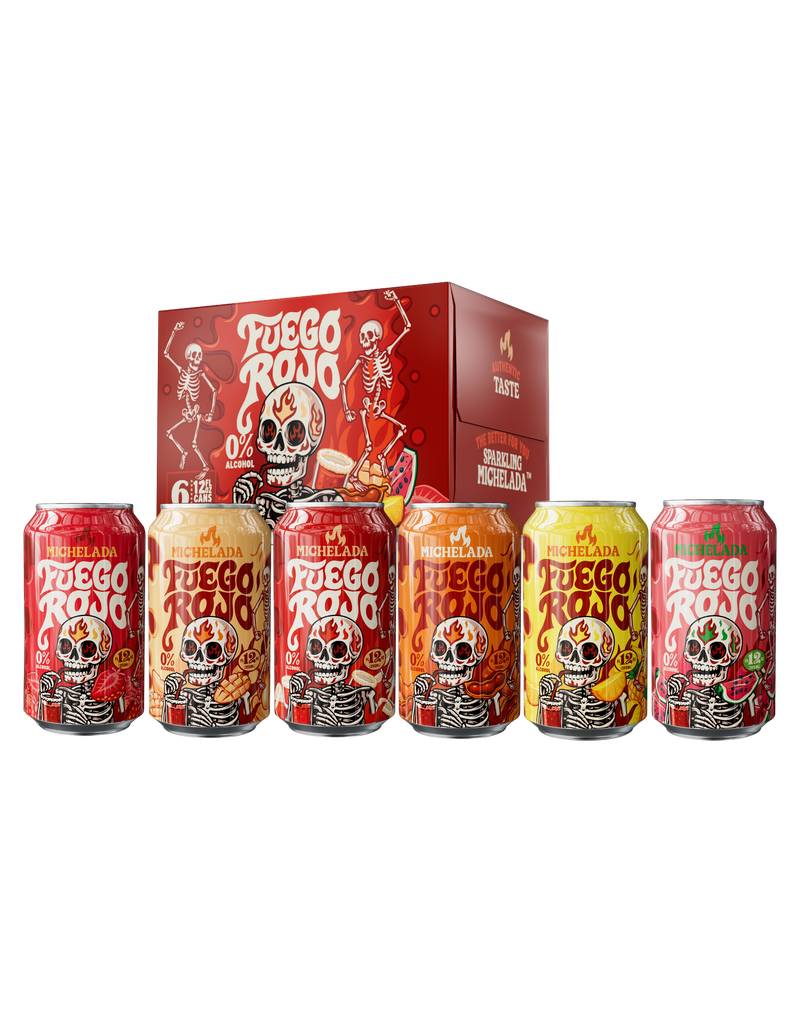
Six Flavors, Six Stories: The Complete Fuego Rojo Lineup
A Flavor Map of Mexican-American Culture
Fuego Rojo’s six-flavor platform is not a collection of line extensions. It’s a deliberate, culturally grounded flavor map — a range of SKUs that each carry a specific reference point in Mexican-American food culture while working together as a cohesive commercial product family. Every flavor has a story. Every flavor had a formulation challenge. And every flavor was built to honor something real.
Here’s the full lineup, flavor by flavor — described the way they deserve to be: starting with the experience, not the ingredient list. You can explore and purchase the full range directly from Fuego Rojo.
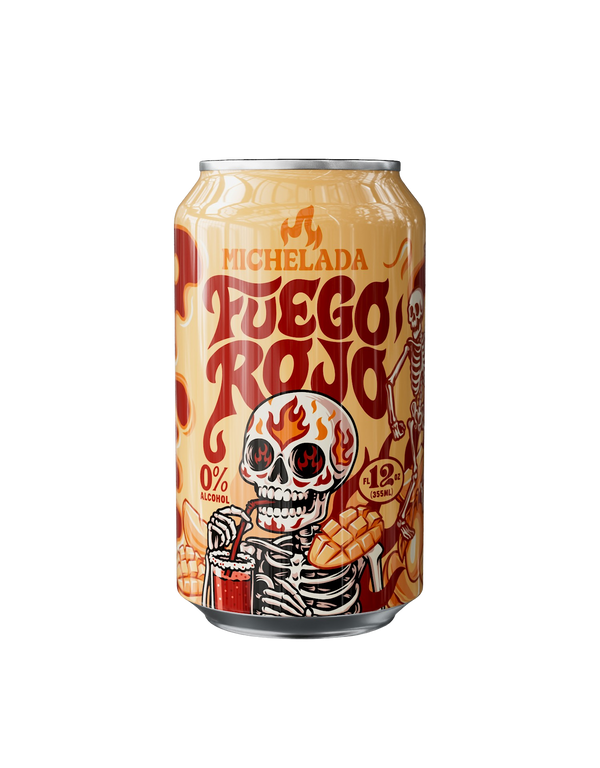
🥭 Mangonada — Mango, Chamoy, Lime, Chili
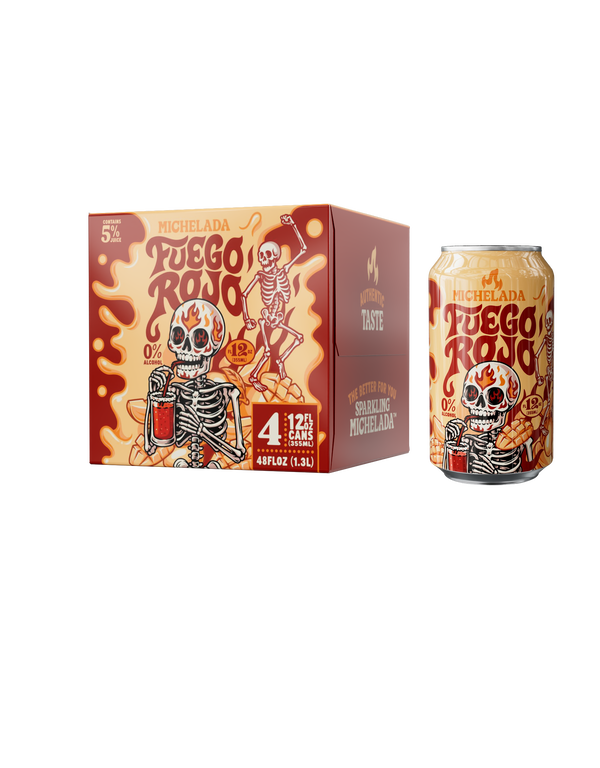
The mangonada is one of Mexico’s most iconic street-food flavor combinations — ripe, golden mango layered with tangy chamoy sauce, bright lime, and the slow kick of chili seasoning. In its natural habitat, it arrives in a cup at a street cart, the chamoy drizzled over frozen mango with a tamarind candy straw. It is simultaneously sweet, tart, savory, salty, and spicy — and all of those dimensions need to exist in perfect equilibrium or the whole thing falls apart.
Rendering that experience in a sparkling RTD is a serious formulation challenge. Mango sweetness has a tendency to dominate if unchecked, flattening the complexity that makes the mangonada worth drinking. Meanwhile, chamoy’s savory-salty depth can tip into astringency without careful calibration. The formulation work on this flavor was among the most detailed in the entire lineup — achieving the sweet-tart-heat balance while preserving the authentic chamoy character that chamoy devotees will immediately recognize. The result is a can that genuinely delivers the mangonada experience. To understand the depth of the chamoy dimension, this guide to chamoy offers excellent context on the condiment’s complexity. And for a deeper look at the mangonada as a cultural phenomenon, this resource on mangonadas is worth reading.
🍉 Flaming Watermelon — Watermelon, Lime, Spicy Finish
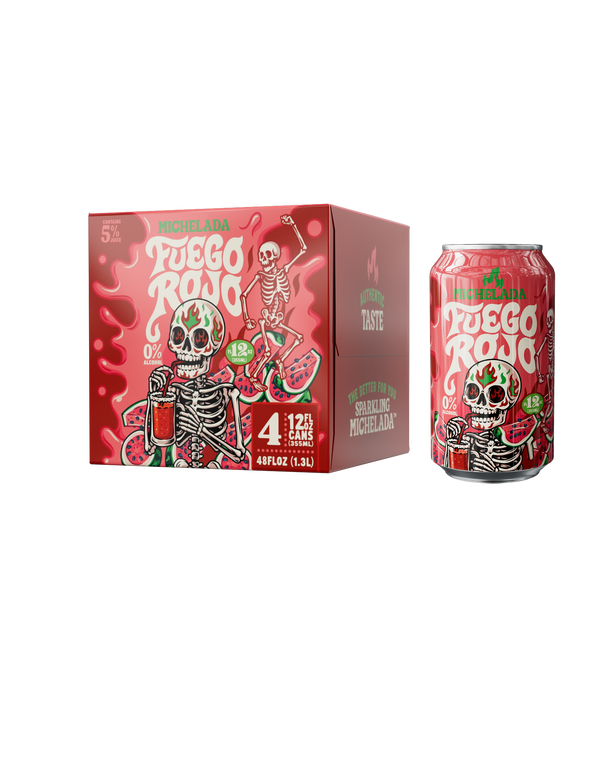
Cool and juicy on the front palate. Then the heat arrives. Flaming Watermelon is built around a classic flavor tension — the refreshing, summery sweetness of watermelon against a slow-building chili finish that lingers long after the last sip. It’s the kind of drink that makes you reach for it again not despite the heat, but because of it.
The formulation challenge here was keeping the watermelon flavor fresh and authentic in a carbonated shelf-stable format — no small feat, given how easily artificial notes can creep in when a fruit flavor is processed for commercial production. The chili finish also needed to arrive cleanly and build gradually, rather than hitting immediately and overwhelming the fruit. The result is a flavor that feels like the best possible version of a summer afternoon — bright, cold, and building toward something.
🍍 Fiery Pineapple — Tropical Pineapple, Direct Chili Heat
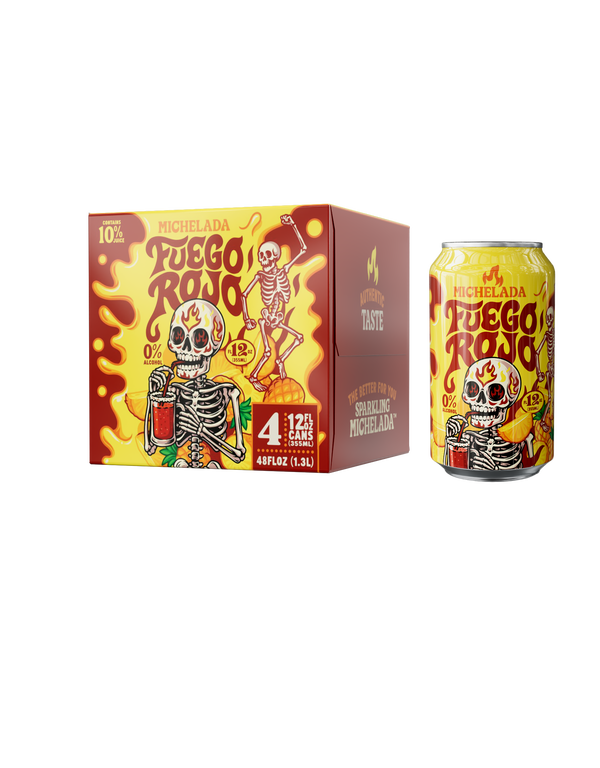
If Flaming Watermelon is about tension, Fiery Pineapple is about directness. Bright tropical pineapple brightness — the kind that hits the front of your tongue with something close to sunlight — cut immediately by the clean, unapologetic heat of chili. This is one of the most direct flavor experiences in the lineup. There’s no slow build. The heat meets the fruit from the first sip.
Pineapple’s naturally high acidity is actually one of its formulation assets — it plays beautifully against carbonation and complements the chili in a way that feels effortless even when the development work behind it was anything but. The formulation focus was preserving the tropical brightness without any of the artificial flatness that can come from processing, so that every can tastes like the real thing, not an approximation of it.
🌶️ Chamoy Tóxico — Chamoy-Forward, Tangy, Salty, Spicy
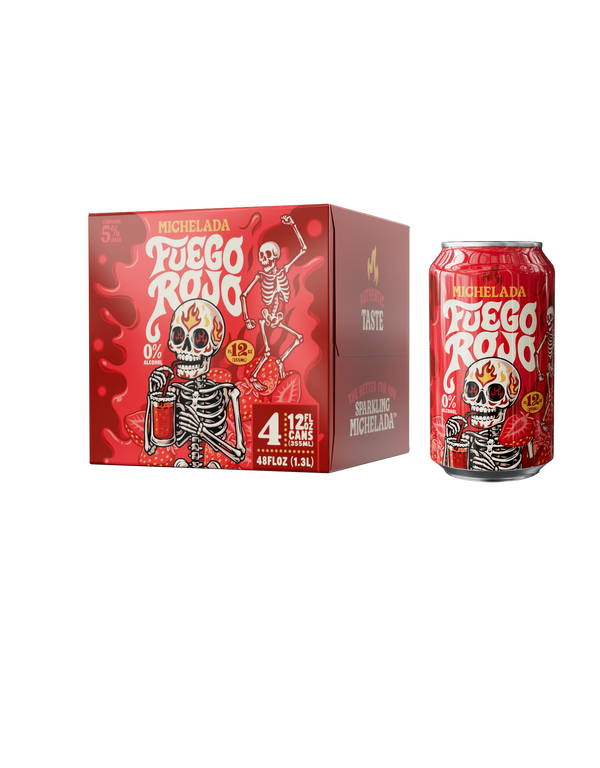
This is the boldest flavor in the lineup. Not bold in a gratuitous way — bold in the way that a flavor is bold when it commits completely to what it is and asks the drinker to meet it there. Chamoy Tóxico leads with chamoy and never looks back: deep, tangy, salty, and spicy, with the complex layering that defines authentic chamoy as a condiment rather than a flavoring.
For the chamoy devotee — and they are a passionate, discerning audience — this flavor either delivers or it doesn’t. There’s no middle ground. Formulating genuine chamoy complexity in a sparkling RTD, without tipping into astringency or losing the salty-tangy-sweet balance that makes chamoy what it is, was the most technically demanding flavor challenge in the entire project. The result is something that will be immediately recognizable to anyone who grew up eating chamoy-covered everything, and genuinely revelatory to anyone discovering it for the first time.
🍓 Fresa Brava — Strawberry, Citrus, Building Heat
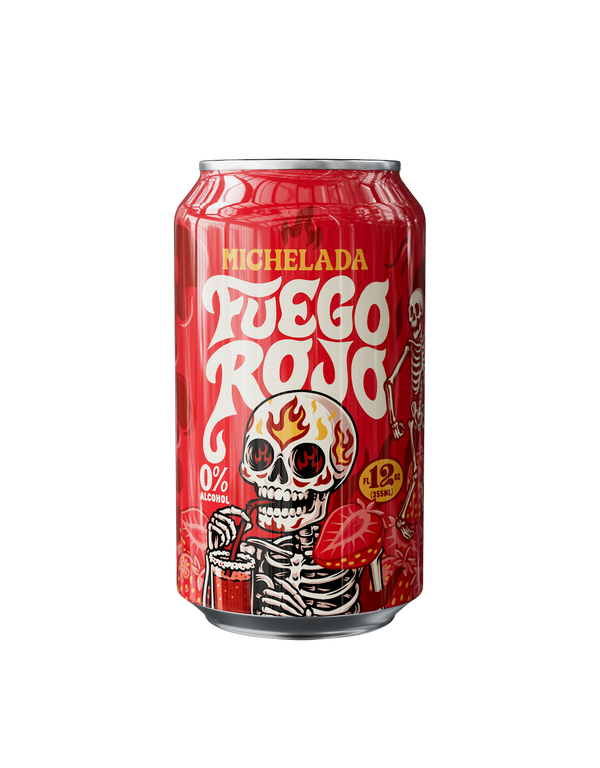
Every lineup needs an entry point. Fresa Brava is Fuego Rojo’s — the flavor most likely to welcome a first-time michelada drinker through the door without making them feel like they’ve wandered into someone else’s party. Strawberry sweetness, softened and brightened by citrus, with a heat that builds gradually and finishes cleanly. It is approachable without being timid. Accessible without being boring.
The formulation focus here was ensuring that the heat never overwhelms the fruit. This is a deceptively difficult balance — a chili finish that feels right in a chamoy-forward or tamarind-forward context can feel aggressive against the relative delicacy of strawberry. The calibration required both technical precision and sensory judgment, and the result is a flavor that serves as a genuine gateway into the broader Fuego Rojo world.
🫙 Tamarindo del Infierno — Tamarind, Deep Lingering Spice

The last flavor in the lineup is the one that makes no apologies. Tamarindo del Infierno takes tamarind — one of the most complex, earthy, sour base flavors in Mexican flavor culture — and pairs it with a deep, building spice that doesn’t quit. The spice doesn’t hit all at once; it evolves, building across the palate in waves that keep arriving long after you’ve swallowed. This is the flavor that rewards patience and adventurous palates. It is also, without question, the most challenging formulation in the lineup.
Tamarind’s natural sour depth is difficult to translate into a sparkling RTD without losing either the authenticity of the fruit or the brightness that carbonation demands. The spice architecture on Tamarindo del Infierno was engineered specifically to build rather than front-load — creating a lingering, evolving heat experience rather than a single sharp hit. For consumers who know tamarind, this flavor is a genuine expression of the ingredient’s potential. For consumers who don’t, it is a revelation.
Six flavors, each with its own formulation story. But getting them out of the development kitchen and into the hands of consumers — that’s the part of the collaboration that most people never see.
From Beverage Formulation to the Shelf — Commercialization in Practice
What “Deliver” Actually Produces
The Deliver phase is where a development project becomes a brand. Once the six Fuego Rojo formulations were validated — each one measured against its Gold Standard, each one performing consistently across sensory evaluation — the work shifted to the commercial reality of getting them from the development kitchen to the hands of consumers.
That transition is more complex than it sounds. Commercial manufacturing introduces variables that don’t exist at development scale. Carbonation behavior changes. Ingredient consistency across suppliers has to be verified. Every formulation has to perform at volume exactly as it performed in testing, or the Gold Standard becomes meaningless. Our team worked alongside Fuego Rojo through that transition, ensuring that the flavor integrity established in development survived the scale-up process intact.
Packaging and brand identity alignment was another critical component of the Deliver phase. Six flavors sharing a shelf need to communicate their family relationship instantly while giving each SKU enough visual distinctiveness to be found by the consumer who’s looking for it specifically. The brand work that supports shelf presence is inseparable from the product development work that makes the beverage worth picking up — and Menu Collective’s involvement extended across both.
A Platform Built to Scale
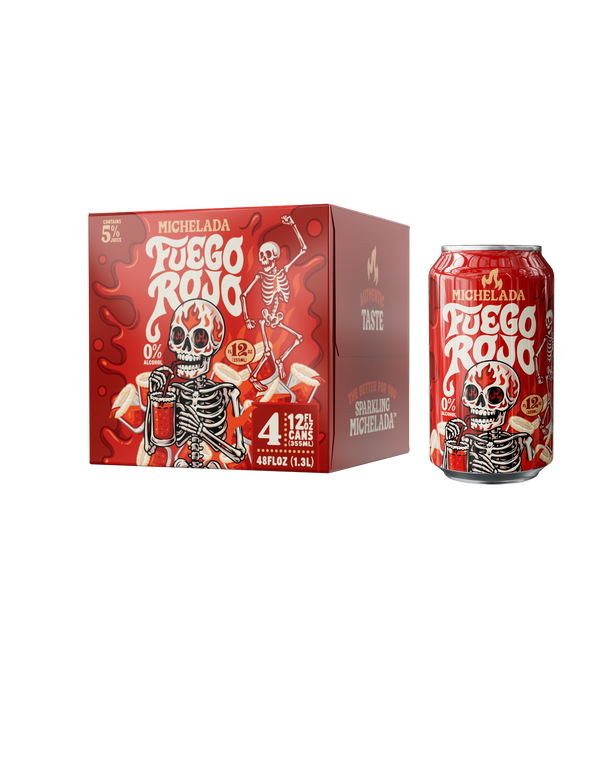
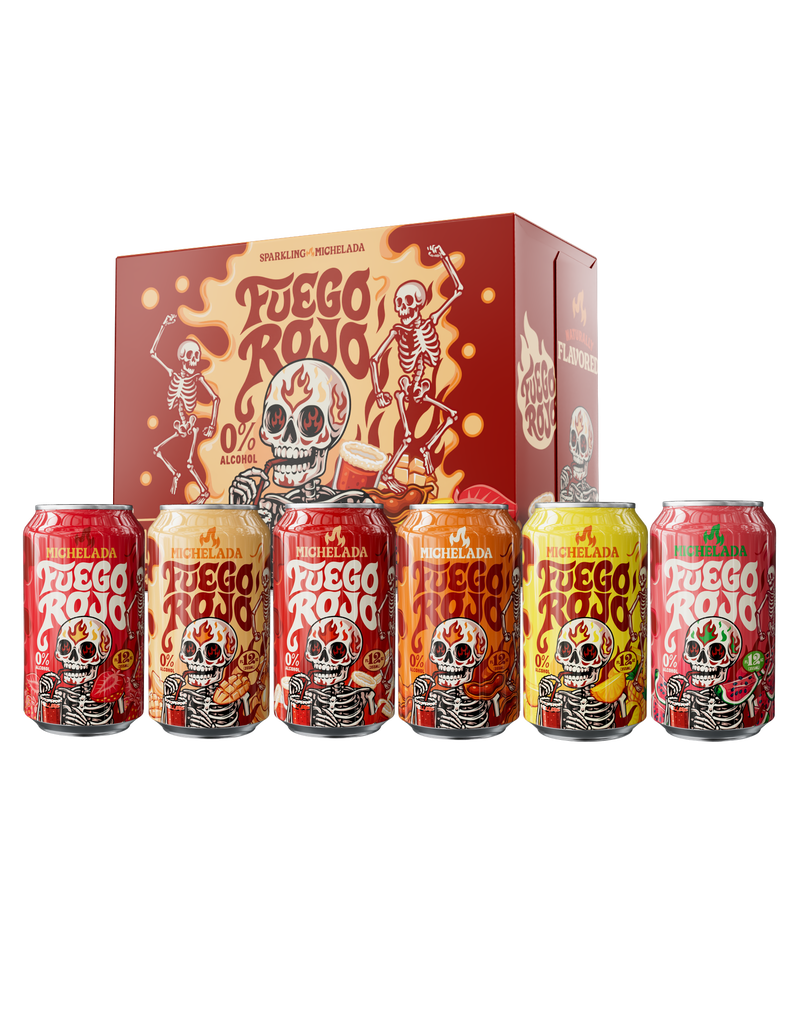
The commercial outcome of this collaboration is concrete and worth naming specifically. Fuego Rojo now offers its full six-flavor platform — Original, Mangonada, Flaming Watermelon, Fiery Pineapple, Chamoy Tóxico, Fresa Brava, and Tamarindo del Infierno — in 12oz cans, 4-packs, a Variety 6-Pack, and a Variety 12-Pack, all available at drinkfuego.com. The DTC platform makes the full lineup accessible nationwide, directly to consumers who found the brand online or through social media and want to explore the full flavor map.
The Fuego Rojo wholesale page signals the B2B distribution ambition that the platform was always built for. This is not a product that was designed to exist exclusively in the DTC channel. It was built to scale — to sit on retail shelves, to appear in wholesale accounts, to reach the communities where the michelada is already part of the culture and introduce itself to communities where it’s about to become one.
The full picture: six SKUs, two variety pack configurations, DTC-ready, wholesale-ready, and carrying the cultural authenticity of a backyard-born brand alongside the formulation integrity of a rigorous commercial development process. That’s what Deliver actually produces. For context on how this same full-cycle approach has worked in other complex RTD categories, our cannabis beverage formulation case study offers a useful parallel.
What made this collaboration work wasn’t just the formulation expertise. It was the way we work — and why that approach makes all the difference for brands like Fuego Rojo.
Why True Collaboration Builds Better Beverages

The Difference Between a Collaborator and a Consultant
There is a meaningful distinction between a collaborator and a consultant, and it shows up in the product. A consultant delivers recommendations and moves on. A collaborator builds alongside you — understanding the brand’s soul, not just its brief. They’re in the room for the decisions that matter. They’re invested in the outcome, not just the deliverable.
At Menu Collective, our foundational belief is captured in a single line from our mission:
“We are collaborators, not consultants. We work with you and alongside you to help bring your passion to life in a product.”
That distinction shaped every aspect of our work with Fuego Rojo. Freddy wasn’t looking for someone to hand him a formula and walk away. He was trusting us with something that mattered to him on a level that goes well beyond commercial ambition. The flavors in that lineup aren’t flavor line extensions — they are cultural expressions. The mangonada is not just a SKU. It’s a flavor memory that millions of people carry from childhood, from street corners, from Saturday afternoons that smelled like chamoy and tasted like summer. Getting it wrong wouldn’t just be a formulation failure. It would be a disservice to the culture the brand is built on.
The Gold Standard as a Partnership Tool
The Gold Standard process — our structured approach to defining the ideal version of a product before formulation begins — is not just a technical tool. It’s a partnership tool. It ensures that the founder’s vision, not the formulator’s convenience, is the benchmark every iteration is measured against. It keeps the collaboration anchored to what the product is supposed to be, even as the technical complexity of making it real introduces pressure to compromise.
For Fuego Rojo, the Gold Standard definition for each of the six flavors was a collaborative document — shaped by Freddy’s cultural knowledge and our formulation expertise in equal measure. When a development iteration fell short, we went back to the Gold Standard, not to a generic flavor profile or a market research summary. That discipline is what keeps the founder’s passion at the center of every decision.
Built on 45+ Years of Experience
Menu Collective was founded by Stuart McCarroll in 2016, after more than a decade in senior corporate food and beverage roles. The team brings a combined 45+ years of industry experience — from bartending and bar design to commercial formulation and retail strategy. That breadth matters. It means we can speak the language of a commercial manufacturer and the language of a founder with a backyard origin story with equal fluency.
The same collaborative approach that produced our work with Starbucks Reserve Roastery — one of the most craft-forward bar programs in the world — is available to a bold independent brand with something real to say. The scale changes. The principles don’t. If you’re building something and want to talk about what the process looks like, the conversation starts here.
Before we wrap, here are the questions we hear most often about non-alcoholic micheladas, beverage development, and what makes Fuego Rojo genuinely different — answered directly.
Frequently Asked Questions
What is a non-alcoholic michelada?
A non-alcoholic michelada is a sparkling beverage that replicates the bold, savory, citrusy, and spicy flavor profile of a traditional Mexican michelada — without the alcohol. It typically combines a sparkling base with tomato, lime, chili, and spices, delivering the full sensory ritual of the classic drink for those who choose not to consume alcohol or simply want a flavorful any-time option. Fuego Rojo is a ready-to-drink non-alcoholic sparkling michelada made with tomato, citrus, chile, and spice, available in six distinct flavors.
What makes Fuego Rojo different from other michelada mixes?
Fuego Rojo is a ready-to-drink sparkling non-alcoholic michelada — not a michelada mix or concentrate that requires mixing with beer. It’s designed to be enjoyed straight or used as a base with tequila or cerveza, giving consumers genuine flexibility. Each of its six flavors is rooted in authentic Mexican-American flavor culture — from the Mangonada (mango, chamoy, lime, chili) to the Tamarindo del Infierno (tamarind, deep evolving spice) — making it a full flavor platform with real cultural depth, not just a single SKU built around novelty.
How are michelada flavors developed by a beverage formulation company?
Developing michelada flavors for a commercial RTD product involves first defining a Gold Standard — the ideal expression of the flavor at its absolute best — and then formulating a scalable, shelf-stable recipe that delivers consistent carbonation, flavor balance, and quality at commercial volume. At Menu Collective, each Fuego Rojo flavor required sensory testing, iterative refinement, and careful calibration of heat, acid, sweetness, and carbonation to ensure that the authentic flavor character established in development survived the scale-up process intact.
What does a beverage development company do?
A beverage development company partners with brands and founders to take a drink concept from initial idea through formulation, regulatory compliance, manufacturing readiness, and market launch. Menu Collective’s Design, Develop, Deliver process covers every stage — from identifying the Gold Standard product to developing scalable formulations and building the distribution and marketing strategy that brings a beverage from concept to commercialization. The goal is never just a formula; it’s a market-ready product with commercial integrity.
What is a chamoy drink?
Chamoy is a traditional Mexican condiment made from dried fruit — typically apricot, plum, or mango — combined with chili peppers, lime juice, and spices, producing a complex sweet, tangy, salty, and spicy flavor profile that is unlike anything else in the condiment world. A chamoy drink incorporates chamoy as a primary flavor element, delivering that distinctive layered taste in beverage form. This in-depth guide to chamoy is a useful resource for anyone unfamiliar with the condiment’s complexity. Fuego Rojo’s Chamoy Tóxico and Mangonada flavors are both chamoy-forward expressions in the six-flavor lineup.
What is a mangonada drink?
A mangonada — also called a chamoyada or chamango — is a Mexican drink traditionally made with mango, chamoy sauce, lime juice, and chili seasoning, and is one of the most iconic flavor combinations in Mexican street food culture. Learn more about the mangonada’s cultural significance here. Fuego Rojo’s Mangonada flavor translates this classic street-food experience into a ready-to-drink non-alcoholic sparkling michelada, capturing the sweet-tart-heat balance of the original in a commercially scalable, shelf-stable format.
The answers above capture the “what.” The story above captures the “why.” And the product in your hand — or in your cooler — captures the “how.”
From the Backyard to the Shelf: A Story Worth Tasting
Fuego Rojo started in a Chicago backyard. It started in the smoke and the laughter and the sound of a grill going and someone, always someone, asking for a michelada. That story didn’t get lost in the development process. It didn’t get ironed out by formulation requirements or commercial scale-up pressures or retail packaging decisions. It’s still in the can. It’s still in the flavor. It still tastes like that backyard, because every decision we made together — from the Gold Standard definition to the Deliver phase strategy — was made to honor it.
The six-flavor platform — Mangonada, Flaming Watermelon, Fiery Pineapple, Chamoy Tóxico, Fresa Brava, and Tamarindo del Infierno — is the result of a genuine collaboration between a founder who knew exactly what he was building and a beverage development company that was fully committed to helping him build it right. Not approximately right. Not commercially expedient. Right.
Great beverages are built on three things: cultural authenticity, formulation integrity, and the kind of partnership that keeps the founder’s passion at the center of every decision. When those three things come together, the product that reaches the consumer is something more than a formula in a can. It’s a story that can be tasted.
That’s what we do at Menu Collective. And that’s exactly what we built with Fuego Rojo.
Building Something Bold? Let’s Talk.
Whether you’re a founder with a flavor idea and a cultural story to tell, or an established brand ready to expand your product platform, Menu Collective brings the formulation expertise, industry knowledge, and genuine collaborative spirit to take your beverage from concept to commercialization.
Explore more of our beverage development work: View All Case Studies →