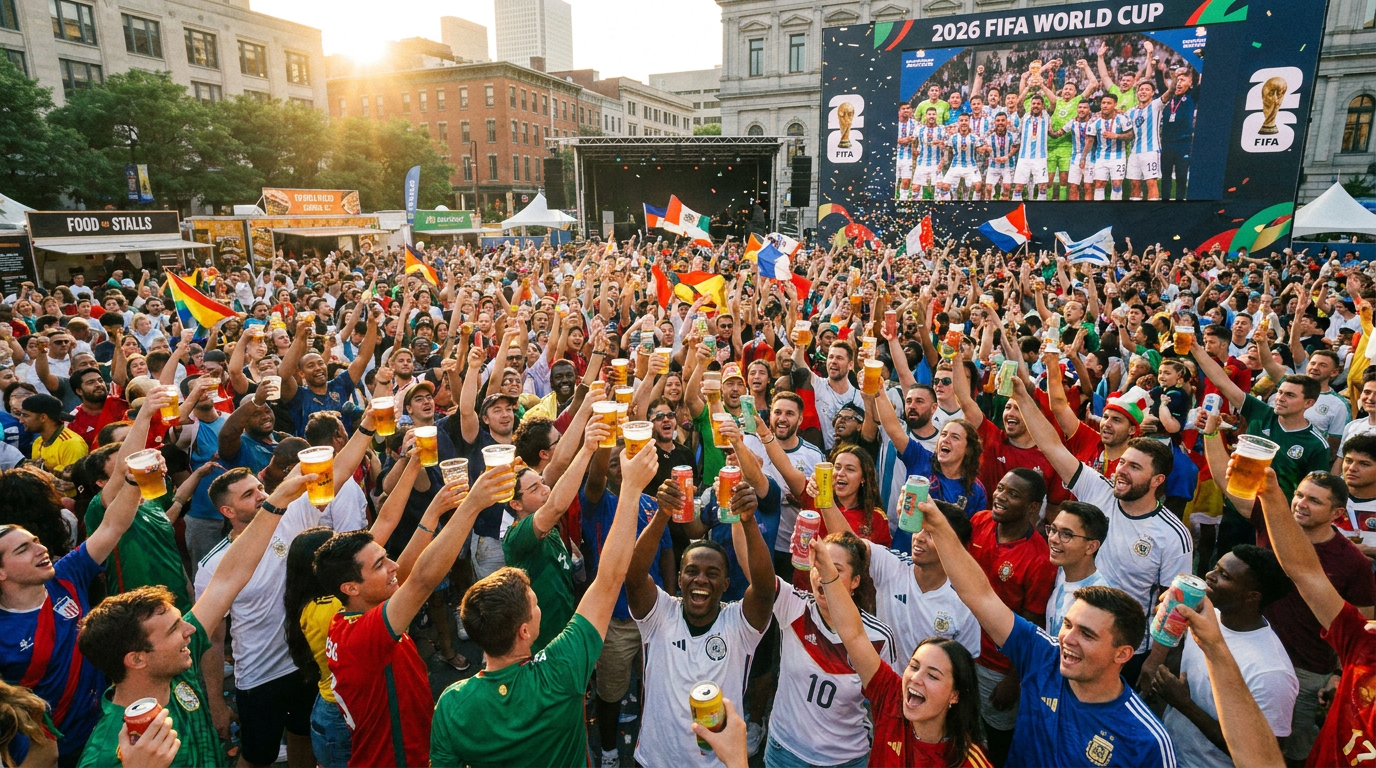
It started with a beer every 12 seconds.
That is not a metaphor. That is what happened at the Sam Adams Boston Taproom on the first day Scotland fans arrived in the city. Jim Koch, founder and CEO of Boston Beer Co., was there to witness it. His staff needed two emergency deliveries before the day was done. “At one point, we were pouring them a Sam Adams Boston Lager every 12 seconds,” he told PBS NewsHour. “What a wonderful group of people.”
That single scene — frantic pours, emergency restocking, a taproom electrified by fans thousands of miles from home — captures something larger than one good day of sales. It captures what the 2026 FIFA World Cup did to the beverage industry across the United States and around the world: it created an occasion so powerful, so sustained, and so culturally charged that it rearranged the entire demand landscape for five straight weeks. For beverage brand owners and product developers, this was not a moment to watch from a distance. It was a live, data-backed demonstration of where the real commercial opportunity in beverages lies right now — and where it is heading next.
This is that breakdown. The numbers, the categories, the flavor story unlocked by Spain’s championship, the sober-curious fan who showed up in force, and the five things you should be doing about all of it right now.
A Beer Every 12 Seconds — The 2026 World Cup Beverage Boom by the Numbers
The scale of what happened to beverage consumption during the 2026 FIFA World Cup is genuinely difficult to overstate. To appreciate it fully, you have to hold two facts in your head at the same time: the beer industry has been in structural decline for the better part of a decade, and yet this tournament triggered the kind of demand surge that most brand owners only dream about.
Begin at the ground level. When Scotland’s fans descended on Boston for their opening group stage matches, the Sam Adams Boston Taproom did not just have a strong day. It ran dry — twice. According to PBS NewsHour’s full report on World Cup beer sales, Jim Koch confirmed that his team required two emergency deliveries and was pouring Sam Adams Boston Lager at a rate that would make any production manager faint. That’s one beer every 12 seconds, sustained, during peak service. Koch’s additional observation was just as striking as the volume number: “I didn’t see a single soul on their phone. They had a beer in their hand and they were talking to each other. They were doing what beer is meant to do, which is helping people enjoy each other’s company.” For an industry whose structural headwinds have included everything from health moderation trends to the rise of solo streaming entertainment, that image of communal, phone-free celebration was almost as valuable as the revenue.
Scale that scene up across every host city and the numbers become staggering. FIFA organizers reported that fans consumed a total of 290,000 stadium beers across the six matches held in Philadelphia alone. That is a single city, six games. According to the Beer Institute, beer sales at bars, restaurants, stadiums, and other on-premise venues rose 14% in U.S. host cities during the first four weeks of the tournament compared to the same period last year. The ripple effect extended well beyond the sixteen host cities — nationally, beer sales were up 4% during the same window, demonstrating that the tournament was lifting the entire category, not just markets with stadiums.
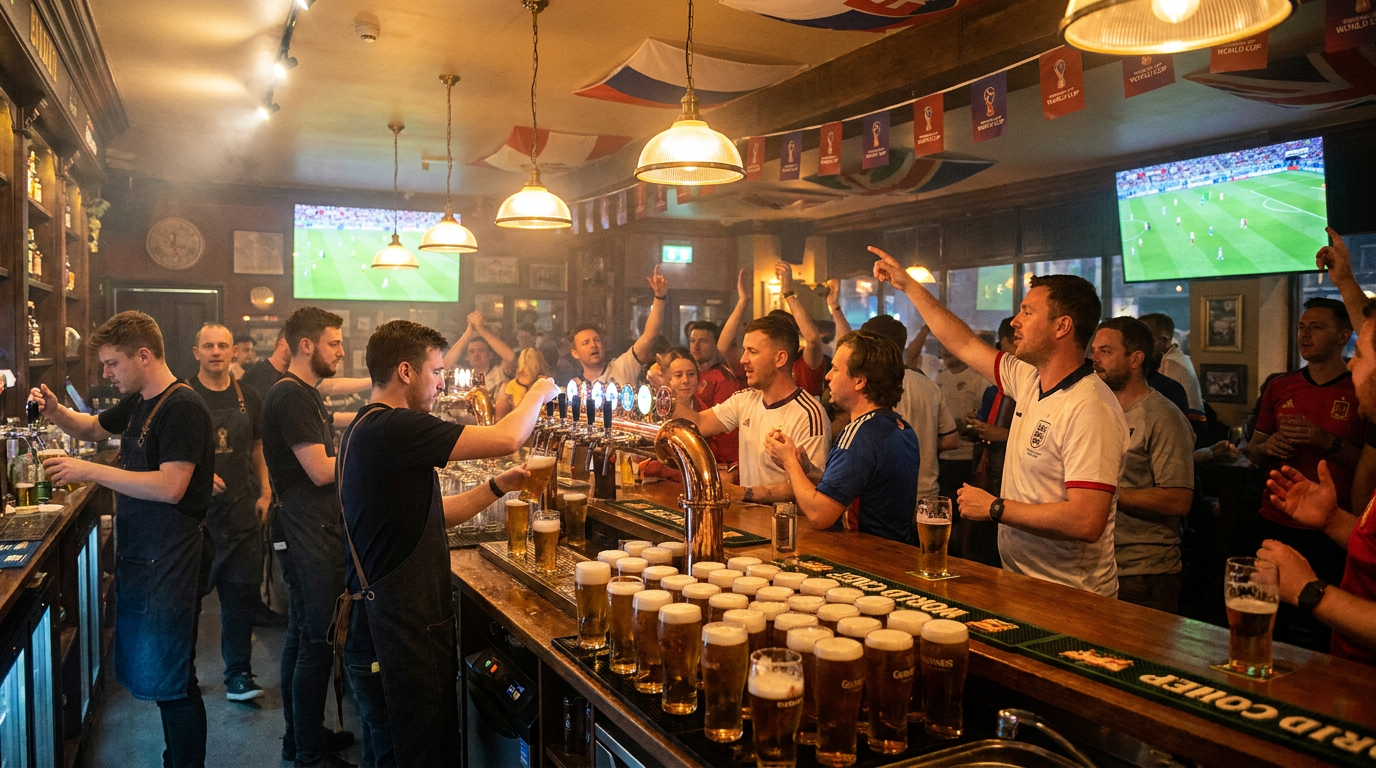
Zoom out further and the global picture is equally compelling. A study by investment bank Jefferies, cited by inside.beer, estimated that the tournament would generate an additional 5.68 million hectoliters of beer consumption worldwide — equivalent to roughly 0.3% of total annual global beer sales. To understand why that number matters, you have to remember the backdrop against which it landed. U.S. beer consumption has fallen steadily for a decade, according to the Brewers Association. The Brewers of Europe reports a parallel decline across the EU. Canada has seen the same trend. This is a category fighting real structural headwinds — and the World Cup temporarily, decisively reversed them.
The pricing dimension of this story is worth noting too. Concession prices across host cities varied dramatically, from a reported $5 per beer in Atlanta to significantly higher prices in San Francisco and other markets. Consumers paid across that entire spectrum without blinking. That tells you something important about willingness to pay during high-emotion, occasion-driven consumption — a principle that extends far beyond stadium concessions and into retail, direct-to-consumer, and hospitality strategy for every beverage brand.
What does all of this mean collectively? It means the World Cup was a real-world stress test for the entire beverage industry — and the industry held up beautifully. The data did not come from a single brand doing exceptional marketing. It came from a category-wide, occasion-driven demand surge that proved something fundamental: when the moment is right, Americans will consume beverages at extraordinary rates, across every format and price point, in ways that no amount of conventional marketing could manufacture. The challenge and the opportunity for brand owners is this — how do you build products that are ready when the next moment like this arrives?
That question becomes even more urgent when you look at the category that didn’t just perform well during the World Cup. It ran away with the trophy.
RTDs Take the Trophy — The 25.4% Cocktail Surge Rewriting the Market
If beer was the expected winner of the World Cup beverage story, the ready-to-drink cocktail category was the breakout performer that nobody should have been surprised by — but many were.
According to Circana data reported by Food Dive, premixed cocktail case sales jumped 25.4% during the week ended June 28, 2026 — the first full week of the tournament. That is not a rounding error. That is a category-wide, one-week surge that outpaced every other beverage type tracked in the same period. Non-alcoholic beer case sales were also up 10.9% and energy drinks up 10% during the same week, both strong numbers in their own right — but the RTD cocktail surge more than doubled either of them. In a category that has been growing steadily for years, this was an acceleration that confirmed something important: the RTD format has become the default social occasion beverage for millions of American consumers.
Understanding why RTDs surged so dramatically during the World Cup requires understanding how most people actually watched the tournament. Circana’s consumer research found that 66% of consumers planned to watch matches at home, either alone or with members of their household. Another 24% planned to watch with friends and family outside their household. Only 7% planned to watch at a restaurant or bar, and just 3% intended to attend matches in person. Add those numbers up and you get an overwhelming picture: this was predominantly an at-home viewing event, staged across living rooms and backyards and rooftop decks all over the country, where convenience, pack format, and occasion-readiness matter enormously. RTDs — pre-measured, portable, no-prep, visually appealing, chill-from-the-fridge-and-serve — were the perfect product for exactly that setting.
“Consumers are looking for easy ways to build the at-home viewing experience, whether that means ready-to-serve appetizers, snack bundles, beverages or hosting essentials. Retailers and brands that make those occasions easier to shop will be best positioned to capture demand.”
— Sally Lyons Wyatt, Global EVP & Chief Advisor, Circana
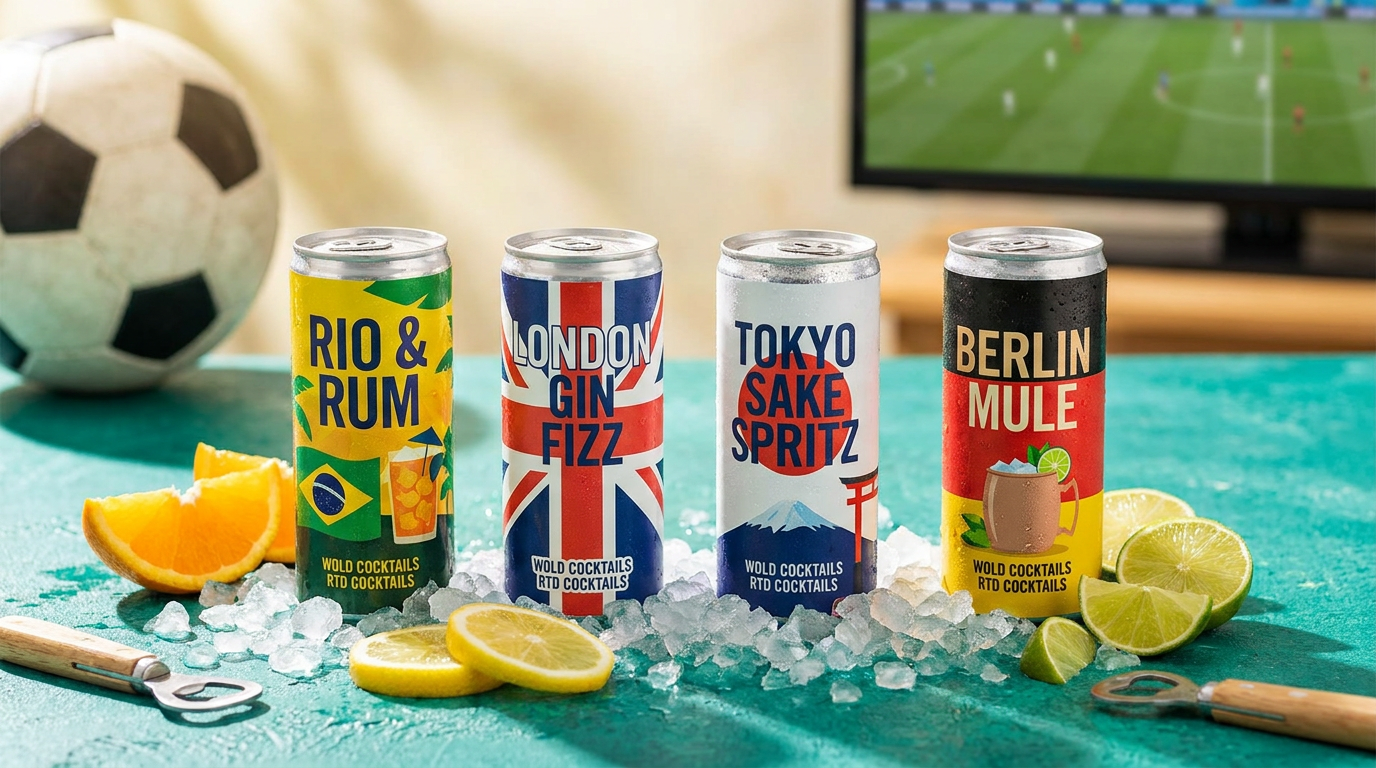
There is another dimension to the RTD surge that gets overlooked in the pure performance data: the tournament did not create one big purchase occasion. It created dozens of them. Unlike the Super Bowl — a single Sunday, one game, one viewing event — the World Cup ran for five full weeks, with multiple matches per day at various stages of the competition. As Circana noted, that extended schedule gave brands and retailers “multiple opportunities to engage consumers as they plan, host and replenish throughout the tournament.” For RTDs specifically, this translated into repeat purchase cycle after repeat purchase cycle. Consumers weren’t just buying once for the opener. They were restocking weekly, trying new brands, exploring new flavors, building the at-home experience again and again as the rounds progressed.
The long-term structural story behind the RTD category makes this even more significant for brand owners. The RTD cocktails market is projected to reach $10.72 billion by 2033, growing at a 14.1% CAGR from 2026, according to Grand View Research. That trajectory was already established before the World Cup. Spirit-based RTDs had already hit a landmark — the category reached nearly 80 million cases in the U.S. in 2025, adding more than 10 million cases in a single year, per Shanken News Daily. The World Cup didn’t create the RTD opportunity. It amplified and accelerated a category that was already on an exceptional growth trajectory — and it demonstrated, publicly and at scale, that consumers across every demographic are deeply comfortable with the format as their primary social occasion beverage.
For any brand owner with a beverage concept that could live in a can or bottle, the conclusion from this data is clear. The consumer is already there. The format is proven. The occasion infrastructure — at-home entertaining, communal viewing, repeat weekly purchase cycles — exists and is growing. The question is whether your product is positioned to meet them. If you want to see what a formulated RTD can look like in the real world, Menu Collective’s RTD cold brew shandy case study is a direct example of exactly this kind of beverage development work.
The RTD category handed beverage brands a clear commercial roadmap. But the World Cup also wrote a flavor brief — one that smart brands are already acting on.
Spain Wins, and a Flavor Wave Begins — Mediterranean Profiles and the Taste of What’s Next
On July 19, 2026, Spain defeated Argentina 1-0 in extra time in the FIFA World Cup Final, claiming the country’s second World Cup title. For football fans, it was the culmination of a thrilling tournament. For the beverage industry, it was something else entirely: the opening of a flavor chapter.
This is how cultural moments work in the food and beverage world. When a nation wins the most-watched sporting event on earth — when its flag fills stadiums across North America, when its colors flood social media, when its fans sing in every host city and its players become global icons overnight — its food and beverage culture gets amplified in proportion. Millions of American consumers who spent five weeks hearing Spanish commentary, watching Spanish fans celebrate, and absorbing Spanish visual culture through broadcasts and social feeds are now primed, in a way they weren’t six months ago, to explore flavors and beverages associated with that experience. That priming is real, measurable, and commercially significant.
The most direct commercial expression of this moment is the sangria-inspired RTD. Sangria is not just a culturally resonant drink — it is a format that was practically designed for the can. Wine-based, citrus-forward, low-ABV, visually vibrant, easy to serve cold, naturally sessionable, and inherently social. It fits the at-home viewing occasion perfectly. It fits the consumer preference for lower-alcohol, more refreshing choices in warm weather. It fits the RTD trend that the World Cup just validated at scale. Lolea Sangría, one of the world’s most recognized sangria brands, is now sold in over 60 countries globally — proof that Mediterranean-style wine RTDs have already demonstrated their international commercial viability well beyond novelty status.
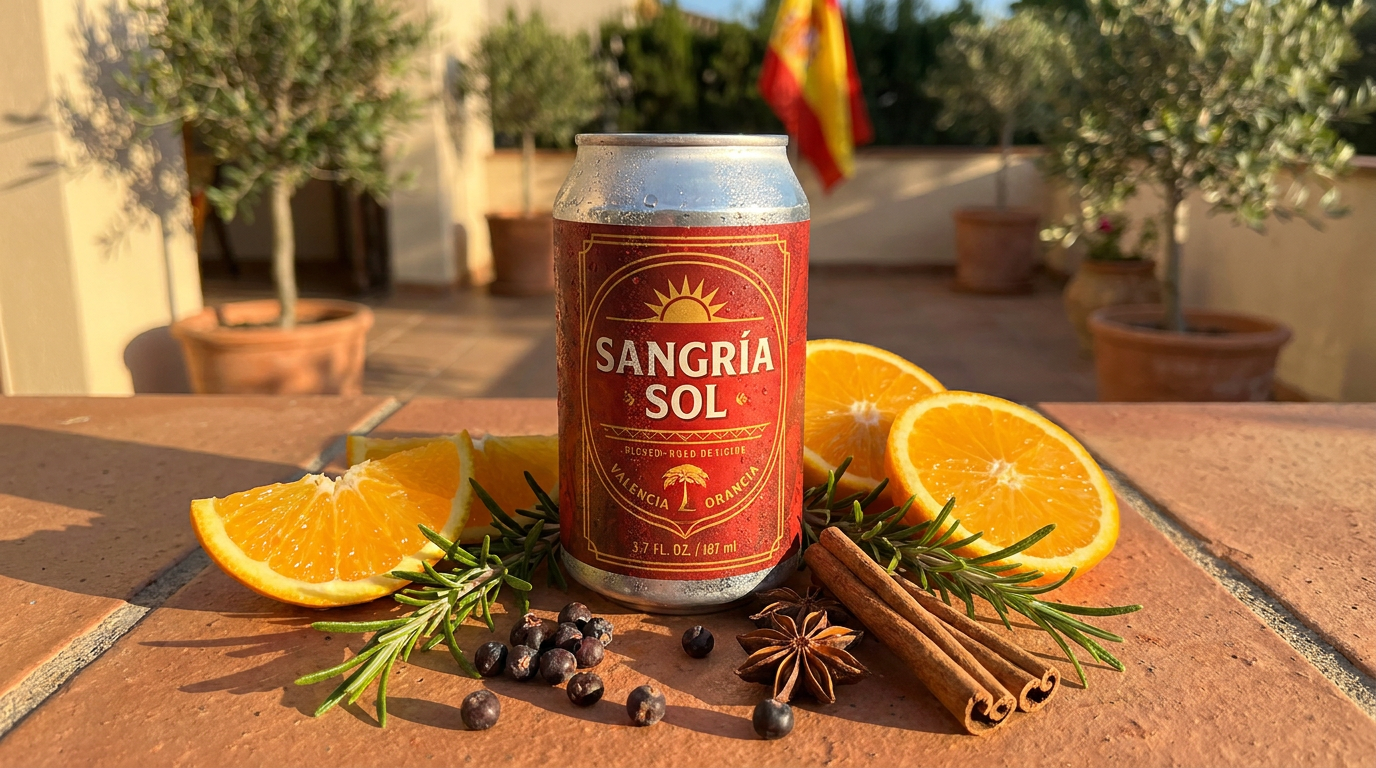
The broader Spanish flavor profile maps to beverage formulation with remarkable elegance. Think citrus-forward expressions — Valencia oranges, blood orange, preserved lemon, bright lime. Think botanical complexity — rosemary, lavender, saffron, the kind of herbal depth that evokes warm Mediterranean evenings. Think light effervescence and lower ABV — exactly where consumer taste preferences are heading across the board. The tinto de verano, Spain’s most-consumed domestic summer drink — red wine, lemon soda, a touch of brandy — represents a more approachable, everyday version of this flavor world that translates naturally and economically into an RTD can.
There is a broader flavor territory here that extends beyond sangria specifically. The aperitivo category — Aperol Spritz territory, Campari-adjacent profiles, low-ABV and effervescent — is already growing rapidly and shares significant DNA with Spanish flavor traditions. The botanical complexity of Spanish RTD profiles overlaps with the non-alcoholic spirits trend, where consumers are seeking sophisticated, layered flavor experiences without the alcohol content. Spanish cava-influenced sparkling profiles offer another development direction that hasn’t yet been fully explored in the U.S. RTD market. These are not niche opportunities. They are adjacent flavor territories waiting for the brand that connects them to this cultural moment before the window narrows.
The timing insight here is critical. Flavor trends have a typical development-to-shelf timeline of 12 to 18 months between conception and retail launch. The brands that begin developing Mediterranean-inspired, sangria-forward, or Spanish botanical RTDs today will be positioned to hit shelves precisely when the cultural resonance of Spain’s victory is at its peak consumer influence — not after it has faded into sports history. For context and direction on how beverage trends in 2026 are creating formulation opportunities right now, Menu Collective’s trend analysis is a useful starting point. And for those curious about what building a trend-responsive beverage program actually looks like in practice, the on-trend menu development case study shows the process in action.
Spain’s victory handed the beverage industry a flavor brief. The brands that read it clearly — and move quickly — will be the ones writing the next chapter of the RTD category’s growth story. But the flavor opportunity was only part of what the World Cup revealed. The tournament also quietly told a second, equally important story — one that gets lost in the headlines about beer and booze.
The Other Winners — Non-Alcoholic Beer, Functional Drinks, and the Sober-Curious Fan
Here is the statistic that should make every beverage brand owner stop and reconsider their portfolio: during the most beer-saturated sporting event in modern American history, non-alcoholic beer case sales rose 10.9% in a single week.
That number, from Circana’s World Cup data, deserves to be read slowly. We are talking about a category that represents approximately 1% of the total U.S. beer market, growing by nearly 11% in one week — not during a wellness retreat or a Dry January campaign, but during a global football tournament, surrounded by stadium concessions, watch party coolers, and marketing spend from AB InBev, Molson Coors, and Heineken. Energy drink unit sales were up 10% during the same period, driven by the sustained social and physical energy of all-day, multi-match viewing occasions.
These numbers tell a story that goes beyond consumer preference for any single product. They tell the story of a fundamentally shifting relationship between Americans and alcohol itself. According to Gallup polling cited by PBS NewsHour, a majority of Americans — 53% — now believe that drinking one or two alcoholic beverages per day is bad for their health. That is the first time in Gallup’s polling history that this view has crossed the 50% threshold. It is not a fringe position anymore. It is the mainstream. Meanwhile, U.S. consumption of all types of alcohol fell 5% last year, according to IWSR — a decline that spans beer, wine, and spirits, driven in part by affordability concerns and in part by exactly this health-awareness shift.
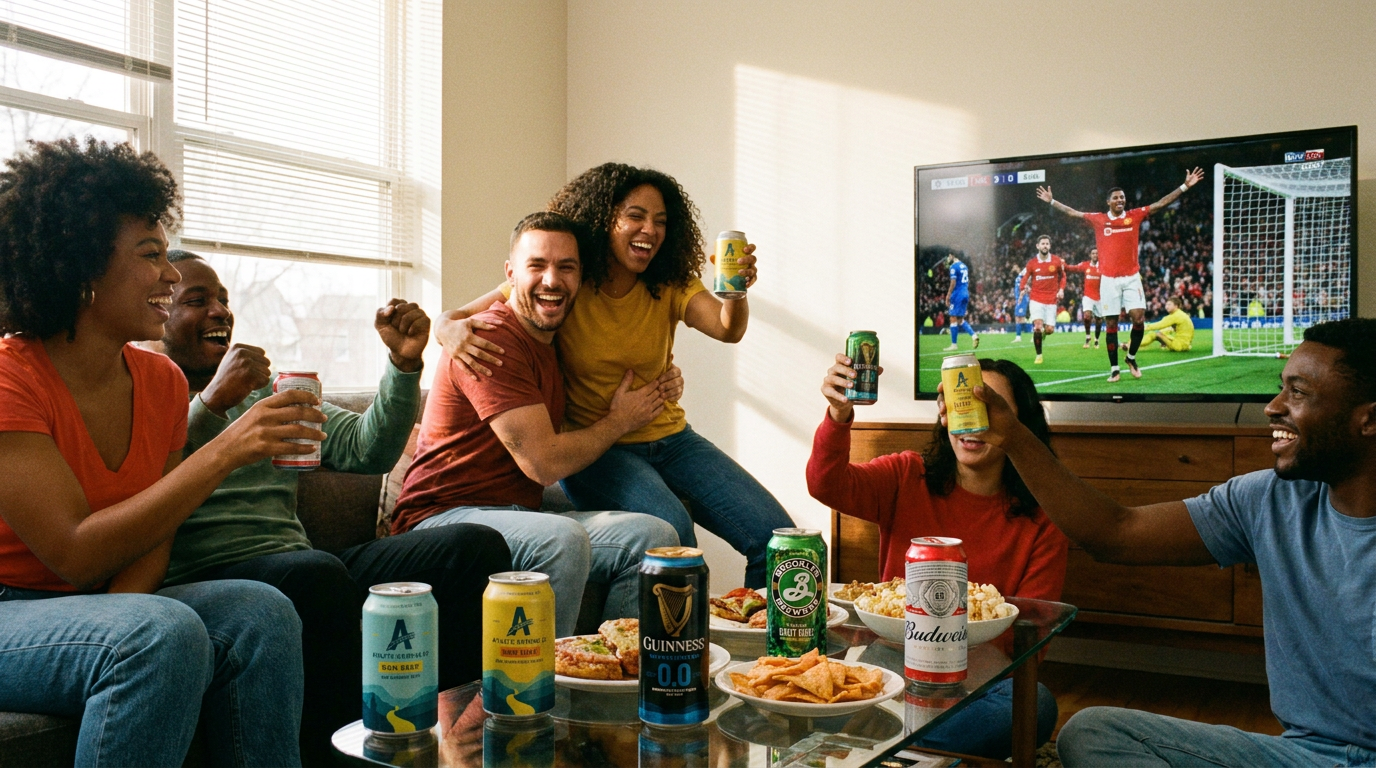
The World Cup gave us a perfect real-world illustration of how this consumer behavior actually plays out in practice. Maybell Romero, a law professor at Tulane University who spoke with PBS NewsHour about her World Cup viewing experience, put it plainly: she usually prefers cocktails, but during the World Cup, she deliberately chose beer instead — because of its lower alcohol content. An all-day viewing schedule means managing consumption over hours, not just a single evening. “If I drink cocktail after cocktail, I will not be functional after a few hours,” she said. She enjoyed the tournament, enjoyed her beer, and noted she expects to return to cocktails once the matches end. This is the sober-curious, moderation-aware, occasion-smart consumer in action. She is not refusing alcohol. She is making strategic, health-informed choices about format and ABV based on the specific demands of the occasion.
This profile — health-aware, younger, more multicultural, more urban, higher income — is exactly the World Cup audience demographic, as Circana’s research confirmed. These are consumers who over-index on better-for-you, reduced-alcohol, and functional beverages across every category. They are also, according to the same data, the most engaged fans of the tournament and therefore the most active purchasers across its entire five-week run.
The brand opportunity here is significant and still underleveraged. The World Cup demonstrated that non-alcoholic and functional beverages can hold their own in the most high-energy, socially charged sporting occasions in the world. They are not compromise products. They are not the consolation option. They are a strategically positioned alternative that millions of consumers actively prefer in exactly the kinds of extended social occasions that major sporting events create. If your brand does not yet have a non-alcoholic or reduced-ABV expression of its core product, you are behind the consumer — not ahead of them.
Menu Collective’s work building the Fuego Rojo non-alcoholic michelada platform is a direct example of this opportunity translated into product reality. Six flavors, a clear occasion identity, and a beverage formulation built for exactly the kind of market shift the World Cup just demonstrated in the most public way possible. The question for brand owners isn’t whether this opportunity is real. It clearly is. The question is what you are going to build to capture it.
With the full commercial picture of the World Cup now in view — the beer boom, the RTD surge, the Spain-driven flavor wave, and the sober-curious consumer’s quiet but powerful statement — the most useful thing we can do is get specific. What does all of this mean for your brand, and what should you actually be doing about it right now?
What This Means for Your Brand — Five Things Beverage Owners Should Do Right Now
The data from the 2026 FIFA World Cup is not just interesting reading. It is a set of clear signals from the market, delivered at scale, with real consumer purchase behavior behind every number. Here are five specific things that smart beverage brand owners should be doing in response to what just happened.
1. Audit your RTD readiness — seriously and urgently.
The 25.4% RTD cocktail surge was not the result of one brand’s exceptional campaign. It was a category-wide lift, driven by consumer behavior that has been building for years and was finally accelerated by a perfect five-week occasion storm. If you have a beverage concept that could plausibly live in a can or bottle, this data is your green light. Consumers are comfortable with RTDs as their primary social occasion format. The format has cleared every real-world market test you could ask for. The question is whether your product exists in that format yet — and if not, what’s stopping you from starting the formulation process right now. Circana’s occasion-based purchasing data makes clear that the window between cultural moment and category peak is finite.
2. Begin developing your Mediterranean and Spanish-inspired SKU today.
Flavor trends are time-sensitive in both directions — they open quickly and close just as fast. The cultural resonance of Spain’s World Cup victory is strongest right now, in the weeks immediately following the tournament. Sangria-inspired, citrus-forward, botanically complex RTDs are the clearest commercial expression of this flavor moment. Tinto de verano formats, aperitivo-adjacent profiles, blood orange and rosemary combinations — these are the formulation starting points for a product that could hit shelves in 12 to 18 months, precisely when consumer priming from the tournament is translating into active flavor exploration. Brands that begin development now will be positioned to launch when the trend is at full commercial resonance. Brands that wait will be chasing a wave that’s already broken.
3. Stop thinking in categories and start thinking in occasions.
The Circana data from the World Cup made something very clear: the brands that captured the most demand were not necessarily the ones with the best products. They were the ones whose products were most aligned with the specific occasions that the tournament created. At-home entertaining. Social viewing gatherings. Repeat weekly restocking. Communal celebration. The World Cup didn’t create one occasion — it created dozens of them, repeated over five weeks, each one representing a distinct purchase trigger. Your next product development conversation should not begin with “what category does this live in?” It should begin with “what occasion does this live in? Who is the consumer in that moment? What format, what ABV, what flavor, what pack size serves them best?” That reframe — from category thinking to occasion thinking — is worth more than any individual product tweak.
4. Take the non-alcoholic opportunity as seriously as you take your core product.
A nearly 11% surge in non-alcoholic beer during a tournament that most brands associate with maximum alcohol consumption is not a coincidence. It is a signal. The moderation-aware consumer is not a niche — they are a growing majority, backed by Gallup, IWSR, and every market research firm tracking the beverage space right now. If you do not have a non-alcoholic or meaningfully reduced-ABV expression of your brand, you are leaving a significant and fast-growing segment of your potential consumer base underserved. This does not need to be a dramatic pivot. It can be a single SKU, thoughtfully developed, that gives the sober-curious fan in your consumer base a product that feels like it was built for them — not built as an afterthought.
5. Start building for the next major occasion on the calendar.
The World Cup is over. The occasion economy is not. Craig Purser, president and CEO of the National Beer Wholesalers Association, told PBS NewsHour that he believes the World Cup will remind Americans how much they love gathering around shared experiences — and he sees the 2028 Summer Olympics in Los Angeles as the next major demand-creation event on that scale. College football is expanding its broadcast footprint, bringing more nights and more occasions to the sports calendar. Soccer itself is growing rapidly in the United States as a domestic sport, with MLS audiences expanding year-over-year. The brands that will win those moments are not the ones that start thinking about product development when the event is six months away. They are the ones building pipelines now.
Knowing what to do is step one. Having the right team and process to build it is step two — and that is exactly where the work gets real.
From World Cup Insight to Product on Shelf — The Design, Develop, Deliver Pathway
Understanding the market opportunity is necessary. Translating it into a commercially viable, scalable, shelf-ready beverage product is the hard part — and it is where most beverage concepts get stuck. At Menu Collective, we have built our entire practice around the gap between a great idea and a product that actually reaches consumers. The Design, Develop, Deliver framework is how we close that gap, every time.
Design is where every project begins. This is the stage where we select the right beverage experts for your specific product and define your Gold Standard — the ideal expression of your concept at its absolute best. In the context of a World Cup-inspired RTD or a Mediterranean-flavored sangria format, this means building the flavor at its fullest, most resonant expression before a single scale decision is made. What does this product taste like when it is perfect? What occasion does it anchor? Who is the consumer reaching for it and what do they feel when they open it? These are not soft questions. They are the foundation of every commercial decision that follows.
Develop is where the Gold Standard becomes real. This is the technical core of the process — turning a great formula into a scalable product with regulatory compliance, shelf stability, production economics, and quality manufacturing built in from day one. Too many beverage startups and early-stage brands treat formulation and scale as separate conversations. They are not. A formula that works beautifully in a test kitchen but falls apart at production volume is not a formula — it is a prototype with a problem. Our development process treats scalability as a requirement from the very first formulation iteration, which means fewer surprises, faster timelines, and products that actually perform in the real world of distribution and retail. This is where 45+ years of experience — from Starbucks and Goose Island to bold independent innovators — makes the difference that marketing dollars cannot buy.
Deliver is where your product meets the market. Menu Collective helps build the sales, marketing, and distribution strategy that gets your product off the bench and into the hands of the right consumers through the right channels. For a World Cup-inspired RTD, that means understanding that your primary consumer — younger, more multicultural, more urban, higher-income, according to Circana — shops differently, discovers brands differently, and responds to different retail environments and messaging than the average U.S. beverage buyer. Channel strategy, pack format, occasion-based marketing, retail placement — all of these flow from knowing who you are building for and what moment in their life your product is designed to serve.
What makes this process work — and what distinguishes it from simply hiring a contract manufacturer or following a trend report — is the collaborative nature of it. We build alongside you at every stage. We bring the expertise and the network of specialists. You bring the vision, the brand direction, and the ambition. The result is a product that is genuinely yours, built to the highest standard the market demands, and positioned to reach consumers when the opportunity is at its peak.
The World Cup has already provided case study material for exactly the kind of products this process is built for. Menu Collective’s RTD cold brew shandy formulation work demonstrates what a well-executed RTD development process looks like from concept to can. The Fuego Rojo non-alcoholic michelada platform shows what is possible when you take the non-alcoholic opportunity seriously and build it with the same rigor you’d apply to any premium alcoholic product. These are not theoretical case studies — they are products that exist in the market, built through this exact process, for exactly the kind of occasions the World Cup just validated in the most public way imaginable. You can explore the full breadth of what we do across our case studies library and learn more about who we are and the depth of experience behind every project.
The window between a cultural moment and a market opportunity is always shorter than it looks. Twelve to eighteen months between formulation start and retail shelf is not a luxury timeline — for many products, it is the minimum. Brands that begin the Design, Develop, Deliver process today will be positioned to capture the Spain-inspired flavor wave, the RTD occasion demand, and the sober-curious consumer’s growing appetite for sophisticated non-alcoholic alternatives when consumer priming from this tournament is at its commercial peak. Brands that wait will find themselves explaining to retail buyers why they are launching a sangria RTD eighteen months after everyone stopped talking about the World Cup.
The Opportunity Is Already Proven — Your Brand Is the Variable
The 2026 FIFA World Cup was not just a sporting event. It was a five-week, nationwide proof-of-concept for the entire beverage industry — and the proof was overwhelmingly, data-backlingly positive.
It showed that RTD cocktails can surge 25.4% in a single week when the occasion infrastructure is right and the consumer is primed. It showed that beer sales can lift 14% in host cities against a backdrop of years of structural decline. It showed that non-alcoholic beverages can grow nearly 11% in the same week as a tournament most brands associate exclusively with heavy alcohol consumption. It showed that a country winning a football tournament — with all the cultural amplification that follows — can genuinely reorient millions of consumers toward a new flavor direction. And it showed that an at-home, multi-week, repeat-purchase occasion can be even more commercially powerful for beverage brands than a single stadium day of concession sales.
The beverage trends 2026 data does not tell a story of a category in trouble. It tells the story of a category that responded to the right occasion with extraordinary vitality — and is now, for the brands paying attention, pointing clearly toward the next growth frontier. Spain’s victory has written the next flavor brief. The occasion economy has proven its power. The RTD format has passed every real-world market test a brand could ask for. The sober-curious consumer has shown up, in force, even in the most high-energy social environments imaginable.
The question is not whether the beverage opportunity exists. The data has already answered that. The question is whether your brand is ready to meet it.
Ready to Build Your Next Beverage?
The window between trend and shelf is shorter than most brands realize. Whether you are developing a sangria-inspired RTD, reformulating for a low-ABV occasion, building your first functional beverage from the ground up, or simply trying to figure out which direction to move next — we would love to talk.
We build alongside you. Every step of the way.
Want to understand our process before reaching out? Explore our services and Design, Develop, Deliver framework — and see how we take beverage brands from concept to shelf.