
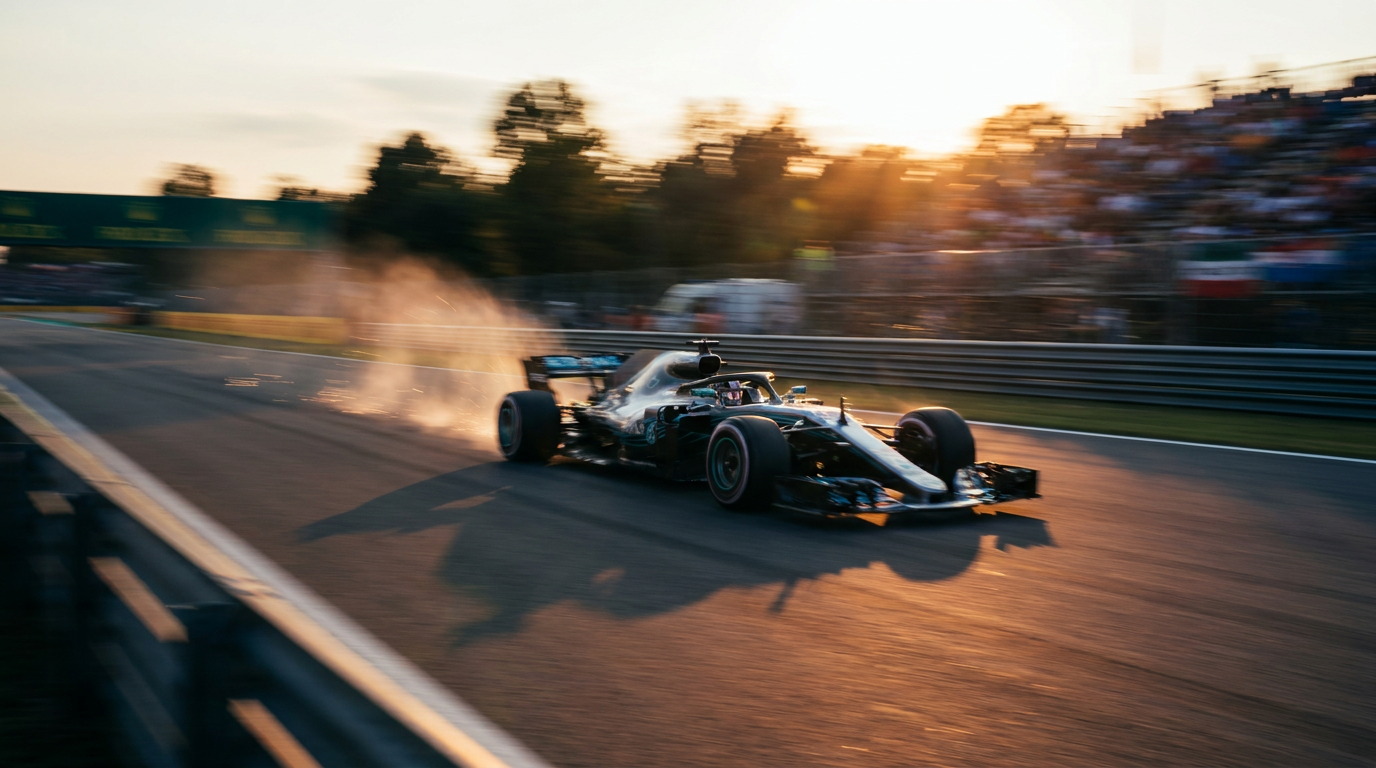
Red Bull built one of the most recognizable beverage brands on the planet on the back of a single, brilliant formula. Right now, in the 2026 Formula 1 season, their other kind of formula is falling apart — and the whole world is watching. The irony is hard to miss. The brand that put wings on a drink can is watching its race car limp around the grid. Max Verstappen is frustrated. Team principal Laurent Mekies is publicly admitting fault. And the word at the center of both crises? Formula.
That double meaning is too good to ignore. Because whether you are talking about a 1,000-horsepower racing machine or a drink you pull off a supermarket shelf, the formula is everything. Get it right and you win championships. Get it wrong and even the best driver in the world cannot save you.
When “The Formula” Isn’t Working: Red Bull’s 2026 Wake-Up Call
There is a particular kind of painful that comes from watching a four-time world champion describe his car as “undriveable.” That is the word Max Verstappen used after qualifying at Suzuka in March 2026, after he was knocked out in Q2 and found himself starting the Japanese Grand Prix from 11th on the grid. “Undriveable.” Not slow. Not inconsistent. Undriveable.
It was a striking choice of words from a driver who, as recently as 2024, was winning races on sheer car superiority and tactical brilliance. In 2026, the landscape changed. Formula 1 introduced a sweeping new regulatory era, with radically redesigned technical regulations covering both the chassis and the power unit. For Red Bull, 2026 also marked their first season as a full engine manufacturer, having taken control of their own power unit operation after years of partnership. That is an enormous undertaking, and the early returns have not been kind.
The problems surfaced almost immediately. At the Australian Grand Prix, rookie driver Isack Hadjar was stopped by an engine-related failure before he could show his pace. At the Chinese Grand Prix, Verstappen retired from the race for the same reason, a coolant fault ending his afternoon while running sixth. After two race weekends, Red Bull had collected just 12 points — their lowest return from an opening two-race haul since 2015. For a team that had dominated the sport for three consecutive seasons, that number landed like a pit lane collision.
Laurent Mekies, the team principal who stepped into one of sport’s most pressurized jobs, was candid after Shanghai. “We had to retire Max because of a coolant fault,” he said. “However, this was not our only issue — as overall, performance-wise, our package showed some significant shortcomings.” That is the language of a team in genuine trouble. Not managing expectations. Not spinning. Acknowledging that the product they put on the grid was not good enough.
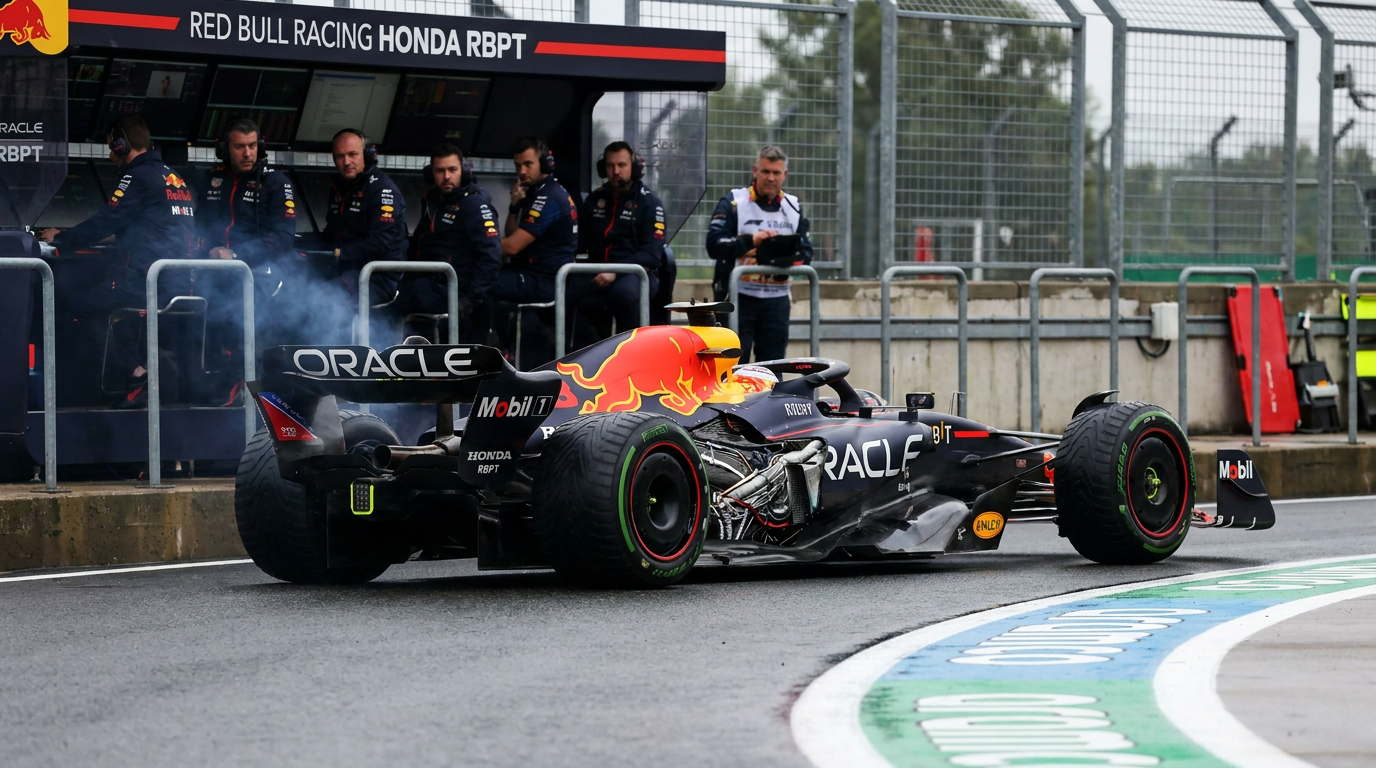
Verstappen, never one to soften a verdict, had been vocal about the 2026 cars even before the season began. He described the new generation of machinery as “not fun to drive,” likening the driving experience to “Formula E on steroids” — a pointed reference to the way the new hybrid deployment systems make the cars feel artificial and difficult to manage in the heat of a race. By Suzuka, his frustration had sharpened into something more pointed. “The feeling in the car is exactly the same as qualifying,” he told Sky Sports F1 after the Japanese Grand Prix. “I’m just trying to hang onto it, basically, in the race.” After qualifying, he was blunter still: “I have a lot of stuff to personally figure out.”
That last line landed beyond the paddock. When a driver of Verstappen’s caliber starts talking about what he personally needs to figure out — not the car, not the engineers, but himself — you know the product has put him in an impossible position. A great driver compensating for a broken formula, lap after lap. His word for it, delivered with the flat precision of someone stating a fact: “not sustainable.”
The word matters. Sustainable means you can maintain this pace, this approach, this product through a full season and come out stronger. Red Bull’s RB22, in those opening rounds, was none of those things. It demanded more from its driver than any formula should, and it still could not deliver the results. Mekies acknowledged that the team needed to “work through its limitations” and bring “rapid improvements.” The engineers went back to Milton Keynes. The season kept moving. The clock did not stop.
There is no mockery intended here. What happened to Red Bull in early 2026 could happen to any team — in any industry — that bets on a complex formula and finds out, under race conditions, that it does not perform the way the simulation predicted. The parallel to beverage development is not forced or clever. It is direct, and it is instructive, because the consequences of a broken formula are just as real in a CPG boardroom as they are in a Formula 1 garage.
The irony, of course, is that Red Bull’s other formula — the one in the silver and blue can — is still exactly right. Which raises the question: what does it actually take to get a beverage formula right in the first place?
The Stakes of Getting Your Beverage Formula Wrong
Here is something worth stating clearly before anything else: a beverage formula is not a recipe. A recipe is what a bartender scribbles in a notebook after a good shift. A formula is a precise, documented, reproducible blueprint that can be manufactured at scale, pass regulatory scrutiny, survive a cold chain, hold its sensory profile for twelve months on shelf, and still cost enough less than its retail price to make a business viable. Those are very different things. And confusing the two is one of the most expensive mistakes a brand can make.
The distance between “it tastes great in the test kitchen” and “it tastes great in every unit on every shelf in every retail partner we have” is where beverage brands win or lose. And that distance is measured in formulation precision, manufacturing discipline, regulatory compliance, and raw material sourcing. Get one of those wrong, and the rest of the formula starts to buckle.
Consider what Verstappen said about the RB22: “this is not sustainable for us as well for a team.” He was describing a balance problem that compounded across a race distance, becoming progressively harder to manage with every lap. Bad beverage formulas work the same way. A stability issue that seems minor in a lab trial becomes a shelf-life crisis in retail. A cost-of-goods calculation that looks fine at 10,000 units becomes a margin catastrophe at 500,000. A flavor profile that passes sensory testing with a panel of ten becomes a consistency nightmare when you scale production across multiple co-manufacturing sites.
These are not hypothetical scenarios. They are the specific, recurring failure modes that end promising beverage launches before they find their audience.
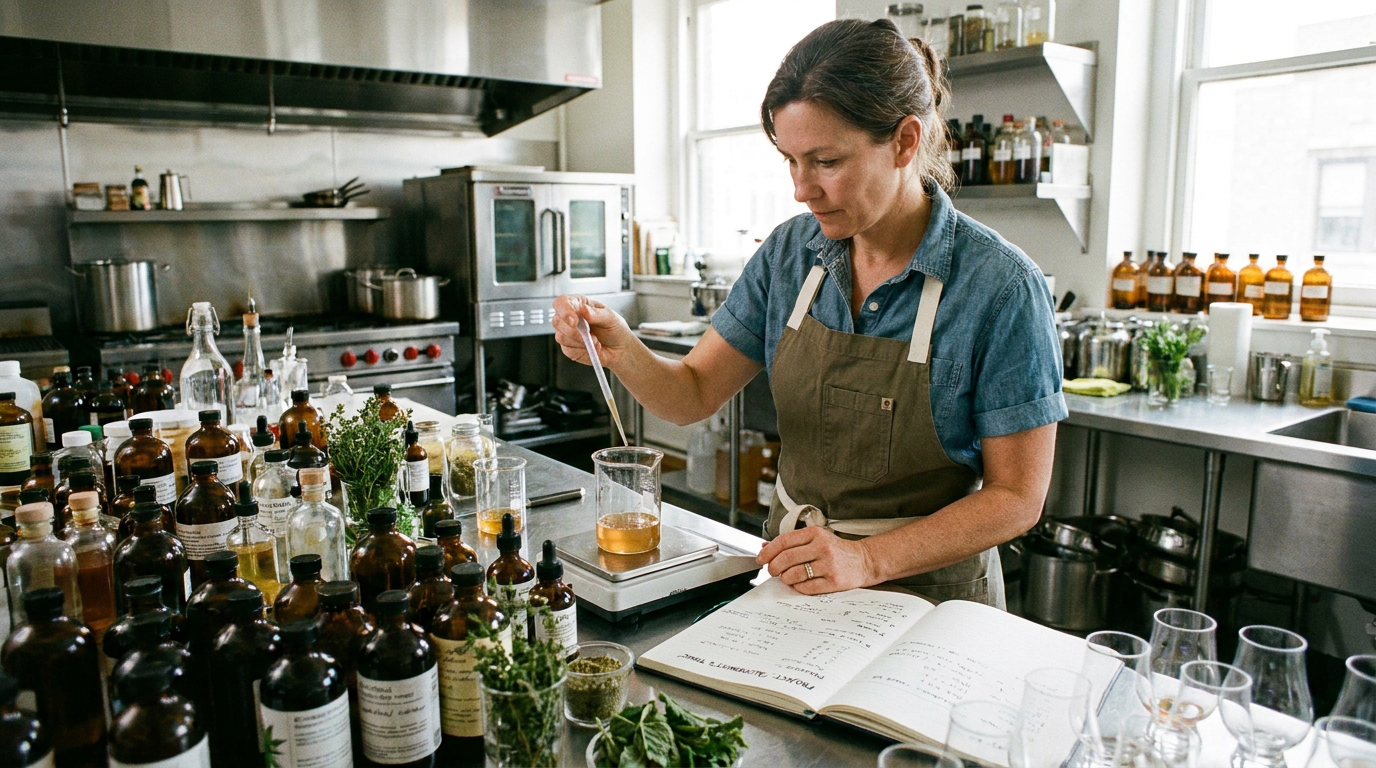
The most common consequences of a flawed beverage formula break down into a handful of categories, each with its own brand damage potential:
- Sensory failure at scale. The product tastes different at manufacturing volume than it did in development. Carbonation levels shift. Off-notes emerge. Sweetness balance drifts. The consumer who loved your prototype buys the retail version and notices something is off. They do not complain. They just do not buy again.
- Scalability breakdown. The formula works beautifully in a 50-liter pilot batch and begins to fall apart in a 5,000-liter production run. Emulsification becomes unstable. Particulates settle unevenly. Viscosity changes with temperature. The product that looked perfect in development becomes a quality control challenge in the plant.
- Regulatory compliance gaps. Ingredient declarations, allergen labeling, permitted additive levels, country-specific import requirements — beverage regulation is not simple, and it is not forgiving. A formula that has not been properly reviewed against the regulatory framework of its target market can stop a launch cold, sometimes weeks before a planned ship date.
- Shelf stability shortfalls. A product that cannot hold its intended sensory profile through a realistic shelf life is a product that will fail in retail. Retailers have expectations. Consumers have expectations. Both are disappointed when the beverage they pull from the back of the shelf looks or tastes different from the one that launched the brand.
- COGS blowouts. The formula is commercially viable at one price point for ingredients and falls apart when that price point changes. Raw material volatility, sourcing disruptions, minimum order quantities that do not match production volumes — the economics of a formula are as important as the sensory profile. A drink that cannot be made profitably is not a product. It is a liability.
Each of these failure modes carries a real cost. Launch delays burn cash and miss retail windows that will not reopen. Quality issues damage retailer relationships that took years to build. Brand damage in a crowded beverage category is notoriously hard to recover from — because consumers have a hundred alternatives waiting at the same cooler door.
Verstappen’s language keeps coming back because it fits so precisely: “I’m just trying to hang onto it.” That is the sensation of managing a bad formula in a live environment. Every lap is damage control. Every race is a gamble. And the gap between where you are and where you need to be does not close by itself.
The good news? Unlike Red Bull’s engineers working under the pressure of a live race season, you do not have to figure it out alone — or under a stopwatch.
Collaboration Beats Solo Engineering: The Menu Collective Approach
In Formula 1, a great driver still needs a great car. The most talented human being on the grid cannot win a championship in machinery that was not built to win. The inverse is also true: the best-engineered car in the paddock still needs a driver who understands it, who can push it to its limits and communicate clearly what it needs to go faster. The relationship between driver and machine, between talent and formula, is always collaborative. The teams that win understand this. They build around that collaboration, not around the assumption that either element can succeed alone.
Menu Collective operates on the same principle, and they would be the first to tell you. Their mission statement is disarmingly direct: “We are collaborators, not consultants.” That distinction is not semantic. It describes a fundamentally different way of working with brands.
A consultant arrives, analyzes, reports, and leaves. A collaborator stays in the car with you. They sit alongside you in the development sessions, in the formulation lab, in the manufacturing conversations, in the sales strategy meetings. They have skin in the outcome because the outcome is something they built with you, not for you.
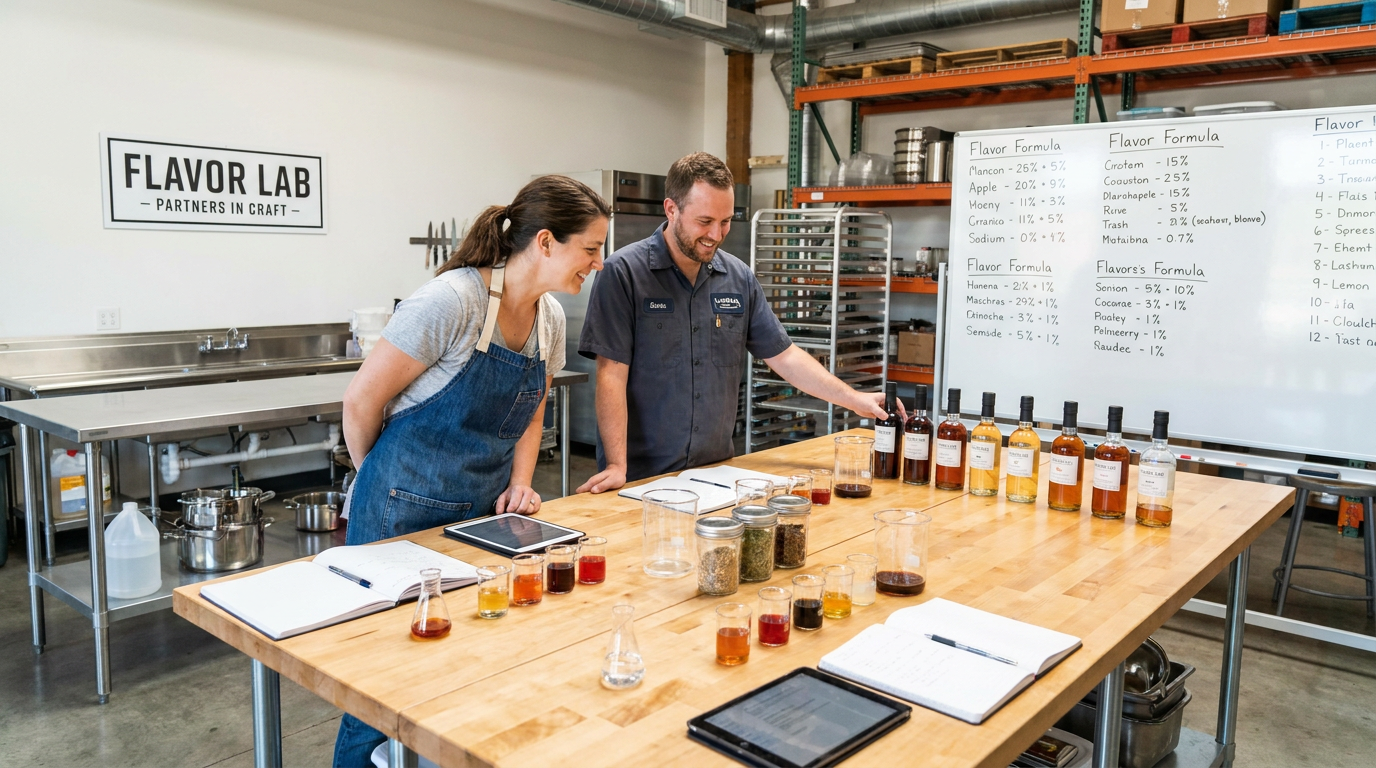
Menu Collective was founded in 2016 by Stuart McCarroll, who left a corporate Vice President role at a major food and beverage company because he saw something the big players were missing: brands needed a partner who had been on both sides of the bar. Literally. Menu Collective’s team brings 45+ years of combined experience across beverage development, bar operations, commercialization, and market strategy. They have developed beverages from behind the bar and shepherded products through commercialization. That combination — artistry and industry awareness in equal measure — is what they describe as being “creative and commercially astute.” Both things, at the same time, every time.
The work is organized around a framework that is elegantly simple in concept and genuinely rigorous in execution: Design, Develop, Deliver.
Design: Building the Right Blueprint
The Design phase is where the Gold Standard is born. Before a single formula iteration is created, Menu Collective works with the brand to define what success actually looks, tastes, and performs like. This is the benchmark. Every subsequent iteration is measured against it. The Gold Standard is not a moving target — it is the finish line that every element of development is racing toward.
This phase also involves assembling the right team for the specific project. Menu Collective operates as a collective precisely because different projects demand different expertise. A cannabis-infused RTD requires different specialist knowledge than a dairy-based coffee cocktail or a shelf-stable protein drink. The breadth of their services — from canned cocktails to spirit-free beverages to dairy and non-dairy applications — reflects a team that has been specifically curated to match the challenge, not a generalist group that treats every project the same way. The right people, with the right experience, working toward the right benchmark. That is Design.
Develop: Engineering the Formula That Works in the Real World
The Develop phase is where the actual formulation engineering happens — and this is where most beverage projects either gain altitude or lose it. Menu Collective’s approach is grounded in the understanding that a formula must work in the lab and in the plant, on the shelf and in the consumer’s hands. Sensory performance, scalability, regulatory compliance, ingredient sourcing, shelf stability, and cost-of-goods are not separate conversations. They are one integrated conversation, happening simultaneously throughout development.
This is where the “creative and commercially astute” positioning becomes concrete. A formula that is creative but not commercially viable is a prototype that never becomes a product. A formula that is commercially viable but not creatively differentiated is a commodity that fights for shelf space on price alone. The Develop phase, done right, produces neither of those outcomes. It produces a formula that earns its place in the market because it is genuinely good and genuinely buildable.
Deliver: Taking the Product to Market with Confidence
The Deliver phase is where brands often underestimate the work involved. Formulating a great beverage is one race. Getting it to retail, at scale, with the right sales strategy, distribution approach, and marketing positioning, is a different race entirely. Menu Collective has navigated both, and their involvement does not end when the formula is locked. They help build the path from concept to commercialization — the full journey, not just the lab portion.
The scope of work Menu Collective has delivered gives the framework credibility that no amount of positioning language can match. Consider their collaboration with Starbucks Reserve Roastery: a full-bar development program spanning multiple global locations — Milan, New York City, Tokyo, Chicago, and eventually the original Seattle flagship. The work went beyond drink creation. It included market research in each city, high-level internal tastings of 30 to 50 cocktail concepts, bar layout design, and week-long staff training programs that transformed baristas into bartenders who could not just make the drinks but tell their stories. Keith Jacobsen, Brand Manager for Roastery and Reserve at Starbucks, put it simply: “Menu Collective has an unparalleled ability to take a brief and a conceptual desired customer experience and apply their mixology wizardry to create a truly magical cocktail program.”
“Menu Collective has an unparalleled ability to take a brief and a conceptual desired customer experience and apply their mixology wizardry to create a truly magical cocktail program. It’s been a blast building our Starbucks Reserve bar experience and signature coffee cocktail portfolio with MC!”
— Keith Jacobsen, Brand Manager, Roastery and Reserve at Starbucks
That is the same team working with start-ups who have an idea and a passion and need a partner who can help them turn that spark into something that scales. James Parrelly, founder of Amani Coffee, described what collaboration with Menu Collective actually felt like in practice: “Together, they helped develop the formula for our line of Sparkling Coffee Shandy products, a truly unique product on the coffee market. Ultimately, our partnership helped grow our revenue exponentially.”
The word “formula” keeps appearing in these testimonials. It is not accidental. It is the thing that matters most.
The pit crew that builds the car worth driving. The engineers who stay in the garage with you through every session, every setback, every iteration, until the formula is right. That is the role Menu Collective plays — and the payoff of that collaboration is staying competitive, staying in the race, keeping your champions engaged and loyal.
Keep Your Champions in the Seat
Red Bull’s most urgent challenge right now is not aerodynamic. It is not even mechanical, not entirely. Their most urgent challenge is keeping Max Verstappen motivated, engaged, and genuinely invested in what the team is building. A driver of his caliber has options. He knows it. The paddock knows it. And the people running Red Bull Racing know it too, which is why Mekies publicly committed to giving his driver a better product — faster, not eventually.
Consumer brands face the exact same challenge with a different audience. The champion in the seat is not a four-time world champion from the Netherlands. It is the consumer who chose your beverage over the fourteen other options in the same cooler. The retailer who gave you shelf space when they didn’t have to. The investor who backed your vision before you had proof. These are your champions. And if the formula does not deliver — if the product is not consistently good, reliably available, and commercially priced in a way that makes sense — they will leave. Quietly. Without a press release.
Verstappen used the word “painful” when talking about what his team was going through. The team gives everything. The talent is there. The intention is there. And still, the result is not where it needs to be, because the formula is not right yet. That particular kind of painful is not unique to motorsport. It plays out in conference rooms, in retail buyer meetings, in founder pitch decks, in quarterly reviews — everywhere a brilliant idea meets the hard reality of a formula that does not yet work at the level it needs to.
The positive reframe matters here. Getting the formula right is not only about avoiding failure. It is about building the confidence to compete at the highest level of your category. To take pole position. To stand on the podium. To build a product that your champions are proud to represent, and that gives them every reason to stay in the seat.
That is what a great beverage formula does, when it is built properly — with the right expertise, the right process, and the right partnership.
Menu Collective helps brands get there. From concept to commercialization, from start-ups to global brands, from canned cocktails to dairy-based beverages, their approach to beverage development is built on one foundational truth: a great formula does not happen by accident. It happens by design. Literally.
Your formula is your foundation. Build it right, and your champions stay in the seat. Build it wrong, and even the best driver in the world cannot save you.
Ready to Build a Formula That Works?
Let’s talk about your product.
Menu Collective works with brands at every stage of the journey — from the first spark of an idea to full commercial launch. Their Design, Develop, Deliver approach means you get a genuine partner in the process, not just a report at the end of it. Whether you are refining an existing formula or building something entirely new, they bring the expertise, the network, and the creative and commercial precision to help you get it right.
Connect with Menu Collective and start the conversation.
Not quite ready? Explore their beverage development services and see what’s possible.