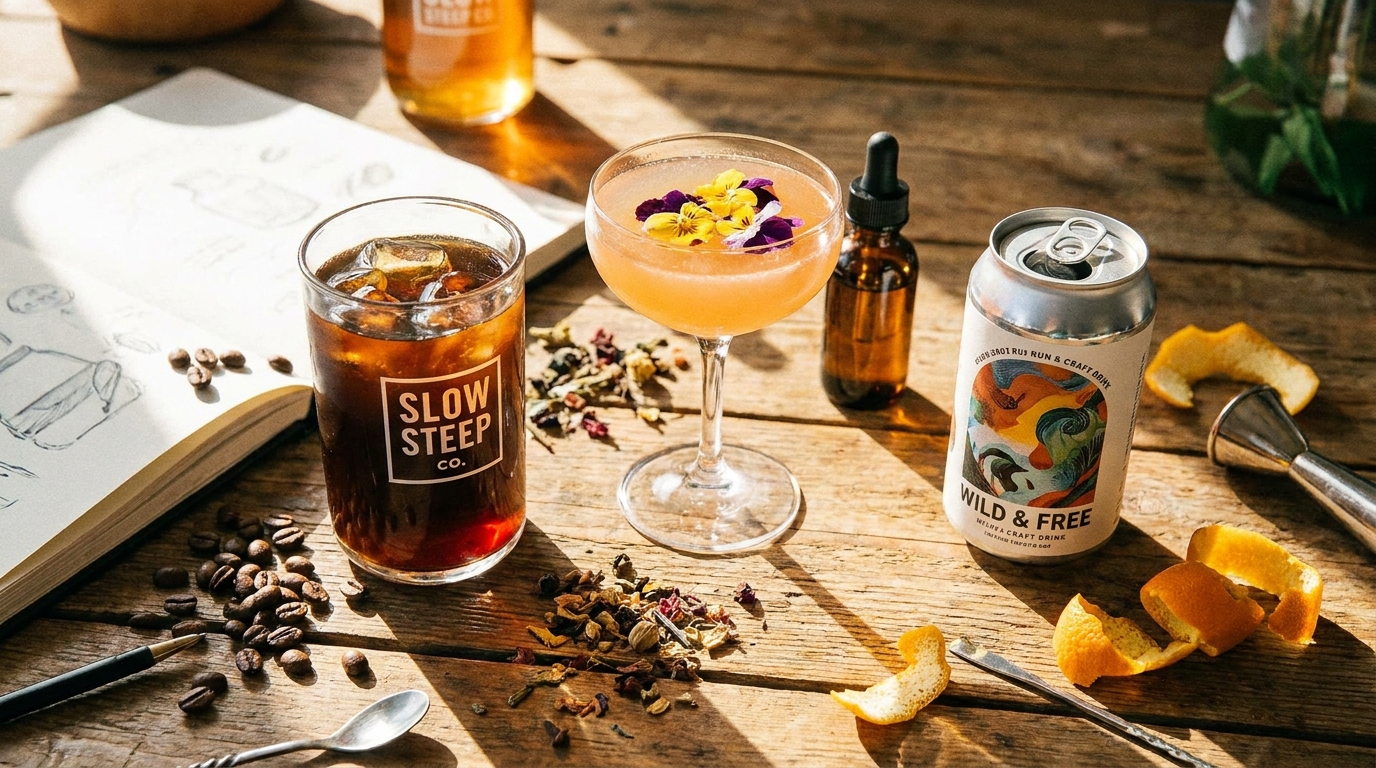
What does a actually do? The short answer: everything it takes to move a product from a spark of an idea to a bottle on a shelf or a drink on a menu. Menu Collective is that company — a team of creative and commercially astute food and beverage experts who design, formulate, test, and commercialize beverages for brands ranging from scrappy start-ups to global icons like Starbucks and 7-Eleven. In a global non-alcoholic beverage market valued at beverage development company
$1.39 trillion in 2025 and growing at an 8% CAGR through 2033
This blog is your complete walkthrough of Menu Collective's proprietary three-phase framework: . It's the system that's taken dozens of beverages from concept to commercialization — and it's the reason clients come back, again and again, every time they have a new idea they want to see in the world.
What makes Menu Collective different isn't just the depth of their expertise — it's their posture. They aren't consultants who hand over a deck and walk away. They are collaborators who roll up their sleeves and build alongside you. That distinction matters more than it might sound, especially when the gap between a great beverage idea and a commercially viable product is filled with formulation science, regulatory complexity, supply chain logistics, and market strategy that most founders and brand managers simply aren't equipped to navigate alone.
, the stakes for getting product development right have never been higher — and the cost of getting it wrong has never been steeper.
What a Beverage Development Company Actually Does (It's More Than You Think)
Most people, when they first hear the phrase "beverage development company," imagine a food scientist in a white coat tinkering with flavor extracts in a laboratory. That image isn't entirely wrong — but it captures maybe ten percent of what the job actually involves. The reality is far broader, far more strategic, and far more collaborative than any single image can convey.
A beverage development company like Menu Collective takes a product concept through its entire lifecycle: from the very first discovery conversation all the way through to distribution strategy and staff training. The company acts as an embedded expert team — not an outside advisor — bringing together the precise combination of mixologists, food scientists, regulatory specialists, sensory evaluators, and brand strategists that each unique project demands.
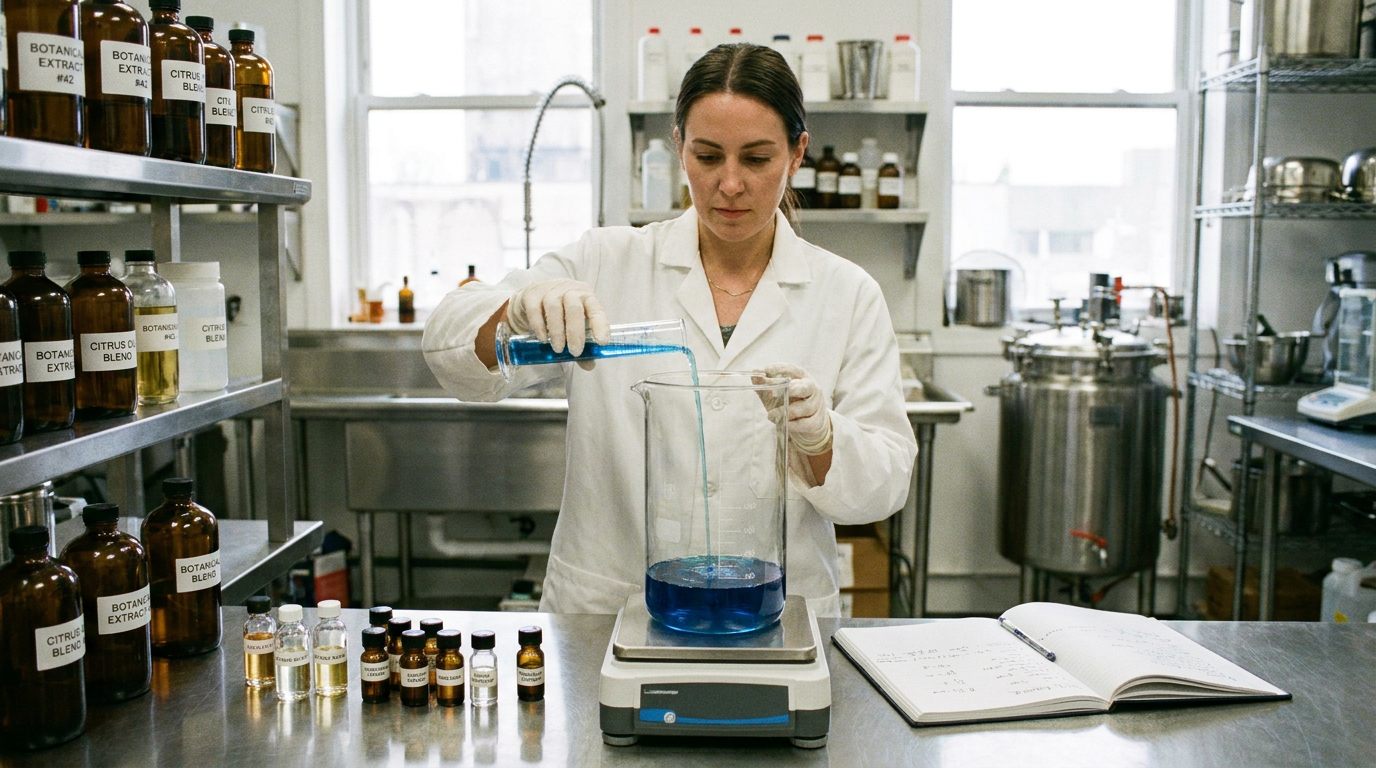
Here's what the full scope of the beverage product development process actually looks like at Menu Collective:
- Concept Ideation & Discovery — Listening deeply to the client's vision, target consumer, market positioning, and commercial goals before a single ingredient is sourced.
- Flavor Development & Sensory Evaluation — Building flavor profiles through iterative tasting, refinement, and structured sensory panels that separate gut feel from real data.
- Custom Beverage Formulation — Developing production-ready recipes that balance taste, stability, shelf life, and scalability — not just what tastes great in a test kitchen.
- Regulatory Compliance & Labeling — Navigating FDA requirements, ingredient restrictions, and market-specific rules — integrated into the process, not bolted on at the end.
- Ingredient Sourcing & Supplier Alignment — Identifying the right raw material partners who can supply at scale, consistently, and at the right price point.
- Bar Design & Operational Integration — For foodservice and QSR clients, designing the physical environment, workflow, and menu architecture that makes a beverage program actually executable behind the bar.
- Staff Training & Brand Storytelling — Teaching teams not just how to make a drink, but how to talk about it with conviction and craft.
- Sales, Marketing & Distribution Strategy — Building the go-to-market engine that gets a finished product into the hands of consumers.
The client spectrum is just as wide. Menu Collective has developed beverage programs for global QSR chains including Starbucks, 7-Eleven, and Red Robin — and has also walked alongside first-time entrepreneurs who had nothing more than a dream and a great palate. What those clients share isn't scale; it's ambition. They want to make something genuinely worth drinking. And that's exactly the kind of problem Menu Collective was built to solve.
The beverage categories Menu Collective works across are equally broad: canned and bottled cocktails, ready-to-drink coffee, cannabis-infused beverages, functional and wellness drinks, dairy and non-dairy formulations, spirit-free beverages, teas, lemonades, energy drinks, protein shakes, and more. Any base. Any format. Any market.
The distinction between a and a traditional consultant is worth dwelling on for a moment. A consultant delivers recommendations. Menu Collective delivers results — formulas, frameworks, trained teams, and market-ready products. The difference isn't semantic. It's the difference between advice and accountability. It's what makes Menu Collective's approach something you can find in , not just slide decks.
real-world outcomesbeverage development partner
With that foundation established, it's worth asking: why does the beverage market make expert development not just valuable, but essential?
The answer lies in just how much can — and routinely does — go wrong between a great idea and a great product.
Why the Beverage Product Development Process Is Make-or-Break in Today's Market
The numbers are seductive. The global non-alcoholic beverage market sits at approximately $1.39 trillion in 2025, growing at a steady 8% CAGR through 2033, according to . Add the alcoholic and ready-to-drink cocktail categories, and the total addressable market climbs well past $3 trillion globally. For a founder with a great idea, those numbers feel like permission. There's room for me in this market.Grand View Research
And they're right — there is. The problem isn't the size of the opportunity. The problem is the gap between having a great idea and building a commercially viable product. That gap is where most beverage brands fail. Not because the flavor was wrong. Not because the market wasn't ready. But because the beverage product development process was treated as a series of isolated steps rather than an integrated system.
Consider the most common failure modes. A founder nails a recipe at home — it's genuinely delicious, genuinely different. They take it to a co-manufacturer for scale-up, and suddenly the flavor profile shifts because the emulsification behaves differently at volume. Or the carbonation level that worked in a 12-ounce batch doesn't survive a 10,000-unit production run. Or the oat milk base separates over a 90-day shelf life test. Or the formulation clears FDA requirements for one target market but runs into a restricted ingredient list when the brand tries to launch in Canada or the EU. None of these problems are insurmountable — but all of them are catastrophic when discovered late in the development cycle, after budget has been spent and timelines have been promised.
The beverage product development process must be designed with the end in mind from day one. That means understanding the production constraints of the co-manufacturer you'll eventually partner with. It means building a formulation that can survive the supply chain, not just the test kitchen. It means thinking about distribution requirements — refrigerated vs. ambient, glass vs. can, foodservice vs. retail — before you've finalized a single ingredient. These aren't afterthoughts. They're the architecture.
This is exactly where Menu Collective's 45+ years of collective industry experience becomes irreplaceable. The team has seen every failure mode in the book — and designed processes specifically to prevent them. They bring the foresight that comes from having launched hundreds of products across dozens of categories, so clients don't have to learn from expensive mistakes.
"Working with Menu Collective helps transform our business by giving us industry insight beyond our knowledge… Ultimately, our partnership helped grow our revenue exponentially."
—
The market opportunity is real. The competition is fierce. The technical complexity is genuine. And the cost of going it alone — whether measured in reformulation budgets, delayed launches, or products that never find distribution — is high enough that expert beverage development partnership isn't a luxury. It's a competitive necessity. Understanding that urgency is what makes Menu Collective's three-phase framework so powerful. Let's walk through it, starting at the very beginning: Design.
That testimonial from James Parrelly isn't just a feel-good endorsement. It's a data point. When a founder with a great product but limited industry knowledge plugs into a team with the right expertise, the outcome isn't incremental — it's transformational. The knowledge transfer alone changes the trajectory of the business.
Phase 1 — Design: Defining Your Gold Standard Product
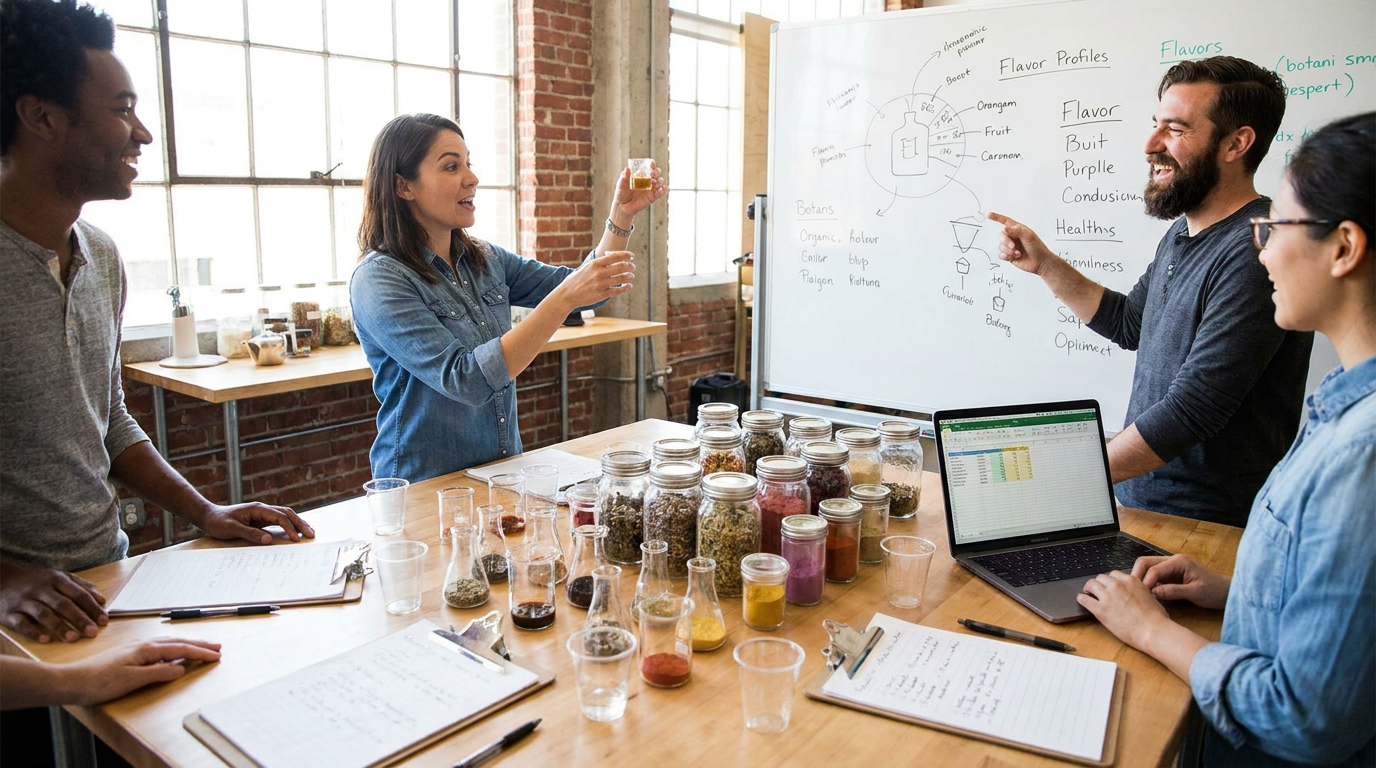
Before a single ingredient is measured, weighed, or blended, the most important work of any beverage development project happens around a table. Not a lab bench — a table. Because the Design phase is fundamentally about alignment: aligning the client's vision with market reality, aligning flavor ambition with operational feasibility, and aligning a diverse team of experts around a single, shared target.
At Menu Collective, the Design phase begins with a deliberate act of curation. Rather than deploying the same generic team on every project, assembles a bespoke A-team for each client's specific goals. Launching a cannabis-infused functional beverage? The team looks different than the one developing a signature cocktail program for a global QSR chain. This isn't just smart resourcing — it's respect for the complexity of each category and each client's unique situation.
the team
The central output of the Design phase is what Menu Collective calls the Gold Standard product: the agreed-upon benchmark that defines exactly what the finished beverage should be. This isn't just a recipe. It's the north star of the entire project — a clear, shared articulation of the sensory experience, the commercial positioning, the operational requirements, and the market fit that every subsequent formulation decision will be measured against. When a development team loses its way mid-project — when there's disagreement about whether a reformulation is an improvement or a compromise — the Gold Standard is the reference point that cuts through the noise.
Establishing the Gold Standard requires genuine discovery. At Menu Collective, this means deep-dive sessions with the client to understand not just what they want the drink to taste like, but whyThe Design phase also encompasses market and trend research — understanding where the category is moving, what consumers are reaching for, and where the white space genuinely exists. It includes format selection (is this a canned product for retail, a draft offering for foodservice, a bottled RTD?), target occasion mapping, and for foodservice clients specifically, a thorough assessment of bar design and layout. A bar that isn't designed to execute a beverage program efficiently is a bar that will undermine even the best recipes.
— what consumer occasion it's designed for, what emotion it should evoke, what price tier it needs to hit, what competitive products it's positioning against, and what the operational reality looks like for the people who will make it every day. A beverage that's exquisite in theory but takes twelve steps behind a QSR counter to produce is a product that will fail in practice.
The Starbucks Reserve Roastery program stands as perhaps the most vivid illustration of the Design phase done at global scale. When for the Reserve Roastery locations, they didn't start in a kitchen. They started in the world. The team conducted multiple site visits across global markets — Milan, New York City, Tokyo, Chicago — immersing themselves in the local consumer culture, the Starbucks brand experience in each context, and the unique sensory expectations that guests in each city would bring to the bar. That cultural intelligence became the foundation for a cocktail program that felt both unmistakably Starbucks and deeply, authentically local.
Menu Collective was engaged to develop the full bar program
Here's what the Design phase covers, step by step:
- Expert Team Curation — Assembling the right combination of mixologists, food scientists, regulatory specialists, and brand strategists for the specific project.
- Client Discovery Sessions — Deep-dive conversations to understand the brand, the consumer, the occasion, and the commercial goals.
- Market & Trend Research — Mapping the competitive landscape, identifying white space, and understanding where the category is heading.
- Gold Standard Definition — Establishing the sensory, operational, and commercial benchmark that will guide every subsequent decision.
- Format & Channel Selection — Determining whether the product is a canned RTD, a draft pour, a bottled retail item, or a foodservice-exclusive.
- Operational Feasibility Assessment — For foodservice clients, evaluating bar design, workflow, and execution complexity before formulation begins.
- Regulatory Market Scoping — Identifying the target markets and the regulatory landscape the formulation must be built to satisfy.
The Design phase is where passion meets strategy. It's where a great idea starts becoming a great product. And it creates the conditions for everything that follows in Phase 2 — the technical heart of the journey.
Phase 2 — Develop: From Gold Standard to Scalable Beverage Formulation
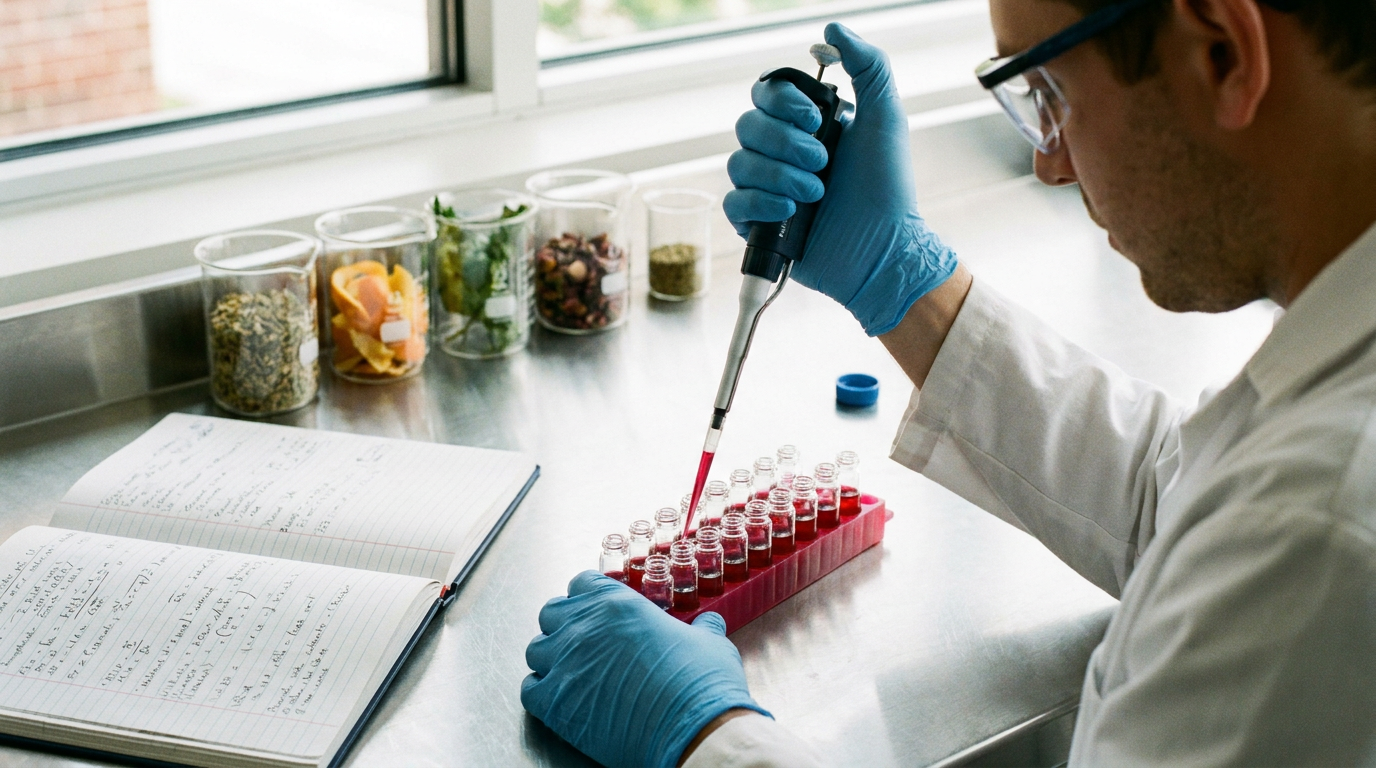
If the Design phase is about vision, the Develop phase is about execution. This is where the Gold Standard product gets transformed — through science, craft, and relentless iteration — into a formulation that can be manufactured at commercial scale without losing any of what made it worth developing in the first place.
The Develop phase is the technical core of the beverage product development process, and it's where the gap between amateur and expert beverage development is most starkly visible. Plenty of people can build a recipe that tastes excellent in a test kitchen. Far fewer can build a formulation that maintains that flavor profile across a 10,000-unit production run, survives ambient distribution for 12 months, clears FDA regulatory requirements, and stays within a cost-of-goods structure that supports a profitable retail price point. That's the standard Menu Collective holds itself to — and it's a much harder target than most clients initially appreciate.
Formulation is not just about flavor.From bench formulation, the process moves to pilot production — a scaled test run that simulates the manufacturing environment and surfaces any stability, texture, or flavor issues that only appear at volume. This is where many recipes that taste brilliant in small batches reveal their weaknesses. The Menu Collective team anticipates these inflection points and engineers around them before they become expensive surprises.
The Develop phase is iterative by nature. It begins with bench formulation — small-batch development where the core recipe is built and refined through multiple rounds of sensory evaluation. Sensory panels at this stage aren't casual tastings; they're structured assessments against the Gold Standard, with trained evaluators scoring on specific attributes — sweetness intensity, mouthfeel, aroma, finish, color, and more. The formula evolves through multiple bench rounds until it consistently hits the Gold Standard target.
It's a systems problem. Every ingredient decision affects stability. Every processing method affects texture and mouthfeel. Every packaging choice affects shelf life. Every market target affects which ingredients are permissible and which are restricted. The custom beverage formulation process that Menu Collective runs is designed to hold all of these variables in tension simultaneously — producing a formula that's not just delicious but commercially viable from every angle.
Throughout the Develop phase, regulatory compliance is woven into the process — not added on at the end. Every formulation decision is made with an eye toward the regulatory requirements of the target markets. This is especially critical for categories like cannabis-infused beverages, where compliance complexity is high and the margin for error is zero. Menu Collective's work on a demonstrates exactly this level of regulatory fluency — building a product that's commercially compelling and legally compliant across specific market contexts.
cannabis-infused drink formulation
The offers a vivid illustration of the Develop phase's complexity in action. The product combined cold brew coffee with an oat milk base and carbonation — a formulation challenge that required managing protein stability in the oat milk, carbonation integrity under distribution conditions, and a flavor profile that held true across the product's intended shelf life. None of those challenges were insurmountable. All of them required genuine expertise to navigate without compromising the drink's sensory quality.
RTD Cold Brew Shandy developed with Amani Coffee
Here's what the Develop phase covers, and why each component matters:
- Bench Formulation — Building the core recipe through iterative small-batch development, measuring every decision against the Gold Standard.
- Sensory Evaluation — Structured tasting panels that provide objective data on flavor, texture, aroma, and appearance — not just gut reactions.
- Stability Testing — Assessing how the formulation holds up over its intended shelf life under real-world storage and distribution conditions.
- Regulatory Compliance Review — Ensuring every ingredient, label claim, and formulation decision meets the requirements of the target markets.
- Ingredient Sourcing & Supplier Alignment — Identifying reliable, scalable supply partners for every raw material in the formula.
- Pilot Production Runs — Scaled manufacturing tests that validate the formula performs consistently at commercial volume.
- Formula Lock & Commercial Sign-Off — Final sensory and technical approval that the production-ready formula meets the Gold Standard.
Menu Collective works across virtually every beverage base and format: canned cocktails, dairy and non-dairy formulations, RTD coffee,
functional and wellness beverages
With a production-ready, compliance-verified formula locked, the development work transitions from the lab to the market. That's where Phase 3 — Deliver — takes over.
On timeline: most beverage development cycles run approximately 8 to 24 weeks from initial brief to commercial sign-off. Scope and complexity determine where a specific project falls in that range — a single-SKU RTD product moves faster than a multi-format beverage program with cross-market regulatory requirements. Menu Collective establishes a clear, realistic timeline during the initial consultation so clients always know exactly where they stand and what's coming next.
, spirit-free offerings, energy drinks, protein drinks, teas, lemonades, and more. Any base. Any format. Any category.
Phase 3 — Deliver: Bringing Your Beverage to Market With Confidence
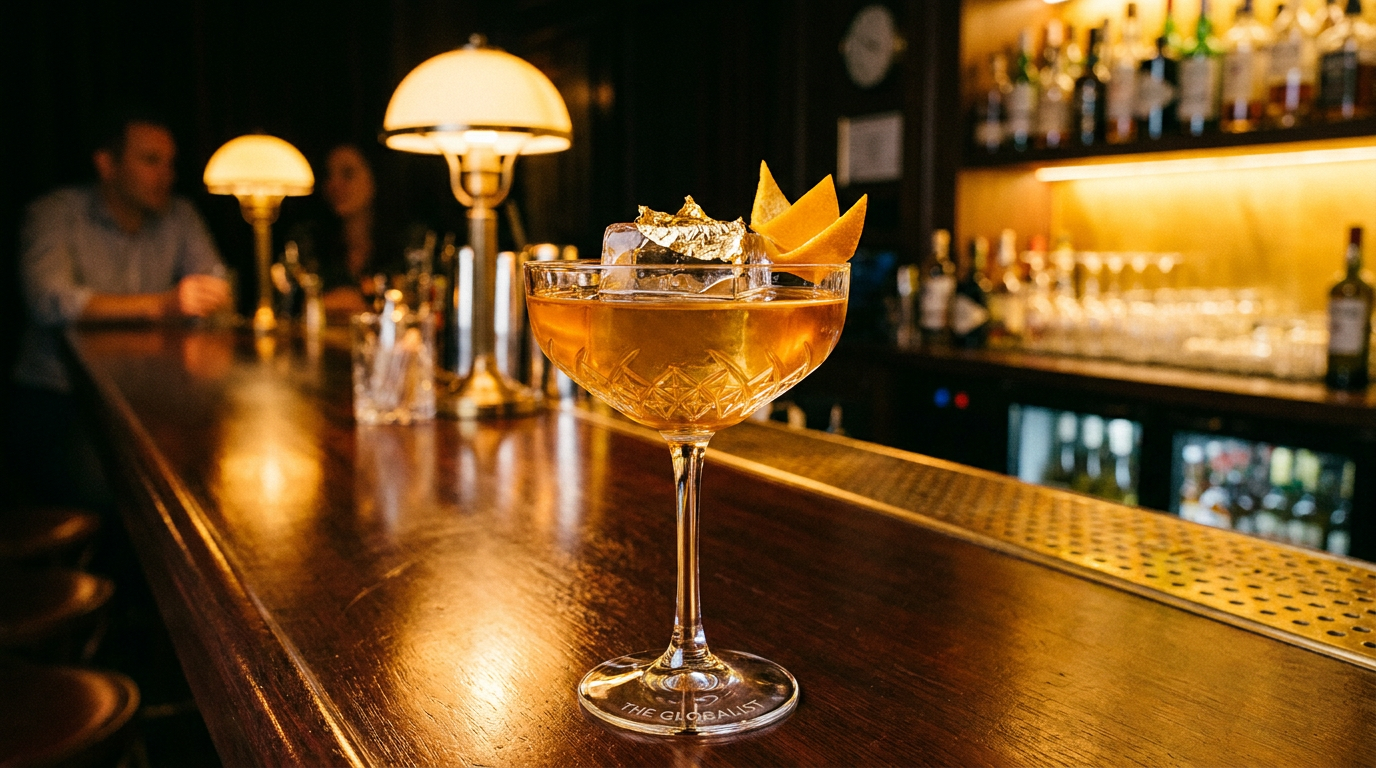
A great formula is necessary. It is not sufficient. The history of the beverage industry is full of genuinely excellent products that never found their market — because the go-to-market strategy was an afterthought, the distribution channels weren't built, or the team behind the bar didn't know how to make the drink or talk about it. The Deliver phase is how Menu Collective closes that gap.
The Deliver phase begins where formulation ends — at the point where a product has passed compliance review and quality manufacturing standards — and extends all the way through to a fully executed market launch. What that looks like depends heavily on the client's context: a retail RTD brand needs a different kind of delivery than a QSR chain rolling out a new signature drink program. But the underlying principle is the same: a great product deserves a great strategy to reach the people who will love it.
For retail and CPG clients, the Deliver phase covers distribution strategy development — identifying the right channels, the right regional rollout sequence, and the right retail partnerships to build the brand's footprint efficiently. It includes sales channel identification, pricing and positioning guidance, and marketing and launch support that translates the product's story into compelling consumer-facing messaging. Getting a beverage onto a shelf is hard. Getting consumers to reach for it — and reach for it again — is harder still. Menu Collective's delivery expertise addresses both.
For foodservice and QSR clients, the Deliver phase goes even deeper. When Menu Collective completed the program, they didn't hand over a cocktail menu and walk out the door. They optimized bar design and workflow so each drink could be crafted efficiently and consistently by the baristas who would make them every day. Then they conducted week-long staff training sessions — not just technical training on how to build each drink, but narrative training on how to tell each drink's story with the same confidence and craft that went into developing it. Because a bartender who can't explain why a cocktail was made the way it was is leaving the guest experience half-finished.
full bar development for the Starbucks Reserve Roastery
The illustrates another dimension of the Deliver phase: the strategy-led refresh. Rather than simply developing new recipes, Menu Collective delivered an entire beverage strategy — built on trend performance data and consumer insight — that repositioned the brand's drink program in the context of where the market was heading. The result wasn't just new menu items. It was a more commercially coherent and consumer-relevant beverage identity.
on-trend menu development work with Red Robin
This is what separates the Deliver phase from a simple product handoff. It's not "here's your formula, good luck." It's a comprehensive concept to commercialization strategy that accounts for everything between the finished product and the satisfied consumer.
"Menu Collective has an unparalleled ability to take a brief and a conceptual desired customer experience and apply their mixology wizardry to create a truly magical cocktail program."
— Keith Jacobsen, Brand Manager, Starbucks
That phrase — "mixology wizardry" — is worth pausing on. Because what Keith Jacobsen is describing isn't just technical skill. It's the ability to take an abstract customer experience vision and translate it into something real, tangible, and repeatable at scale. That's a rare combination of creative excellence and operational rigor. It's what the Deliver phase is built to produce.
The Deliver phase also marks a natural conversion moment for clients who are still evaluating whether to engage. If you're reading this and you have a product that's already been developed but hasn't found its market — a formula that works but a distribution strategy that doesn't — Menu Collective can step into that gap as well. . The delivery expertise doesn't require you to have started at Phase 1.
Reach out and start a conversation
Three phases, fully mapped. The system is now clear. But the practical question every reader is sitting with is a personal one: Is this right for me? And when should I make the call?
When to Hire a Beverage Development Partner — And What to Look For
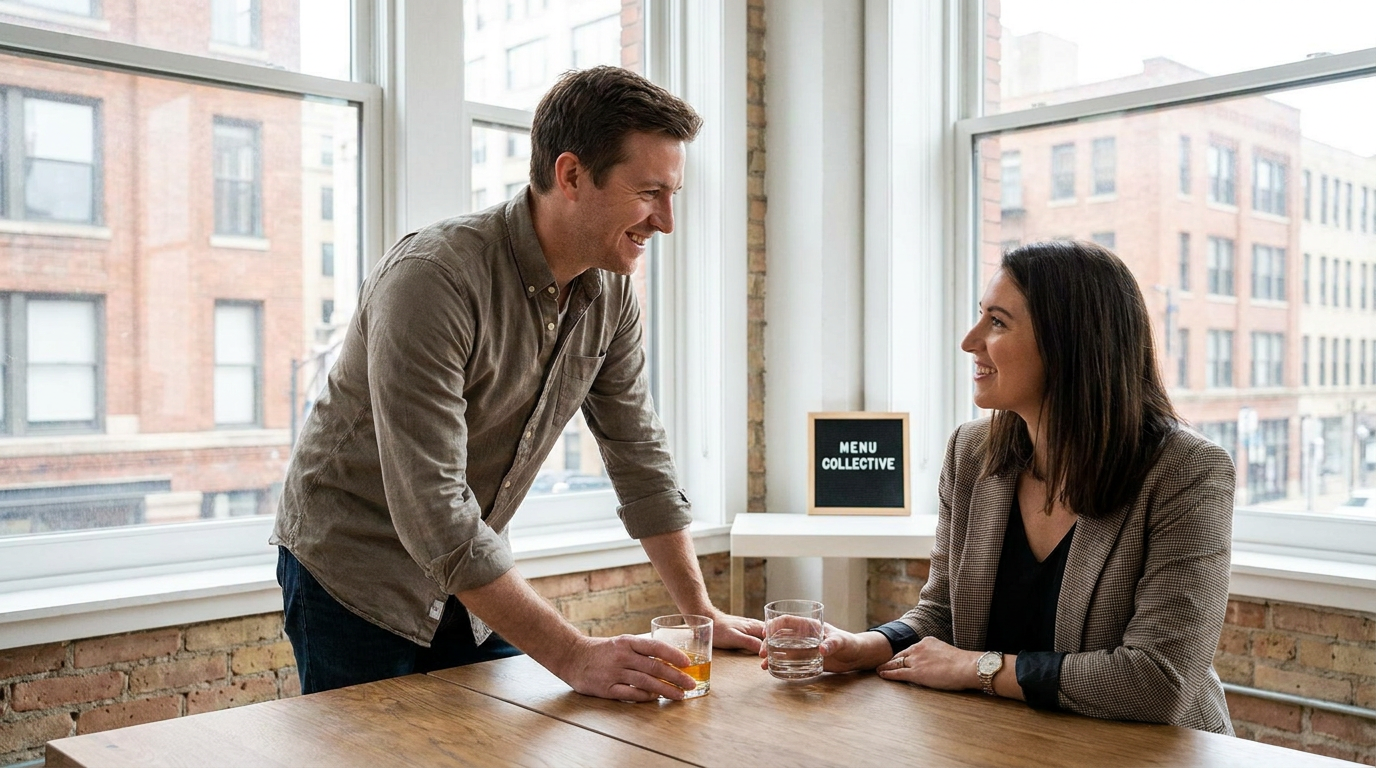
The most common mistake brands make when it comes to beverage development partnership is waiting too long. They spend months — sometimes years — trying to figure out formulation on their own, burning through budget on reformulations that don't work, and losing critical time-to-market advantage before finally engaging a development partner who could have solved in weeks what took them months of struggle.
The short answer to "when should I hire a beverage development partner?" is: as early as possibleThat said, Menu Collective can and does step in mid-stream. If you have an existing formulation that isn't surviving scale-up, a product that's been developed but hasn't found distribution, or a beverage program that's underperforming relative to its potential — there's a role for a development partner at every stage of the journey.
. Engaging a partner at the concept stage allows the team to shape strategy, formulation direction, and go-to-market planning from the ground up — building a product architecture that's commercially viable by design, not retrofitted to fit commercial reality after the fact. Early engagement isn't a cost; it's an investment that prevents far more expensive mistakes downstream.
Here are the clearest signals that it's time to partner with a custom beverage formulation company:
- You have a beverage idea but no formulation experience — You know what you want to make, but the path from concept to production-ready formula is a mystery.
- Your current formula doesn't survive scale-up or shelf life — What works at bench doesn't work at volume, or the product degrades before it reaches the consumer.
- You need to launch across multiple markets with different regulatory requirements — Navigating FDA requirements, international ingredient restrictions, and market-specific compliance without specialist support is a recipe for expensive delays.
- You're a QSR or foodservice operator adding a new signature drink program — You need not just formulation but bar design, staff training, and operational integration.
- You have a great product but no path to distribution — The formula is locked and approved, but the go-to-market strategy doesn't exist yet.
- You want to transcend the industry norm — You're not looking for a safe, category-average product. You want something genuinely different, and you need collaborators with the expertise and creative courage to get there.
What distinguishes a beverage development partner from a traditional consultant? A consultant gives you a report. A partner gives you a product. At Menu Collective, the team is embedded in the work — accountable for outcomes, not just recommendations. That collaborative identity is the foundation of every client relationship, from start-ups with a dream to global enterprises with complex, multi-market programs.
"It's been a pleasure working with Menu Collective and I'd recommend them to anyone who has a 'dream' they want to commercialize."
— Hershel Perera, Saturday Beverage Company
That word — dream — captures something important. Because the clients Menu Collective works with aren't just building products. They're building brands, businesses, and in some cases, entirely new categories. The work deserves a partner who takes that seriously. Someone who brings the same level of creative ambition and commercial discipline to every project, regardless of the client's size or stage.
before committing is always a smart move. So is to understand the range of challenges Menu Collective has solved and the results they've delivered. And when you're ready to talk about your specific situation, a reviewing the case studiesGetting to know the team
is the obvious next step — it's where every great beverage journey begins.
Frequently Asked Questions About Beverage Product Development
Still have questions? Here are the answers to what we hear most often.
What does a beverage development company do?
A beverage development company like Menu Collective takes a beverage concept from initial idea to commercial product — handling formulation, sensory testing, regulatory compliance, ingredient sourcing, and go-to-market strategy. At Menu Collective, we work alongside clients as collaborative partners through every stage of the journey, from the first discovery conversation to the first sale. We don't consult from a distance — we build with you.
What is the Design, Develop, Deliver process?
The Design, Develop, Deliver process is Menu Collective's three-phase framework for beverage product development. In the Design phase, we assemble a curated team of experts tailored to the specific project and define the client's Gold Standard product — the sensory, commercial, and operational benchmark that guides every subsequent decision. In the Develop phase, we transform that standard into a scalable, compliant, production-ready commercial formulation through iterative bench work, sensory evaluation, stability testing, and regulatory review. In the Deliver phase, we build the full sales, marketing, and distribution strategy that brings the product to market — including staff training and bar design for foodservice clients. to see the full picture.
Explore our services
What is a Gold Standard product in beverage development?
A Gold Standard product is the agreed-upon benchmark that defines exactly what the finished beverage should be — in terms of flavor profile, format, operational feasibility, and commercial positioning. At Menu Collective, every project begins by establishing this Gold Standard so every subsequent formulation decision is measured against a clear, shared target. It's not just a recipe; it's the north star of the project. Without it, development decisions become subjective and iterative in the wrong direction.
How long does beverage development take?
Beverage development timelines vary based on complexity and scope. A single product development cycle typically runs 8 to 24 weeks from initial brief to commercial sign-off. A full beverage program, multi-market launch, or ongoing R&D initiative may span longer. At Menu Collective, we establish a clear, realistic timeline during the initial consultation so clients always know exactly where they stand — and what's coming next. Surprises are for cocktail menus, not development timelines.
When should I hire a beverage development partner?
The best time to engage a beverage development partner is as early as possible — ideally at the concept stage. Early collaboration allows the team to shape strategy, formulation direction, and go-to-market planning from the ground up, avoiding costly reformulations and timeline delays further down the road. That said, Menu Collective can also step in mid-project to optimize existing formulations, resolve scale-up challenges, address compliance issues, or build a launch strategy for a product that's already been developed but hasn't yet found its market.
What types of beverages does Menu Collective develop?
At Menu Collective, we work across virtually every beverage category — canned and bottled cocktails, RTD coffee, cannabis-infused beverages, functional and wellness drinks, dairy and non-dairy formulations, spirit-free beverages, teas, lemonades, energy drinks, protein drinks, and more. Any base, any format — from concept to commercialization. If it's a beverage and it needs to be brought to market, we've likely done something like it before. to see the range of what we've built.
Explore our case studies
Ready to start your own beverage development journey? Here's how.
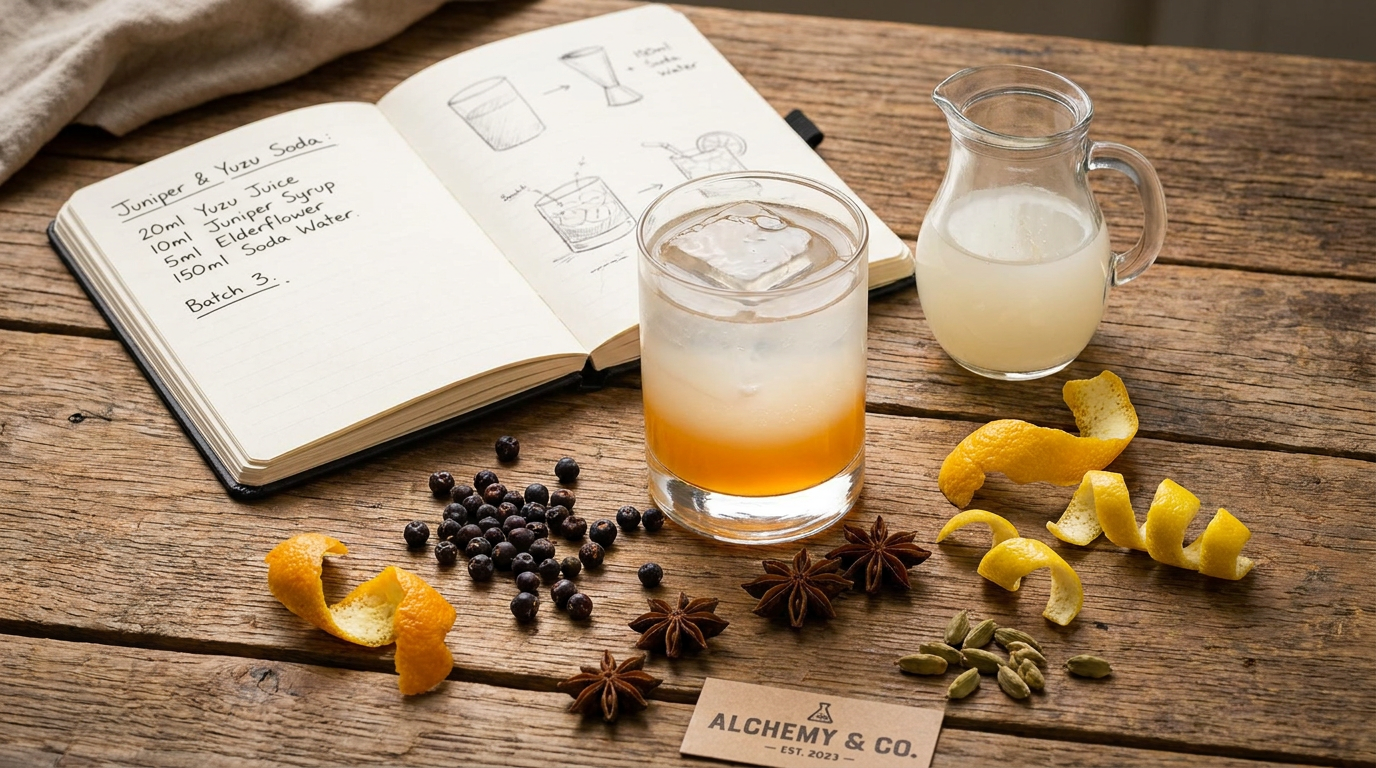
From the first idea scribbled in a notebook to the finished drink ready for the world — the journey between concept and commercialization is what Menu Collective was built to navigate.
The Journey From Idea to Icon — A Final Word
The beverage product development processWhat makes Menu Collective different is what has always made the difference: they don't stand apart from the work. They stand inside it, alongside you, from the first conversation to the first sale. Whether you're a first-time founder with a dream and a recipe scribbled on a napkin, or a global brand manager at a company like Starbucks who needs a cocktail program that works across multiple continents and cultures — the starting point is the same. A conversation. A commitment to collaboration. And a shared belief that the beverage industry deserves better than ordinary.
is not a single event. It's a system — a continuous, interconnected journey from passion to product that requires the right expertise, the right process, and the right partner at every stage. Design, Develop, Deliver isn't three isolated phases; it's one seamless arc, engineered to take a beverage from concept to commercialization without the costly detours that derail so many launches.
Menu Collective exists to help brands transcend the industry norm
The next great beverage idea is out there. Maybe it's yours. The question is: are you ready to build it?
— to make beverages that are genuinely creative and commercially astute, built to last and designed to delight. That's not a tagline. It's what happens every time the team does its job well.
Let's Build Something Together
Whether you're starting from scratch or scaling up, we're ready to build alongside you.
Book Your Free Consultation
Explore Our Case Studies