The sober-curious movement changed everything. Non-alc spirits are just getting started.
If you work in beverage innovation, you have watched this category go from novelty to necessity in under a decade. So let's start with the question everyone asks first: what exactly is a non-alcoholic spirit? A non-alcoholic spirit — also called an alcohol free spirit or zero proof spirit — is a distilled or botanically built beverage designed to deliver the complexity, aroma, and ritual of a traditional spirit at under 0.5% ABV. It is made to be stirred into a Negroni, shaken into a margarita, or sipped neat over a big clear cube, and it is priced, positioned, and consumed exactly like the full-proof bottles it sits beside.
For innovation teams and brand managers at alcohol companies, the stakes are real. Non alcoholic spirits remain a small category by absolute dollars, but the growth is compounding fast, the consumer behavior driving it is generational, and the window for credible entry is open right now. The brands that move with rigor in the next few years will define the category for the next decade. The ones that rush out a thin, watery line extension will spend years living it down.
This article gives you the full picture: the data proving this is structural demand rather than a passing trend, how zero proof spirits are actually made, the formulation challenges nobody talks about at trade shows, and a practical framework for entering the category without embarrassing your brand. Let's pour.
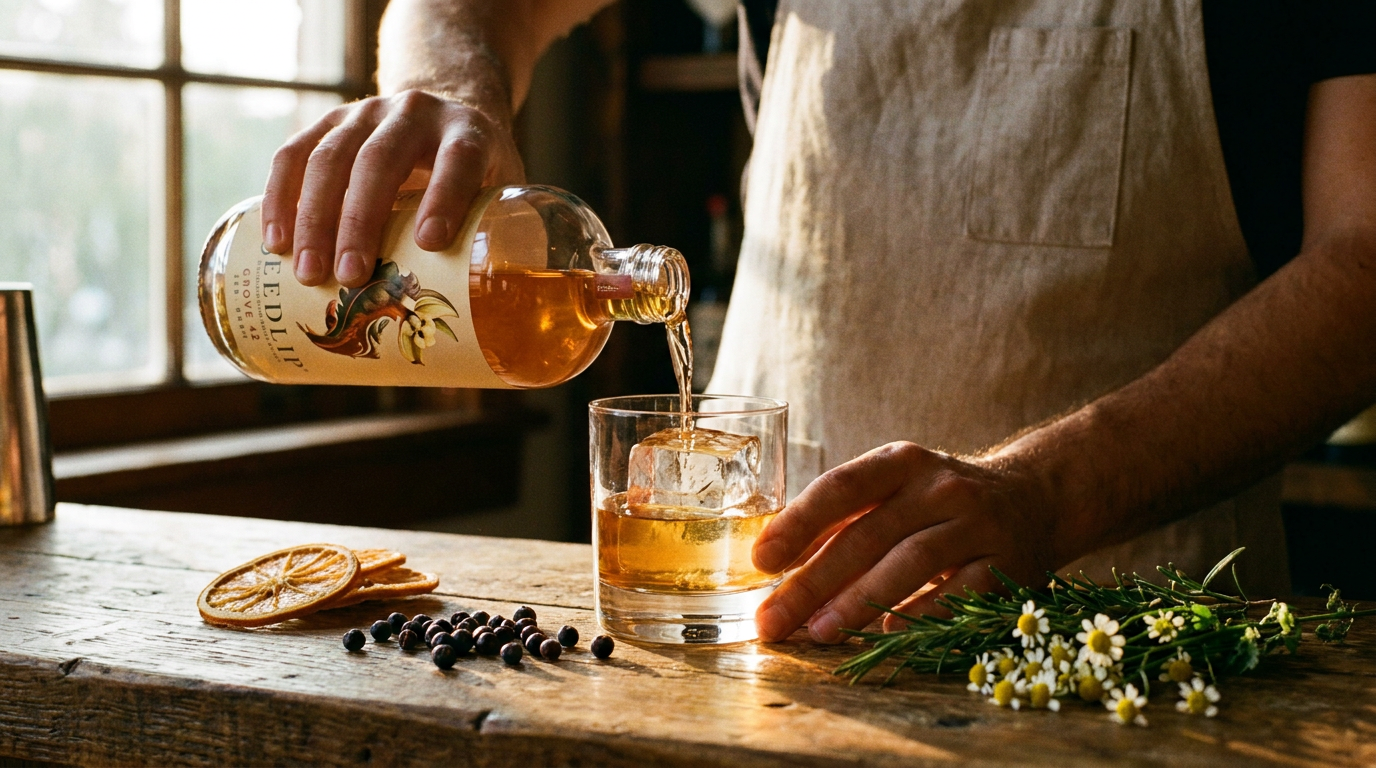
By the end, you will understand why we believe the demand curve here is not a fad line on a chart — it is a durable shift in how people drink. But first, let's get the definition airtight.
What Is a Non-Alcoholic Spirit? A Straight Answer
That definition matters because the category gets lumped in with things it absolutely is not. A non-alc spirit is not a soda. It is not a mocktail mixer. It is not flavored water with a nice label. Those products are diluted, sweetened, and ready to drink. A zero proof spirit is concentrated, complex, and designed to be the backbone of a drink — the thing a bartender reaches for when a guest orders a martini without the morning after. The positioning, the pricing, the bottle format, and the shelf placement all mirror the spirits aisle, because that is exactly where these products live and compete.
A non-alcoholic spirit is an adult beverage containing less than 0.5% alcohol by volume, formulated to replicate the sensory experience of a traditional spirit: the aromatic complexity of gin, the oak-and-caramel depth of whiskey, the vegetal bite of tequila and agave spirits, or the bittersweet botanical layering of an aperitif. It is built for cocktails and neat serves, not for chugging from the bottle, and its entire reason for existing is to preserve the ritual of drinking while removing the intoxication.
The Two Product Families: Dealcoholized and Direct-Build
Under the hood, virtually every product in the category belongs to one of two families, and the distinction shapes everything from flavor to labeling to marketing story.
Dealcoholized spirits begin life as full-proof spirits. A distiller ferments, distills, and often ages the liquid exactly as they would a conventional product — and then strips the ethanol out using specialized separation technology. The result carries genuine distillation character, and the sub-0.5% ABV threshold that governs the category is a legal line these products must finish under, as detailed in .
Spirits Selection's deep dive on how no-low spirits are made and their legal requirements
Direct-build spiritsThe category's leading names tell you how far it has matured. Ritual Zero Proof now holds the number one dollar share in the US, while Seedlip and Lyre's carved out the global template as category pioneers. We mention them as market context, not endorsement — but the fact that a category this young already has established share leaders, private equity interest, and shelf sets at national retailers tells you this is no longer an experiment.
never contain meaningful alcohol in the first place. These are botanical distillates, macerations, and infusions — juniper, citrus peel, warming spices, bittering roots — assembled from the ground up to create spirit-like complexity without ever fermenting anything. Seedlip, the brand that essentially invented the modern category in 2015, built its entire portfolio this way.
Then there is the price tag, which surprises people outside the industry every time: these bottles routinely retail at $25 to $40. Skeptics ask why anyone pays whiskey money for something without whiskey's alcohol. The answer is that consumers are not buying ethanol — they are buying craft, ritual, and occasion. The weight of the bottle, the complexity in the glass, the ability to participate fully in a social moment: that is the product. Alcohol free spirits succeed precisely when they honor that premium promise, which is why defining a product's category position is the very first step of any serious development process — it is the foundation of the Design stage in So that is the product. Now for the question every innovation lead has to answer in a boardroom: is the demand real, or is this another coconut water moment? The numbers give a very clear answer.
Menu Collective's beverage development services
, long before anyone touches a bench sample.
The Data Says This Is Structural Demand, Not a Fad
Let's arm you with the numbers you need for the internal business case, because this category's growth story holds up under scrutiny from any CFO.
Start with the core market sizing. The global non-alcoholic spirits market was valued at roughly $445.8 million in 2024 and is projected to grow at a 9.5% compound annual rate through the decade, according to . sizes the market at $356 million in 2025 on its methodology, with a growth path toward $762.92 million by 2032. The exact figures vary by research house — they always do — but the shape of every credible forecast is identical: high single-digit to near double-digit compounding, year after year, with no plateau in sight.
Fortune Business Insights' non-alcoholic spirits market analysisGrand View Research's non-alcoholic spirits market report
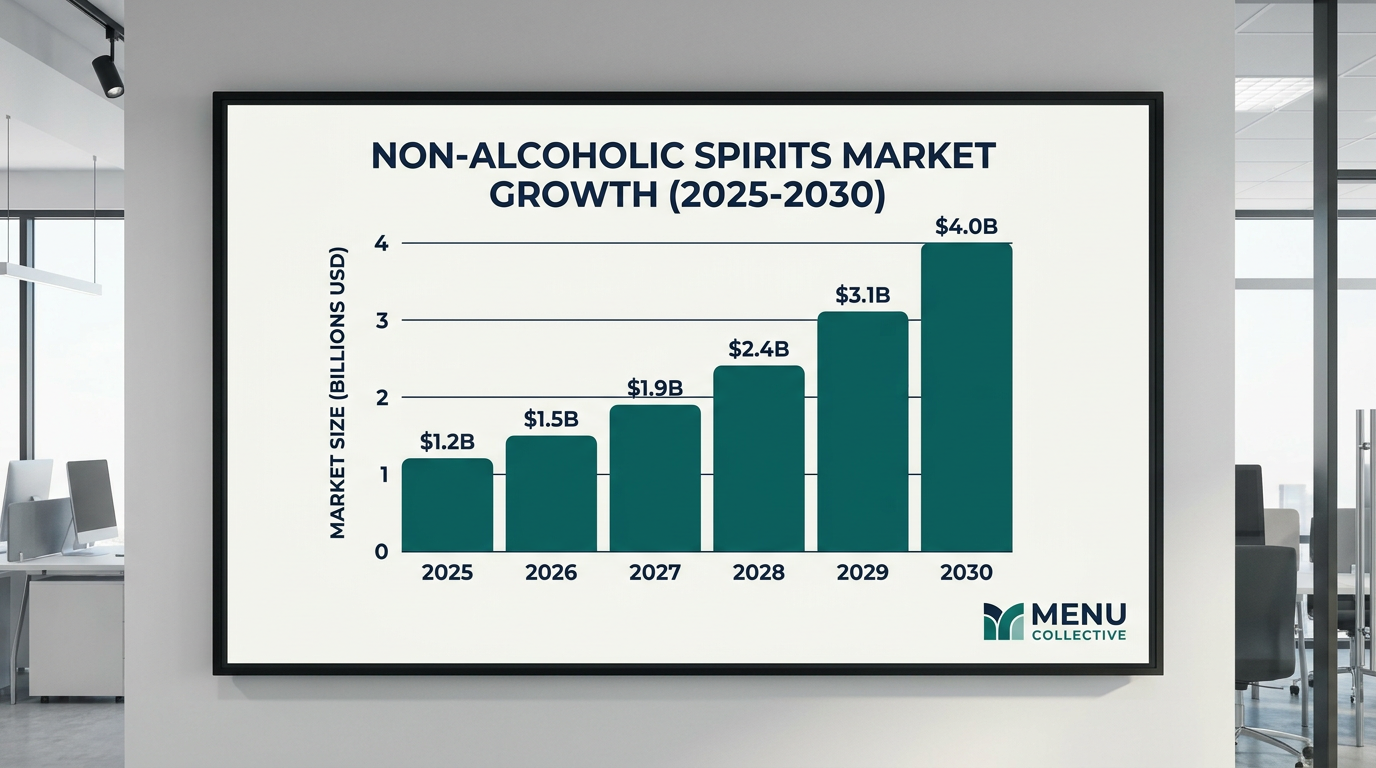
Now zoom out, because non-alc spirits are the premium tip of a much larger spear. The broader low and no-alcohol beverage market — beer, wine, RTDs, and spirits combined — is projected by Research and Markets to reach $29.4 billion in 2026 and climb to $50.5 billion by 2034. That context matters strategically: the spirits segment rides the same behavioral wave as non-alc beer (which built the beachhead) and benefits from every dollar the big brewers spend normalizing zero proof drinking. Athletic Brewing and Heineken 0.0 did the category's missionary work; non-alc spirits get to harvest the converted at three times the price point.
The US retail data is just as convincing. Off-premise sales of non-alcoholic beer, wine, and spirits hit $823 million in the 52 weeks ending December 2024 — a jump of more than 27% year over year, per NielsenIQ figures cited in . Growth north of 20% in a mature retail environment where total beverage alcohol is flat-to-declining is the kind of divergence that gets category managers promoted.
The Adult Non-Alcoholic Beverage Association's industry statistics
The Single Most Important Number in This Article
Here is the statistic that should reframe how your leadership team thinks about this category:
"92% of non-alc buyers still buy alcohol. This is moderation, not abstinence."
That figure comes from NielsenIQ's buyer panel data, and it demolishes the biggest internal objection to entering the category: cannibalization fear. The non-alc consumer is not walking away from your flagship whiskey. She is buying your whiskey on Saturday night and reaching for a zero proof option on Tuesday, before a Wednesday workout, or during a workday happy hour where staying sharp matters. This is repertoire expansion — occasions your alcohol portfolio was never going to win anyway. Every non-alc bottle sold into a Tuesday evening is incremental revenue, not a substitution. Brands that understand this stop asking "will this eat our base business?" and start asking "how many occasions are we currently forfeiting to sparkling water?"
The Generational Tailwind Is Measurable, Not Anecdotal
The behavior driving all of this has a name — sober curious — and it has graduated from hashtag to measurable purchasing pattern. According to , 65% of Gen Z planned to drink less alcohol in 2025, and nearly half of all Americans (49%) said the same — a figure up 44% from just two years earlier. This is not a January phenomenon that evaporates by Valentine's Day. The moderation intent shows up in scanner data across all twelve months.
NCSolutions and Circana's survey on Americans drinking less
And critically, the trend is international. The demand is proven. The harder question — the one that separates the brands that win from the brands that quietly discontinue their non-alc SKU after eighteen months — is how these products actually get made. This is where most teams underestimate the work.
The BMJ's analysis of why Gen Z drinks less than older generations
One more data point for the strategy deck: geography. Fortune Business Insights puts Europe at roughly 44% of global non-alc spirits share, with North America at around 32%. Read that the right way — Europe has already validated the category at scale, and the US market still has enormous room to run. American brands are not pioneering into the unknown; they are following a proven playbook into an under-penetrated market. That is about as de-risked as category entry gets.
documents declining youth drinking across multiple countries, driven by deep shifts in health awareness, social behavior, and how young adults spend their time. When a consumer behavior shows up simultaneously in peer-reviewed public health literature and in NielsenIQ scanner data, you are not looking at a trend. You are looking at a generation.
How Non-Alcoholic Spirits Are Made: Two Roads to Zero Proof
Every non-alcoholic spirit on the shelf traveled one of two roads to get there, and the road you choose shapes your flavor, your cost structure, your label claims, and your brand story. Let's walk both.
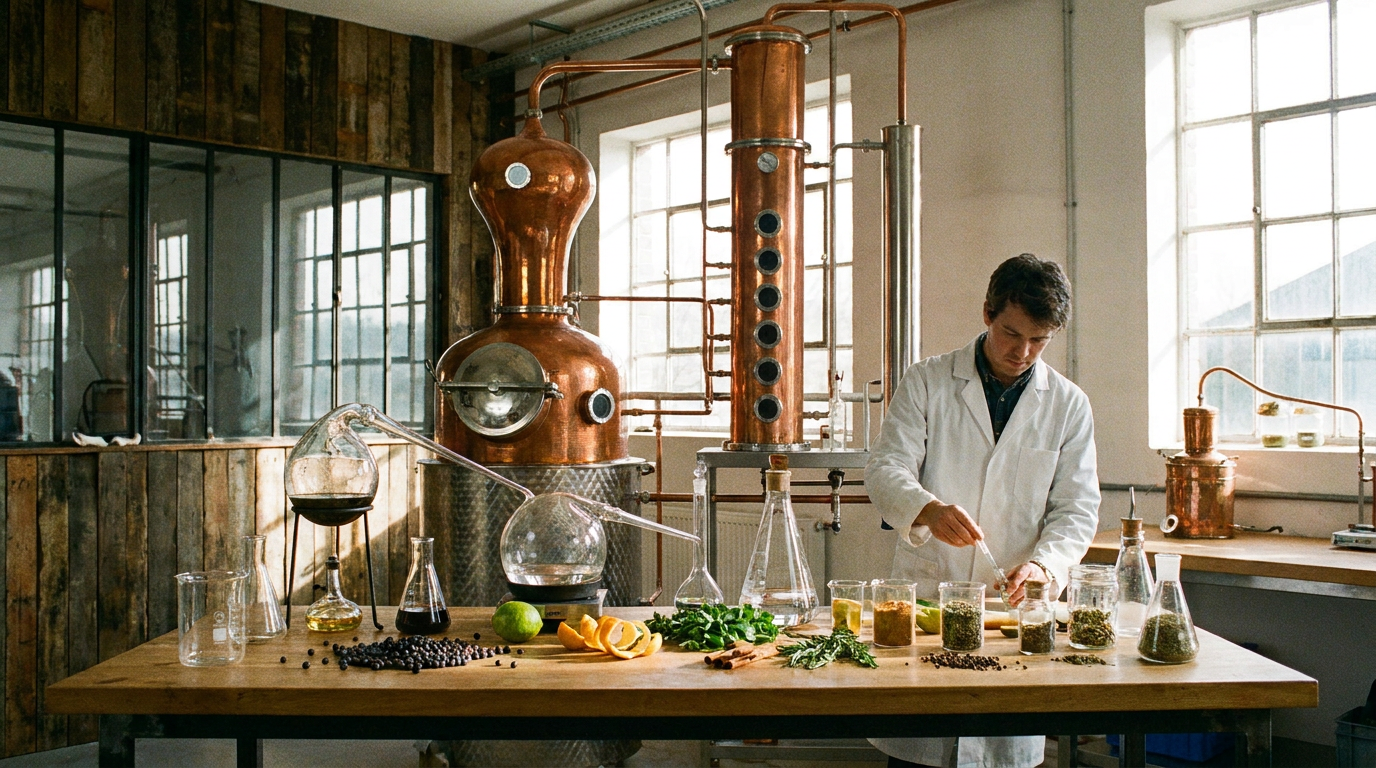
Road One: Make It, Then Unmake It — Dealcoholization
The first road starts in familiar territory: you produce a genuine, full-strength spirit — fermented, distilled, sometimes barrel-aged — and then you remove the ethanol. Two technologies dominate this work, as covered in :
FoodNavigator's explainer on how non-alcoholic spirits are made
- Vacuum distillation. Ethanol normally boils at 78°C, a temperature that scorches delicate aromatics. Pull a vacuum over the liquid, and alcohol boils off at just 35 to 40°C — barely warmer than a summer afternoon. The gentle temperature protects heat-sensitive flavor compounds that would otherwise cook away, a detail explained accessibly in ABC News' science explainer on how no-low drinks are made.
- Reverse osmosis and membrane separation. Here the spirit is pushed through semi-permeable membranes that let small molecules — ethanol and water — pass through while holding back the larger flavor and aroma compounds. The alcohol is then separated out, and the concentrated flavor fraction is reconstituted with water. ScienceDirect's chapter on membrane technologies for nonalcoholic drinks covers the underlying science in peer-reviewed depth for the technically inclined.
Dealcoholization carries real trade-offs. Even the gentlest process strips some volatile aromatics along with the alcohol — ethanol and aroma are stubbornly loyal traveling companions. The finished liquid tends toward a thinner body than its full-proof parent, and running product through distillation twice (once to make it, once to unmake it) raises production cost meaningfully. What you buy with that cost is authenticity: when your label says "distilled," it is telling the truth, and both trade buyers and educated consumers reward that.
Road Two: Build It From Zero — Direct Botanical Construction
The catch is chemistry. Water is a far weaker solvent than alcohol. Ethanol pulls oils, resins, and aromatic compounds out of botanicals with ease; water leaves most of them behind. Direct-build formulation means engineering around that limitation with distillation technique, extraction sequencing, and emulsion science — which is why the gap between a great direct-build spirit and a sad one is so wide.
The second road never ferments anything. Direct-build spirits are assembled from botanical distillates, macerations, vapor infusions, and hydrolates — aromatic waters captured from steam-distilling plants. Juniper, cardamom, grapefruit peel, gentian root, smoked teas, charred oak chips: the formulator's palette is enormous, and because there is no parent spirit to imitate, the creative freedom is total. This is how you build flavors that have no full-proof equivalent at all — a category-defining advantage the biggest direct-build brands have exploited brilliantly.
Why the Road You Pick Is a Brand Decision, Not a Lab Decision
Knowing how the liquid gets made is step one. What actually separates the winners from the shelf failures is something harder: solving all the problems ethanol used to solve for free.
This is exactly why the Gold Standard process starts where it does. In our Design stage, defining the Gold Standard product means choosing your production road — and the story it enables — before a single bench sample gets made. Pick the road after formulation starts, and you will reformulate twice.
Here is the part most teams miss: the production method is a marketing decision wearing a lab coat. Consumers and trade buyers judge authenticity partly on process. A whiskey brand extending into non-alc almost certainly needs the dealcoholization story — "we distill it for real, then remove the alcohol" is a narrative that protects the parent brand's craft credentials. A new standalone brand chasing a flavor territory no full-proof spirit occupies is often better served by direct build, where the story is invention rather than imitation.
The Formulation Challenges No One Talks About
Here is the truth we share with every client who walks in wanting a zero proof product: ethanol is the hardest-working ingredient in beverage, and it does five jobs at once. It delivers heat. It builds body. It carries aroma. It preserves the liquid. And it balances flavor. Remove it, and you have not simplified your formulation — you have inherited five engineering problems simultaneously. Great non-alcoholic spirits are among the hardest formulation challenges in all of beverage development, and every shortcut shows up in the glass.
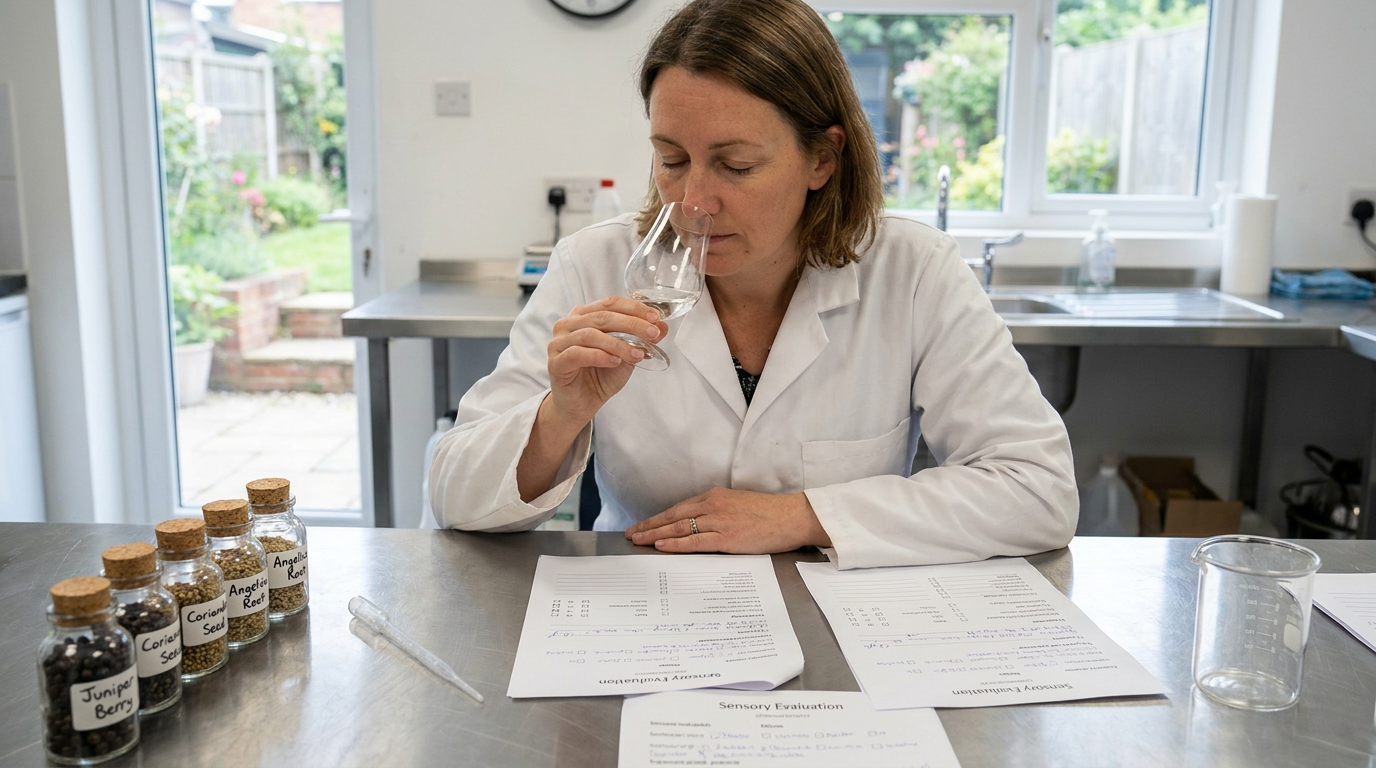
Replacing the Burn: Yes, Non-Alc Spirits Can Deliver Real Heat
Do non-alcoholic spirits burn? Well-formulated ones absolutely do. The warmth drinkers expect from a sip of whiskey comes from ethanol activating heat receptors in the mouth and throat — and those same receptors respond to other compounds. Skilled formulators recreate the sensation using capsaicin-style heat from chili extracts, the sharp pungency of peppercorn and ginger, and carefully dosed botanical irritants that trigger genuine warming without any burn-out or lingering spice. Dosage is everything: too little and the liquid reads as juice, too much and it reads as hot sauce. The window of "reads as spirit" is narrow, and hitting it takes iteration after iteration on the bench.
Rebuilding the Body: Why Thin Liquid Killed the First Generation
Ask any bartender what disappointed them about early non-alc spirits and you will hear the same word: thin. Ethanol at 40% ABV contributes real viscosity and a mouth-coating weight that plain water cannot fake. First-generation products that ignored this problem poured like flavored water, and consumers who paid $35 for the bottle did not come back for a second one. Thin liquid is the single biggest reason early entrants disappointed.
The modern toolkit solves it. Glycerol contributes smooth weight. Plant-derived gums and texture builders restore viscosity and that satisfying cling on the side of the glass. The formulation additives and functional ingredients now available to zero proof developers — cataloged in — mean there is no longer any excuse for a watery pour. But these systems interact with acidity, botanicals, and heat components in ways that demand real expertise to balance.
FoodNavigator's reporting on the non-alc formulation toolkit
The Volatility Problem: Flavor That Survives Month Six
Ethanol does one more quiet job: it carries and stabilizes volatile top notes — the bright citrus, the delicate florals, the fresh herbal lift that hits your nose before the first sip. Without alcohol holding them in solution, those delicate aromatics fade fast. A non-alc spirit that tastes brilliant at the bench can smell like nothing eight months later in a warm warehouse. Serious development means engineering the flavor system twice: once for the first pour, and once for month six on the shelf, with accelerated shelf-life testing to prove the aroma holds.
Preservation: The Job Nobody Sees Until It Fails
At 40% ABV, a spirit is essentially self-sterilizing — nothing dangerous grows in it, ever. At 0.4% ABV, your beautiful botanical liquid is, microbiologically speaking, food. Preservation becomes a genuine system-design problem: pH control and acidification, sterile filtration, preservative selection, and packaging decisions all have to work together as one coherent strategy. Get it wrong and the consequences are brutal — a spoiled premium bottle destroys a brand faster than any bad review, because the customer who opened a cloudy $38 purchase tells everyone.
The Regulatory Layer: You Are Not in TTB Territory Anymore
Here is the compliance surprise that catches alcohol brands off guard: your zero proof product probably is not regulated the way your spirits are. Most non-alcoholic spirits fall under FDA food labeling rules rather than TTB distilled spirits rules, a jurisdictional split explained clearly in . That means nutrition facts panels, FDA-compliant ingredient statements, and a completely different rulebook for what your label can say. Terms like "distilled" and "non-alcoholic" each carry specific compliance weight, and functional claims raise the stakes further. Alcohol brands launching non-alc extensions face a federal framework they have never operated in, as makes plain. This is exactly the kind of unglamorous, launch-saving detail the Develop stage exists to handle.
McDermott's Alcohol Law Advisor coverage of TTB formulas and zero-proof launchesVicente LLP's FAQ on non-alcoholic beverage regulations
None of this is theoretical for us. When Fuego Rojo came to Menu Collective with a backyard michelada recipe and a vision, our team took it Every one of these challenges is solvable with the right team at the bench. The next question is strategic rather than technical: how does your brand actually enter this category without diluting what it stands for?
from concept and formulation through co-packer selection, building a six-flavor non-alcoholic michelada platform
— solving heat delivery, body, preservation, and scale-up for real, on a real timeline, for a real launch. That is what it looks like when the five jobs of ethanol get replaced properly: not a workaround, but a product platform built to grow.
How to Enter the Non-Alc Spirits Category Credibly
You believe the data. You respect the formulation challenge. Now comes the decision that will dominate your internal debates: do you extend an existing alcohol brand into zero proof, or build something new? There is no universal answer — but there is a clear framework for choosing.

When a Non-Alc Line Extension Wins
But the model only works under one condition: the liquid has to honor the flagship. A line extension wins when the parent brand has strong liquid credentials and the non-alc version can honestly deliver a comparable sensory experience — the heat, the body, the aromatic signature that made the original famous. Consumers punish pale imitations of a flagship without mercy, because every disappointing sip of the zero proof version quietly erodes trust in the brand that made it. If your dealcoholized expression cannot stand next to the original with pride, do not put the family name on it. That is not caution; that is brand stewardship.
Extending your existing brand brings serious advantages to the table: built-in consumer trust, immediate shelf recognition, and distribution leverage your salesforce can activate tomorrow. Guinness 0.0 and Heineken 0.0 proved the model in beer — the parent brand's equity transferred, and the non-alc version became a genuine volume driver rather than a footnote.
When a Standalone New Brand Wins
The alternative path is building fresh — a new name, a new story, a new bottle. You start from zero awareness, which is a real cost. What you gain is the freedom to own occasions your parent brand could never credibly claim: the workday drink at a 2 p.m. desk, the wellness-forward evening ritual, the daytime social event where a heritage whiskey label would feel like it wandered into the wrong party. The category's pioneering brands were all standalone builds for exactly this reason — they were not asking permission from a parent brand's positioning, so they could invent the occasion from scratch.
The occasion math supports the standalone play, too. found that 40% of Americans resolved to reduce their alcohol consumption, with the intent strongest among 18-to-34-year-olds — the exact demographic building new drinking rituals right now. Those rituals are unclaimed territory. A new brand can plant a flag on them; a legacy label mostly cannot.
Ipsos' consumer tracker on Americans planning a sober future
Pricing, Positioning, and the One-Purchase Trap
Whichever path you choose, respect this rule: the category supports premium pricing, but only when the liquid, the bottle, and the story all earn it together. Consumers have shown they will happily pay $30-plus for a zero proof spirit — once. Whether they pay it twice depends entirely on what is in the glass. A thin liquid in a beautiful bottle is a one-purchase product, and in a category built on repeat ritual, a one-purchase product is a slow-motion failure. Invest in the liquid first. The packaging and narrative amplify quality; they cannot substitute for it.
Channel Strategy: Retail Proves It, Bars Build It
The off-premise growth numbers are proven — that is where the scanner data lives. But do not sleep on the on-premise. Bartender advocacy made this category's leading brands, full stop. When a respected bartender builds a zero proof cocktail program around your spirit, three things happen: consumers trial the product in its best possible expression, the ritual gets modeled in public, and your brand earns the craft credibility no ad budget can buy. On-premise placements build the ritual; off-premise captures the repeat purchase. A credible launch plan works both.
Design, Develop, Deliver: The Same Rigor as a Flagship
Map the whole decision to a disciplined process. Design: define the Gold Standard sensory target — the exact heat, body, aroma, and finish your product must deliver, and the production road that gets you there. Develop: engineer a formulation that is scalable, shelf-stable, and compliant with the FDA framework this category actually lives under. Deliver: build the sales, marketing, and channel plan that turns liquid into velocity. Entering credibly means treating your non-alc product with the same rigor as a flagship spirit — because your consumer certainly will.
"We build with you, not for you."
That philosophy is why the range of what we have brought to market runs from coffee-based drinks and low-ABV beverages to functional wellness blends — you can see the breadth in , and follow the category coverage as it evolves on Before we bring this home, let's clear the remaining questions that readers — and search engines — keep asking about this category.
Menu Collective's Trends + Insights blogMenu Collective's beverage case studies
.
Non-Alcoholic Spirits FAQ
Do non-alcoholic spirits give you a buzz?
No. At under 0.5% ABV, non-alcoholic spirits cannot intoxicate you. Some products include functional ingredients like adaptogens that promote a mild relaxation effect, and the ritual of a well-made drink carries real psychological satisfaction — but there is no alcohol buzz, and that is precisely the point.
Are non-alcoholic spirits healthy?
They remove alcohol's health risks and are typically low or zero calorie, but they are not health products by default. Formulation determines sugar, sodium, and functional content, so read the label. Brands making functional claims invite FDA and FTC scrutiny, a regulatory reality outlined in , so careful formulation and labeling matter on both sides of the shelf.
Juris Law Group's insights on non-alcoholic beverage regulatory challenges
Do non-alcoholic spirits burn?
Well-made ones do. Formulators recreate alcohol's warming sensation using botanical heat sources — chili extracts, ginger, and peppercorn pungency — dosed precisely to trigger the same receptors ethanol activates. The result is genuine warmth on the palate and throat. Poorly made products skip this work, and you taste the absence immediately.
What are the best non-alcoholic spirits?
The best non-alcoholic spirits share four qualities: real body and viscosity rather than watery thinness, a genuine warming sensation, layered aromatic complexity that evolves in the glass, and balance between bitter, sweet, and savory elements. Judge any bottle against those four criteria and you will find your favorites fast — regardless of the brand name.
How long do non-alcoholic spirits last after opening?
Shorter than full-proof spirits, because there is no alcohol to preserve the liquid. Most opened bottles are best consumed within weeks to a few months, and refrigeration after opening is often recommended. Formulation quality matters enormously here — well-engineered preservation systems keep flavor and safety intact far longer than shortcuts do.
With the questions answered, let's step back and look at the decision actually sitting in front of you.
The Zero Proof Opportunity Is Real — and the Clock Is Running
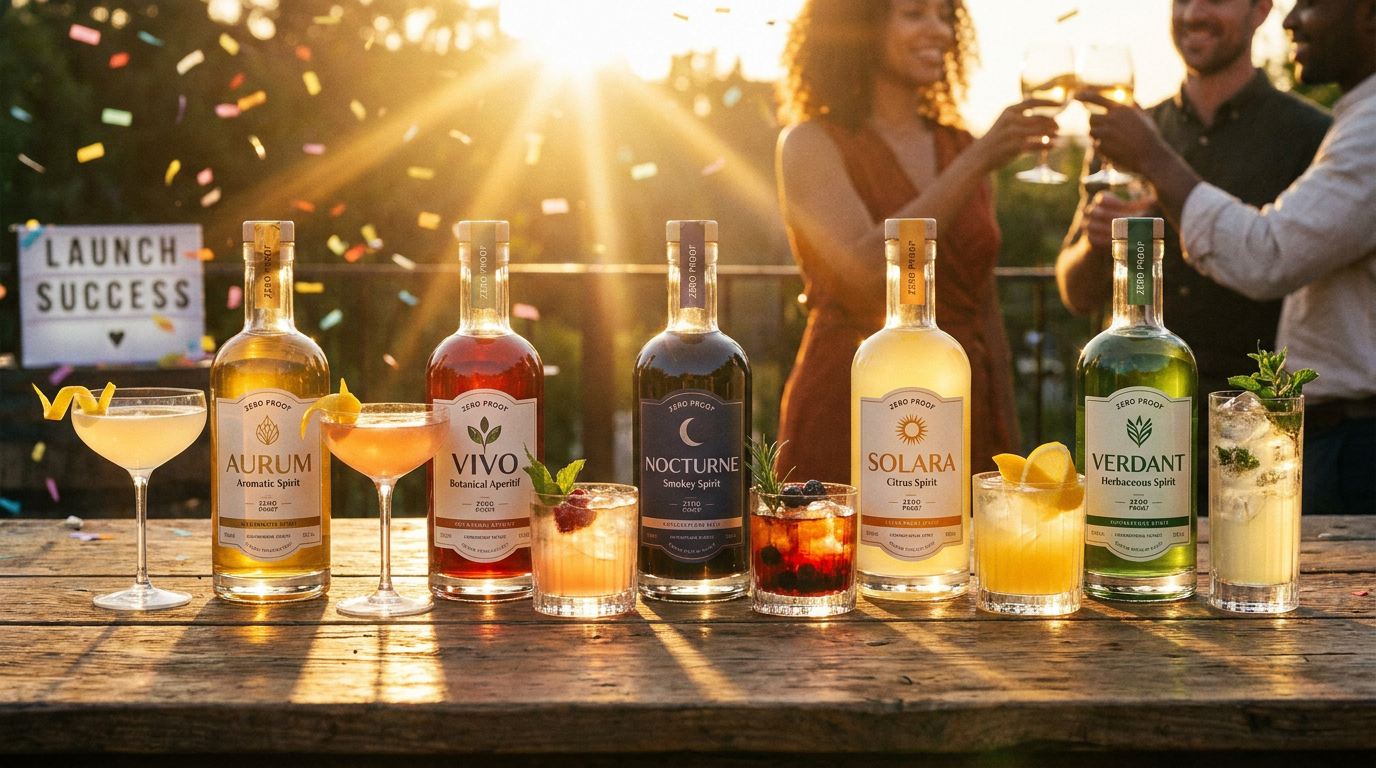
The sober-curious movement changed everything. It turned moderation from a resolution into a lifestyle, from a hashtag into a line item in the scanner data. The question is no longer whether zero proof deserves a place in your portfolio strategy. The question is whether you will build something worthy of the shelf price — a product with real heat, real body, real aroma at month six, and a story that earns its bottle.
Strip this article down to its essentials and three truths remain. First, demand for non alcoholic spirits is structural: near double-digit category CAGR, generational behavior change documented in peer-reviewed literature and retail scanner data alike, and a buyer base where 92% still purchase alcohol — which means every zero proof sale is repertoire expansion, not cannibalization. Second, the winners will be the brands that respect the difficulty. Great non-alc spirits are among the hardest formulation challenges in beverage, because ethanol did five jobs at once and every one must be rebuilt by hand. Shortcuts show up in the glass, and the glass is where consumers vote. Third, the category's leadership positions are still being written. Europe validated the model; North America is under-penetrated; the brands moving with rigor right now will define the category's next decade.
That is a walkable path with the right partner beside you. Menu Collective brings 45+ years of beverage development experience across any base and any format — from canned cocktails to dairy, from functional wellness blends to the zero proof spirits this whole article has been about. We build alongside you, from first concept through commercialization, and the conversation starts whenever you are ready to .
reach out to our team
Ready to Build Your Zero Proof Gold Standard?
Let's create something new together. We work with you and alongside you, from Design through Develop to Deliver — defining your Gold Standard sensory target, engineering a formulation that scales, and building the plan that gets it into glasses.
Book a free consult with Menu Collective — or call us directly at (630) 642-0721. The category is moving. Let's move with it.