That is not an answer. It is a sales tactic.
You have asked five companies what it costs to develop a drink. You have received five variations of the same sentence: "it depends."
Here is the beverage development cost conversation the industry keeps having in private, published in public. A lean regional launch, one or two SKUs, a straightforward non alcoholic formulation, runs roughly $50,000 to $150,000 to get to first shelf and a soft launch. An ambitious national launch, three or more SKUs, premium or alcoholic positioning, custom packaging and real marketing behind it, runs $750,000 to $3,000,000 or moreNobody talks about the real cost of beverage development. We will. You will not have to fill in a contact form to find out what your drink costs, and you will not have to sit through two discovery calls before someone will say a number out loud. Every figure below is an industry range drawn from current US market conditions. Where sources disagree, and on one important line item they genuinely do, we say so.
Read those two numbers again. The gap between them is enormous, and that gap is not sloppiness on our part. It is the entire subject of this article. Everything that follows explains what moves a project from the bottom of that spread to the top, and which of those forces a founder actually controls.
across the first 24 months.
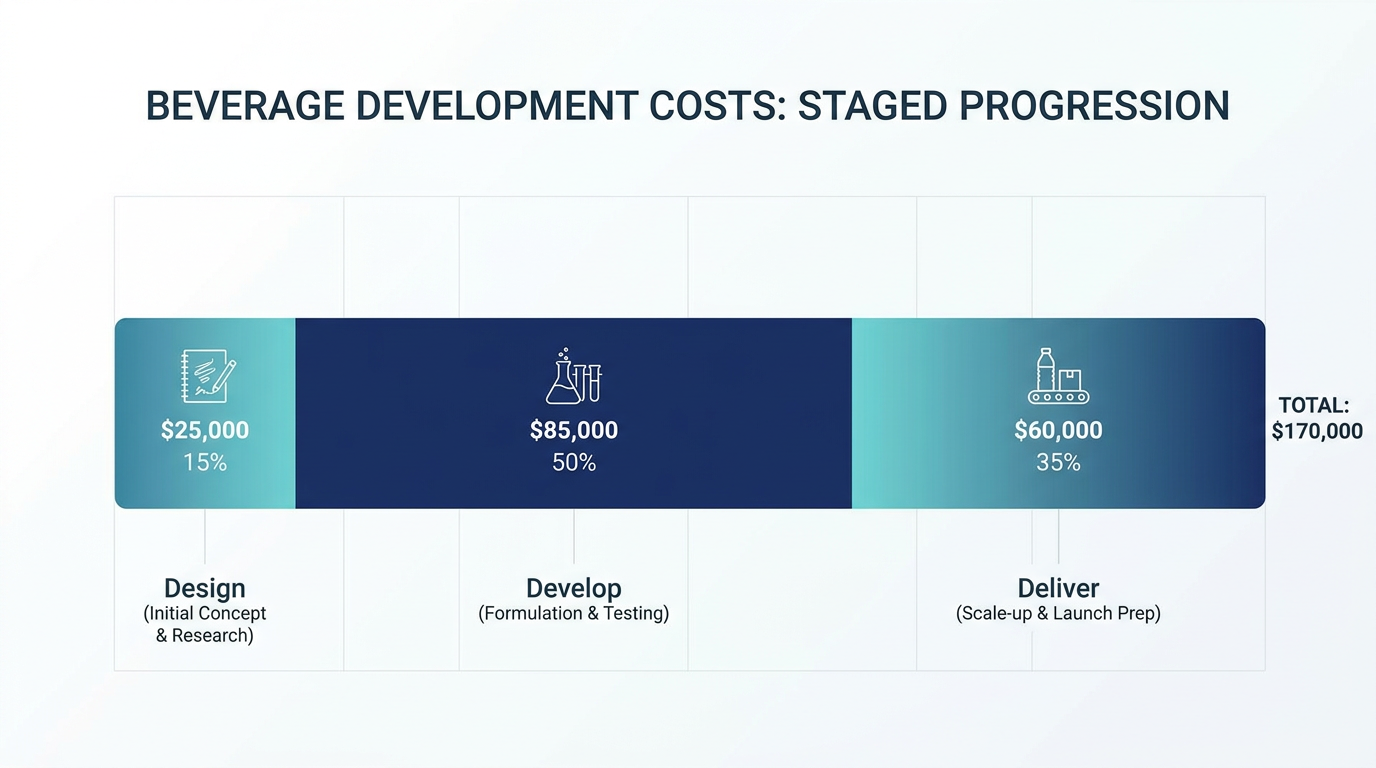
We have organized the costs along Design, Develop and Deliver, because that is the order in which money actually leaves a founder's bank account. It is also worth reading this alongside its companion piece on , since cost and calendar move together, and a delay is almost always a cost wearing a different hat. If you are earlier in the process and want the full sequence rather than just the budget, is the wider map this article sits inside.
our founder's roadmap to starting a beverage companyhow long a beverage project takes
So why are these numbers so hard to find in the first place? That question deserves an honest answer before any of the others.
Why Nobody Gives You a Straight Answer on Cost
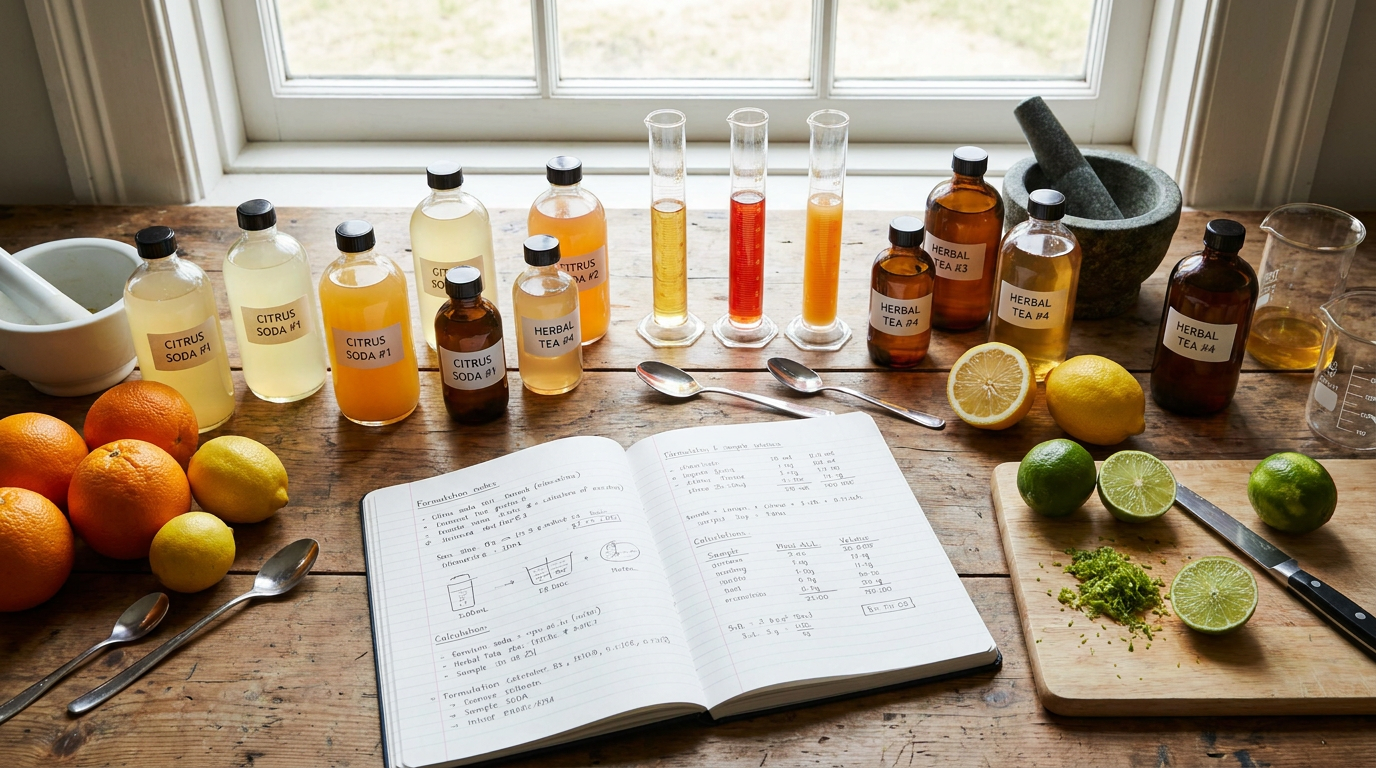
There are three standard non answers, and once you can name them you will hear them everywhere.
The first is "it depends on your goals." This one is frustrating because it is partly true, which is what makes it such an effective deflection. Yes, it depends. But a doctor who says "it depends on your symptoms" and then declines to examine you has not practiced medicine. The useful version of that sentence names what it depends on and gives you a range for each scenario. The useless version stops at "it depends" and waits for you to ask a follow up question, which is the actual goal.
The second is "let's scope it together." Warmer, more collaborative sounding, same function. Scoping together is genuinely how good projects begin. But scoping is not a prerequisite for stating a range. If a company has formulated forty beverages, it knows what the fortieth cost. Withholding that until you are emotionally committed to the process is a choice.
The third is the proposal that arrives only after two discovery calls.The illegitimate reason is simpler. An unclear number keeps a founder engaged, and an anchor set later, after investment of time and hope, converts better than an anchor set early. That is standard practice across a lot of service industries. It is not fraud. It is just not how we want to start a relationship with someone who is about to spend their savings.
Now, in fairness, there is a legitimate reason costs vary, and it is not a small one. A two ingredient sparkling water and a shelf stable dairy based functional beverage with three claims on the front of the can are not the same project and never will be. One needs a flavor house, a co-packer and a label. The other needs stability data, claim substantiation, protein and pH interaction work, a processing authority letter and a testing program that runs for a year. Quoting both from the same range would be dishonest in the other direction. Honest variability is real, and pretending every beverage costs the same would be its own kind of lie.
By the time the number appears, you have invested three hours, explained your vision twice, built a rapport with someone whose name you now know, and started imagining the product on a shelf. The number lands into a mind that has already decided it wants this. That sequencing is not accidental.
Here is where the distinction matters, and this is the only place in this article where the word will appear. A consultant sells you a document. The deliverable is the recommendation, the deck, the strategy, the roadmap. Once it is handed over, the engagement is largely complete, and whether the numbers inside it survive contact with a pilot line is somebody else's problem. A collaborator builds the product with you. Which means a collaborator is standing in the room when the budget runs out at month nine, holding a formulation that needs another pilot run nobody planned for. We have a direct interest in your budget being accurate, because we live inside it with you. That is not a moral position, it is a structural one. We have written about , and it is the single idea that shapes how we price, scope and communicate.
why the difference between a consultant and a collaborator changes everything in beverage development
Most founders are not scared of a big number. They are scared of a number that keeps moving.
That is the part the industry gets wrong. We have sat across from founders who heard "$180,000" and nodded, because it was a real figure they could raise against, plan around and defend to an investor. The same founders come apart when a $60,000 project quietly becomes $95,000 through four amendments nobody flagged in advance. The absolute size of the number is rarely the problem. The uncertainty is. Uncertainty is what makes a founder stop returning calls, delay a decision by two quarters, or launch underfunded and stall three months after first production.
So let us set the ground rules for everything below. Every figure is an industry range compiled from current US market conditions across independent formulators, analytical labs, packaging suppliers and co-packers. They are not a Menu Collective rate card. Complexity determines where inside a range a specific project lands, and some projects land outside the range entirely for legitimate reasons. The structure follows the three stages we use on every build, which we describe in full in The rest of the industry will not put this on a public page. We will. Here is the whole picture.
The Menu Collective Way
, because grouping costs by stage tells you not just what you will spend but when.
The Full Beverage Development Cost Breakdown at a Glance
What follows are current US industry ranges, not a price list from us. Where a project sits inside each range is driven almost entirely by complexity: ingredient count, claims, format, processing requirements and how many SKUs you are launching at once. Scan it, then read the sections underneath to understand why each number behaves the way it does. The stages map to how in practice.
we structure formulation scope
Design: defining and formulating the product
- Concept and Gold Standard definition: benchmarking, target profile, positioning and sensory target. Often bundled into formulation scope.
- Formulation, simple SKU: few ingredients, no functional claims. $5,000 to $15,000
- Formulation, commercial ready single SKU: full commercial formulation for one SKU. $20,000 to $45,000
- Formulation, complex or multi SKU: functional beverage or multiple SKUs. $50,000 and up
Develop: proving it works, lasts and complies
- Bench and lab validation: small scale validation work. $5,000 to $25,000
- Pilot plant runs: day rates plus materials, 3 to 8 runs typical. $500 to $2,000 per day, plus $1,000 to $5,000 per run in materials.
- Shelf life, short study: a few time points, simple product. $2,500 to $7,500
- Shelf life, comprehensive study: 6 to 18 months, ambient and accelerated, micro, chemical and sensory. $7,500 to $40,000
- Nutritional panel: per SKU analysis. $150 to $500 per SKU
- Microbial and pathogen panels: per sample. $200 to $500 per sample
- Chemical, preservative and heavy metals testing: per sample. $500 to $1,200 per sample
- Allergen panels and optional certifications: per panel or per certification. $200 to $3,000
Deliver: packaging, production and market entry
- Packaging and label design: design, dielines and regulatory label review. $5,000 to $30,000
- Custom bottle molds and structural tooling: proprietary container tooling. $15,000 to $75,000
- First small canned run: approximately 10,000 twelve ounce cans, all in. $10,000 to $20,000, roughly $1.00 to $2.00 per unit
- Production at scale: approximately 50,000 units. $0.50 to $0.80 per unit
- Voluntary certifications: organic, non GMO, gluten free. $500 to $3,000
- Initial inventory and first production: full first run inventory. $20,000 to $100,000 and up
- Marketing and brand launch: brand, content and launch activity. $5,000 to $50,000 and up
Stack those into the two scenarios most founders actually fall into:
A lean regional launch: roughly $50,000 to $150,000. One or two SKUs, simple non alcoholic formulation, stock packaging, a modest first production run and a regional go to market.
An ambitious national launch: roughly $750,000 to $3,000,000 or more across 24 months. Three or more SKUs, premium or alcoholic positioning, custom packaging and tooling, national distribution and serious marketing spend.
One honest note before we go deeper. Ranges compiled from formulators, independent labs and co-packers do not always agree with each other, and we would rather show you the seams than pretend the data is tidier than it is. Take the per unit cost at 50,000 units. The range above says $0.50 to $0.80. Several current US co-packer cost guides put the same run closer to , and both figures are defensible depending on what is inside the number. A tolling rate that covers filling, line time and QC behaves very differently from an all in landed cost that also carries can bodies, ends, decoration, ingredients and secondary packaging. Neither source is wrong. They are answering slightly different questions.
$0.75 to $1.40 per can
That is the most useful habit you can build from this whole article. A quote that lands outside these ranges is not automatically wrong. It is a prompt to ask exactly one question: what is included? Half of all beverage budget disasters trace back to two parties using the same number to mean two different things.
A list tells you what things cost. It does not tell you why, and it certainly does not tell you which of these numbers you can influence. That starts at the very beginning, where the money first moves.
DESIGN: What It Costs to Define and Formulate Your Product
A defined Gold Standard makes that conversation happen on day two, on paper, for free.
Here is how that failure actually plays out, and we have watched it happen from the outside more than once. A founder describes the drink they want as "refreshing, not too sweet, kind of like a craft soda but cleaner." The formulator hears that and builds something at 6 grams of sugar per serving with a crisp, dry finish. The founder tastes it and says it is too austere, they meant "not too sweet" relative to a mainstream soda, so more like 22 grams. That is not a tweak. That is a different product with a different sweetener system, a different acid balance, a different mouthfeel problem to solve and a different cost per unit. Six weeks and a meaningful slice of the formulation budget just evaporated because two people used the same three words to mean different things.
This sounds like administrative throat clearing. It is the highest leverage document in the entire project, and founders who skip it pay for the same work twice.
We call the answer the Gold Standard. It is the agreed target product, the version every sample gets measured against, defined before formulation work begins. A proper Gold Standard specifies the taste and sensory target, the texture and mouthfeel, the appearance, the target cost per unit, the claims that will appear on the pack, and the format. It is written down. Both parties sign up to it.
Before anyone measures a single ingredient, there is a question that determines more of your final budget than any other decision you will make: what exactly are we building?
What formulation actually costs, and why
A simple formulation runs roughly $5,000 to $15,000. Few ingredients, no functional claims, a flavor and sweetness system that behaves predictably. Think a flavored sparkling water or a straightforward iced tea.
A commercial ready formulation for a single SKU runs roughly $20,000 to $45,000. This is the real number for most founders, and the word doing the work is "commercial." It is not a good tasting sample. It is a formula with specified ingredients from named suppliers at volume pricing, defined processing parameters, a costed bill of materials and documented tolerances.
A complex functional beverage or a multi SKU platform starts at $50,000 and climbs. Active ingredients, protein systems, dairy or dairy alternatives, botanical extracts, anything requiring claim substantiation, and any project where you are building several products that must taste like siblings rather than strangers.
Those tiers look arbitrary until you do the labor math, so let us do it. Experienced food scientists and beverage formulators bill roughly $100 to $250 per hour in the current US market. A simple SKU absorbs 40 to 80 hours of that time across benchmarking, iteration, bench trials, supplier sourcing and documentation. Multiply it out: 60 hours at $150 gives you $9,000, which sits neatly inside the simple tier. A complex formula absorbs 150 to 300 hours, because every active ingredient interacts with every other one and each interaction has to be tested rather than assumed. Two hundred hours at $200 is $40,000, and that is before the multi SKU multiplier.
The tiers are not pricing strategy. They are arithmetic.
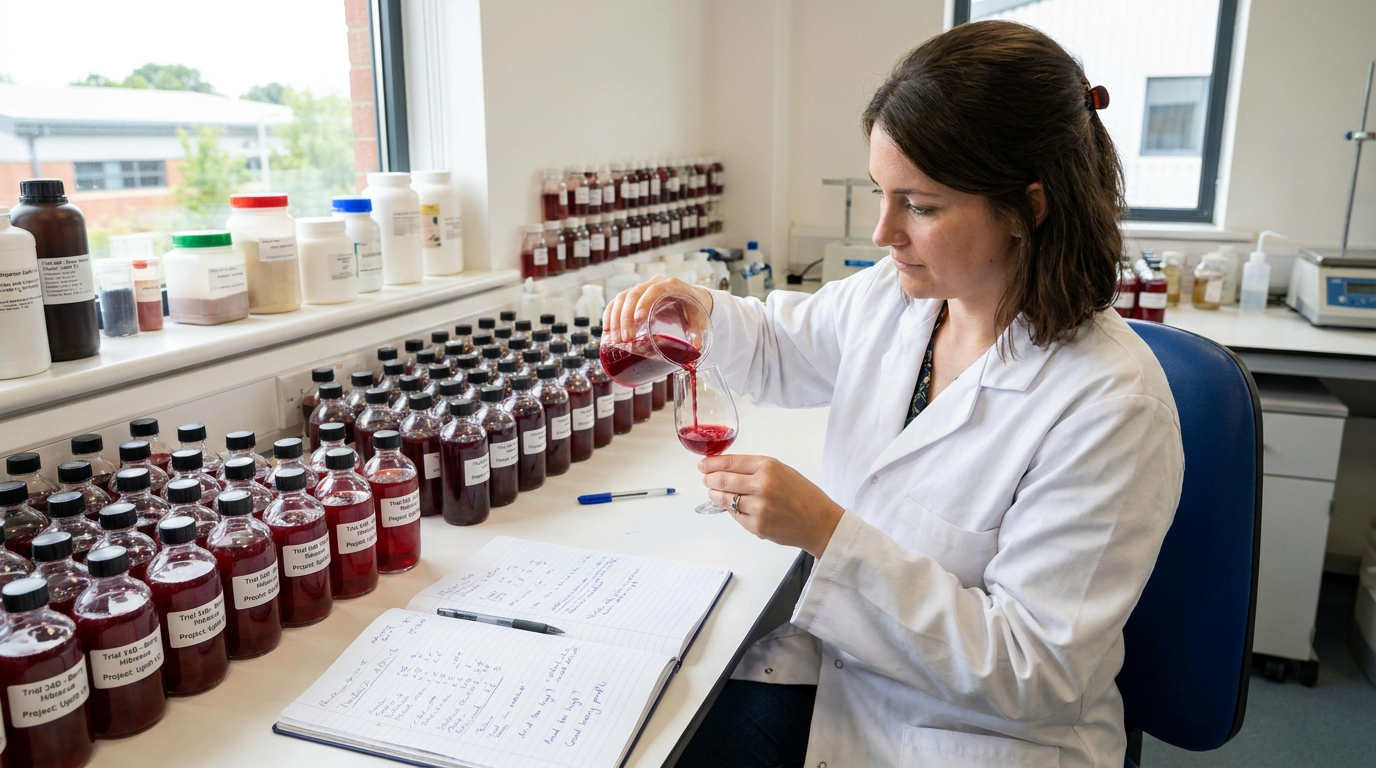
A recipe is not a formulation
This is the single most common and most expensive misunderstanding founders bring to the table, so it is worth being blunt about it.
You have a recipe. It might be excellent. Your friends genuinely do love it, and they are not just being polite. But a kitchen recipe and a commercial formulation are different objects that happen to produce a similar liquid:
- A recipe uses the ingredients you can buy. A formulation uses ingredients available in commercial volume, from suppliers with food safety documentation, at a price that survives contact with your target margin.
- A recipe is measured in cups. A formulation is measured in percentages by weight, scalable to a 3,000 gallon batch without changing behavior.
- A recipe assumes a stove. A formulation accounts for processing tolerances, whether the product is hot filled, tunnel pasteurized, cold filled with preservatives or retorted, and what each of those does to flavor, color and nutrients.
- A recipe is consumed today. A formulation controls pH and water activity so the product remains safe and stable after eight months in a warehouse in Phoenix that hits 95 degrees in August.
- A recipe can cost whatever it costs. A formulation has to hit a cost per unit that supports your wholesale price, your distributor margin and your retail shelf price simultaneously.
Which leads to the hardest sentence in this section. A great tasting bench sample that cannot be manufactured at scale, cannot be sourced consistently, or lands at a cost per unit your retail price cannot support is not a formulation. It is an expensive sample. We have seen founders arrive holding one, convinced they are 80 percent finished, when the commercially viable version of that product requires starting substantially over.
Why SKU count changes everything at this stage
Building one product and building a platform are different disciplines. When we worked with Fuego Rojo on , the work was not six single SKU projects billed six times. It was a base system that had to hold together across six distinct flavor expressions, each one recognizable as part of the same family, each one stable, each one costed. That is a genuinely different scope, and the budget reflects the architecture rather than the count.
a six flavor non alcoholic michelada platform
Complexity from the other direction shows up in premium and alcoholic categories. Developing meant working inside alcohol's constraints on flavor perception, mouthfeel and regulatory approval at the same time as hitting a premium sensory target. Complex formulation budgets are not padded. They are absorbing real technical problems that simple formulations never encounter.
an upscale hard seltzer for Che Che
Time and money move together here too. A properly defined Gold Standard compresses the calendar as much as it protects the budget, which is the argument we make in detail in our piece on A finished formulation feels like an ending. It is not. On paper, a formulation is a hypothesis, and the next stage is where that hypothesis meets a lab, a pilot line and a regulator, all of which have opinions.
how long beverage development actually takes
.
DEVELOP: Bench Work, Pilot Runs, Shelf Life and Regulatory Costs
This is the stage founders underestimate most reliably, because nothing here produces something you can photograph. It produces evidence. Evidence that the product can be made outside the room it was invented in, that it survives a year, that it is safe, and that it is legal to sell.
Bench and small scale lab validation runs roughly $5,000 to $25,000. What that buys is proof that the formula holds up when it leaves the original development environment. Different water chemistry, different mixing equipment, different shear rates, different ingredient lots from different suppliers. Formulas that behaved perfectly on a bench have separated, browned or lost carbonation the first time somebody made them somewhere else, and finding that out at this scale costs thousands rather than the six figures it costs to find out during a production run.
Pilot runs, and the fact that some of them fail
Pilot plant work is billed as day rates of roughly $500 to $2,000 per day, plus materials. Budget 3 to 8 pilot runs, each consuming roughly $1,000 to $5,000 in ingredients and supplies.
Now the part almost nobody puts in a proposal: first pilot runs frequently fail, and that failure is a normal, budgeted part of the process.The founders who get hurt here are the ones who budgeted for two runs because two runs was what the optimistic version of the plan assumed. When run three is necessary and there is no money allocated to it, the project stops. Not because the product failed, but because the budget did.
It is not a sign that your formulator is bad or your product is flawed. A pilot run exists precisely to discover what breaks when real equipment meets your formula. The fill temperature drops the carbonation below spec. The viscosity clogs a filler designed for thinner liquids. A botanical extract that dissolved beautifully in a beaker leaves sediment in a 500 gallon tank. The pilot found the problem. That is the pilot working.
Shelf life: the cost founders most want to skip
A short stability study covering a few time points on a simple product runs $2,500 to $7,500. A comprehensive study across 6 to 18 months, with both ambient and accelerated conditions plus microbiological, chemical and sensory testing at each time point, starts around $7,500 and reaches $25,000 to $40,000.
We will be direct. Shelf life is the line item founders most want to cut, and it is the one that most reliably destroys a brand when cut.
Think about what the failure mode actually looks like. Your product ships in March. In July, a consumer in a hot climate opens a can that has separated into layers, or browned, or developed an off flavor, or in the worst case supported microbial growth. That is not a quality complaint. That is a recall conversation, with a retailer who will remember it, a distributor who will deprioritize you, and a social media post with a photograph. The $30,000 you did not spend on stability testing becomes a number with a comma in a place you did not want it.
Accelerated testing exists to compress that timeline, holding product at elevated temperature to approximate months of aging in weeks. It is genuinely useful and it is genuinely an approximation. Real time ambient data is what a serious retailer will eventually ask to see.
Analytical testing, and the multiplication nobody warns you about
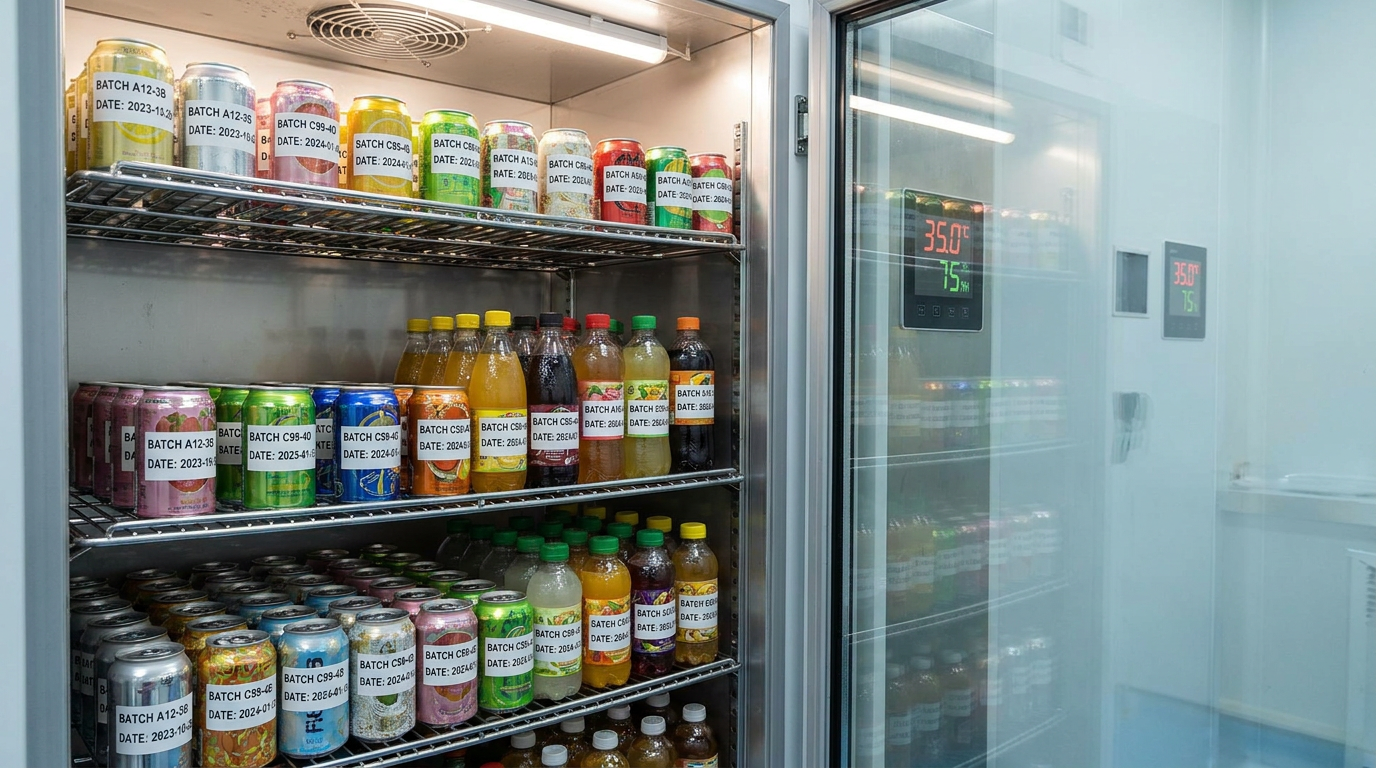
Here are the per unit costs. Read the words "per SKU" and "per sample" carefully, because they are where budgets quietly detonate:
- Nutritional panel: $150 to $500 per SKU
- Microbial and pathogen panels: $200 to $500 per sample
- Chemical composition, preservative and heavy metals testing: $500 to $1,200 per sample
- Allergen panels and optional certifications: $200 to $3,000 per panel or certification
A founder launching three flavors reads that list, mentally totals somewhere around $2,000, and moves on. But three flavors means three nutritional panels, and micro and chemical panels are run per sample across multiple stability time points per flavor. A comprehensive program pulling samples at six time points across three SKUs is eighteen sample sets, not three. That line item was never $2,000. The explains what the panel has to contain and why the analysis is specific to each individual formula, which is exactly why it cannot be shared across flavors.
FDA's Nutrition Facts Label resource
Regulatory costs, in plain terms
For non alcoholic beverages, there is no FDA premarket approval requirement. You do not submit your drink for permission before selling it. What is mandatory is label compliance, and the requirements are detailed, specific and unforgiving. The is the authoritative source, and we link it so you can verify everything yourself rather than take our word for it. Getting a label wrong is rarely a fine. It is reprinting 40,000 labels, paying labor to relabel or destroy existing stock, and missing a delivery window you promised a buyer. That combination routinely costs more than the label design did.
FDA Food Labeling Guide
For alcoholic products, add federal approval on two fronts. You need a before your label can go to market, and depending on ingredients you may need to go through as well. Both cost money and both cost calendar time, and TTB review queues are outside your control entirely. Founders in RTD cocktail and hard seltzer categories should build these into the timeline as fixed obstacles rather than variables.
TTB formula evaluationTTB Certificate of Label Approval
Facility compliance covering GMP and HACCP programs runs several thousand dollars, and food facilities generally require registration with FDA through the . If you are using a co-packer, much of this sits with them, which is one of several reasons co-packer selection is a compliance decision and not only a price decision.
online food facility registration system
Voluntary certifications such as organic, non GMO and gluten free run $500 to $3,000 depending on the certifying body and the complexity of your supply chain. USDA's guide to lays out the actual requirements and fee structure.
becoming a certified organic operation
Regulatory complexity compounds fast in emerging categories. Our A stable, compliant, fully tested formulation is a real achievement. It is also still not a business, because nobody can buy it yet. That requires making it at volume, and this is where the largest single check gets written.
cannabis blend formulation work with Lyre's
sat inside a regulatory environment that changes by state and by month, and that environment shaped the development cost as much as the formulation science did. When a category is new, budget for the paperwork like it is an ingredient.
DELIVER: Packaging, Co-Packing Minimums and Your First Production Run
Read this section twice. It contains the mistake that catches more beverage founders than every other cost in this article combined.
Packaging and label design
Design, dielines and regulatory label review run $5,000 to $30,000, whether you work with an agency or a skilled freelancer. The spread reflects scope: one SKU with a simple front panel sits at the bottom, a multi SKU family system with custom illustration and full production artwork sits at the top.
One component of that is not optional, and it gets cut constantly: regulatory label review. A designer produces a beautiful label. A regulatory reviewer confirms the net contents statement is in the right place and the right size, the ingredient list is correctly ordered and named, allergens are declared properly, the nutrition panel format is compliant, and no claim on the front panel creates an obligation you cannot substantiate. Design without review produces gorgeous labels that cannot legally ship. That is a five figure reprint and a delayed launch, discovered at the worst possible moment.
Custom tooling: almost always a later decision
Custom bottle molds and structural tooling run $15,000 to $75,000.
Our advice here is consistent and we give it even when a founder does not want to hear it. Use a stock container for your first run. A distinctive bottle shape is a genuine brand asset, and it is a second or third run decision, made once you have sales data proving people want what is inside it. Spending $50,000 on tooling before you have sold a single unit converts flexible cash into a permanent commitment to a container shape you chose before you knew anything about how your product performs.
Co-packing minimums: the number that ends projects
Here is the trap.
- Bottled beverages: roughly 1,000 to 3,000 cases per SKU. At 12 or 24 units per case, that is somewhere between 12,000 and 72,000 bottles.
- Craft and sleeved can lines: roughly 2,500 to 10,000 cans. This is the accessible tier, and it exists because sleeves and labels applied to blank stock cans avoid the setup costs that printed cans carry.
- Industrial printed can lines: approximately 180,000 cans per run.
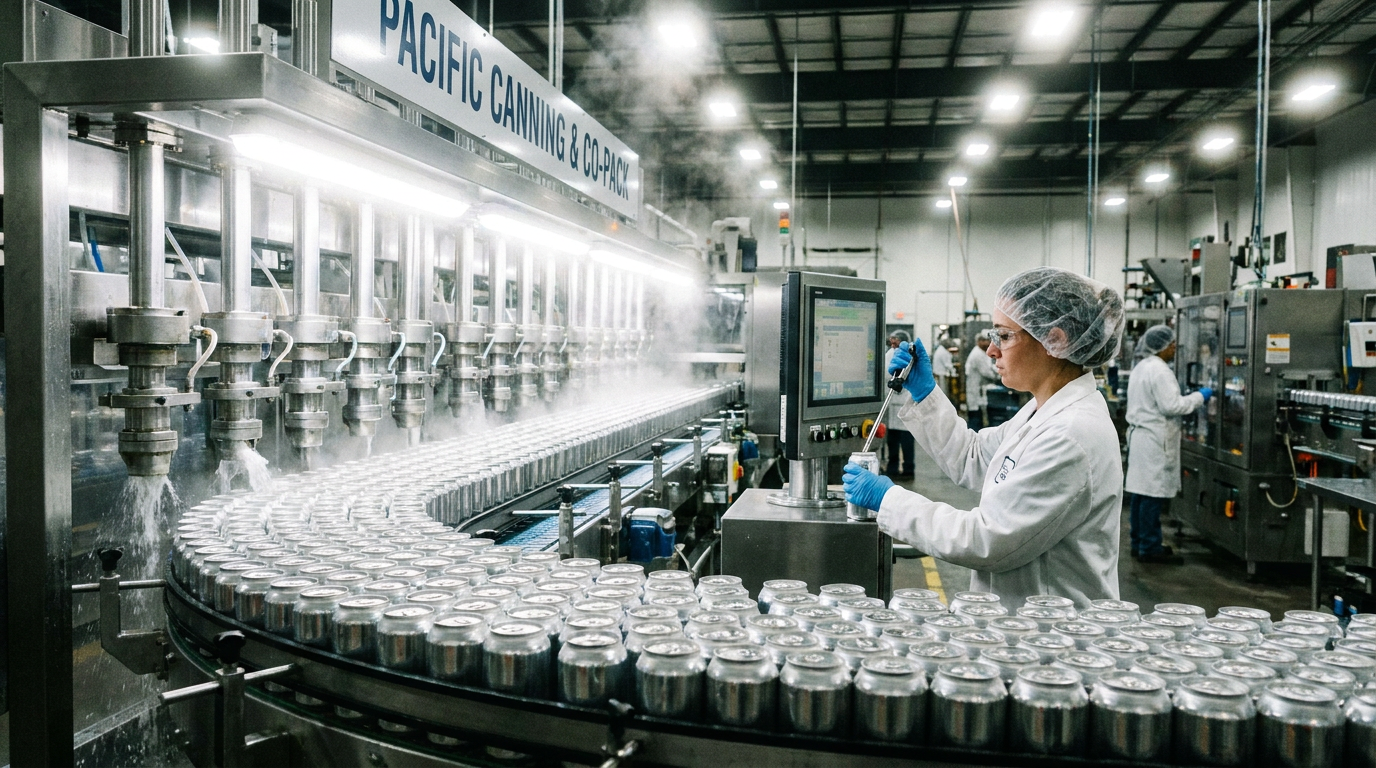
That last figure deserves its own paragraph, and it is corroborated across current US co-packing sources: high speed industrial lines running custom printed cans This is the number that catches founders out. A founder falls in love with a printed can, because printed cans look premium and sleeves sometimes do not. They approach an industrial co-packer, get a fantastic per unit price, and only later discover that accessing that price requires committing to 180,000 units. At even a modest cost per can, that is a low six figure commitment, paid before a single consumer has tried the product. The per unit economics are genuinely excellent. The cash requirement is a different universe from a 5,000 can craft run.
commonly set minimums around 150,000 to 180,000 cans
. Printing plates, decoration setup and line economics make smaller runs uneconomic for the facility.
The same dynamic shows up in raw materials. Blank 12 ounce aluminum can bodies run roughly . Scale genuinely rewards you. It just asks for the money first.
$0.08 to $0.14 each at volumes above 100,000 units, rising to about $0.14 to $0.18 at the 50,000 level
What a first small canned run actually costs, line by line
This is the breakdown founders screenshot, so here it is in full. Approximately 10,000 twelve ounce cans, all in $10,000 to $20,000, which is roughly $1.00 to $2.00 per unit:
- Blending and processing: $3,000 to $5,000
- Filling line time and labor: $2,000 to $3,500
- Cans and ends: $1,500 to $2,500
- Sleeves or labels: $1,500 to $2,500
- Ingredients: $1,500 to $3,500
- In production QC: $500 to $1,000
- Trays and cases: $300 to $500
- Setup and changeover fees: $500 to $1,500
Independent 2026 co-packer cost guides land in , which is reassuring: on small runs, the market broadly agrees.
almost exactly the same territory for a 10,000 can run
Note the last line. Setup and changeover fees are charged per SKU. A three flavor launch pays them three times, because the line has to be cleaned and reconfigured between flavors. Founders model this once and get surprised twice.
Scale economics, and the trap inside them
At roughly 50,000 units, per unit production drops to about $0.50 to $0.80.Either way the direction is the same, and the direction is seductive. Bigger runs cost dramatically less per unit. A founder looking at $1.60 per can at 10,000 units and $0.70 at 50,000 does the multiplication and concludes that the bigger run is obviously smarter.
As noted earlier, some current sources put the all in figure closer to $0.75 to $1.40 depending on whether the number includes can bodies, decoration and ingredients or only tolling. Ask which.
Sometimes it is. Often it is not, and here is the honest version of the tension. Bigger runs cost less per unit and tie up far more cash.A warehouse of unsold inventory at a great unit cost is still a dead business.
A 50,000 unit run at $0.70 is $35,000 committed to inventory. A 10,000 unit run at $1.60 is $16,000. The larger run gives you a better cost of goods and a worse cash position, and cash position is what determines whether you survive long enough to benefit from your cost of goods.
Go to market
Initial inventory and first production run: $20,000 to $100,000 and up. Marketing and brand launch: $5,000 to $50,000 and up, scaling directly with ambition and geography.
Format choice drives much of this, and cans dominate current growth for reasons we unpack in our analysis of . Getting a formulation genuinely production ready for that format is its own discipline, which is what our Everything covered so far appears on a budget spreadsheet. Now for the costs that do not.
RTD cold brew shandy formulation workwhy RTD is the fastest growing beverage category in 2026
was built around.
The Hidden Costs Nobody Puts in the Budget
These are the line items that turn a funded launch into a stalled one. None of them are secrets exactly. They are just consistently absent from the plan until the moment they arrive.
Slotting fees. Retailers charge for shelf space. Amounts are negotiated, vary enormously by retailer, region and category, and are frequently discovered by founders after the formulation is finished and the inventory is sitting in a warehouse. Sometimes they take the form of a straight fee, sometimes free fill, sometimes promotional commitments. The specific mechanism matters less than the principle: assume access to shelf space has a price and put a real figure in the plan from day one. A founder who has budgeted for it negotiates. A founder who has not simply cannot afford the yes they just received.
Freight, 3PL and warehousing. Beverage is heavy, and it is mostly water. You are paying to ship water across the country, and physics is not negotiable. Add cold chain requirements and the number climbs again. Critically, these are recurring costs, not one time costs. Storage compounds every single month that inventory sits, which means a slow sell through does not just delay revenue, it actively burns cash on the shelf.
Failed pilot runs. Covered above, worth restating as a budget item rather than a technical one. Budget 3 to 8 runs. A founder who budgeted for two and needs six does not have a product problem. They have a cash problem, and cash problems kill products that were working.
Reformulation after a stability failure.Picture month four of a stability study. The product browns, or separates, or drifts off flavor. The project goes back to the bench. You pay for formulation time again. You pay for new pilot runs again. You pay for a fresh stability study again, and that study takes another six to twelve months because you cannot accelerate real time. This single scenario adds tens of thousands of dollars and can push a launch back by a year.
This is the expensive one.
It is also the most preventable cost in beverage, and prevention happens at the very beginning, in . A target that includes stability requirements from the outset produces a formulation designed to survive. A target that only describes flavor produces a formulation optimized for a tasting that happens in week three.
the Gold Standard definition work described in the Design section
The MOQ cash trap. Minimum order quantities lock working capital inside inventory, and the mechanics deserve to be spelled out plainly. Money converted into cans in a warehouse cannot pay for the marketing that sells those cans. It cannot pay for the trade show booth, the sampling program, the broker, the field marketing or the discount that gets you a second order. This is precisely how well funded brands run out of money while holding plenty of product. On paper they have assets. In practice they have aluminum.
A warehouse full of product you cannot afford to market is not an asset. It is a very expensive lesson.
Per SKU multiplication. Testing, label design, setup fees, changeover fees and certifications are all charged per SKU. A founder who prices a launch on one SKU and then launches three has not tripled one line item. They have tripled seven of them, simultaneously, and the total lands far above their mental model of "three times a bit more."
Five questions to ask any partner before signing
Take these into every conversation. The answers tell you more about a partner than their portfolio does:
- What exactly is included in this quote, and what is explicitly excluded?
- What happens if a pilot run fails? Who pays for the next one?
- If stability testing sends us back to the bench, who pays for reformulation?
- Which of these fees are charged per SKU rather than per project?
- What is the minimum order quantity, and what is the payment schedule against it?
A good partner answers all five immediately and without discomfort, because they have thought about all five before. Hesitation on question two or three is the most useful signal you will get.
If you need the wider sequencing picture of how working capital moves through a launch, Enough about what goes wrong. Let us talk about what you actually control.
our founder's roadmap
puts these costs in order against the calendar.
What Drives Your Number Up or Down (and How to Spend Less)
Every number in this article responds to five decisions. Make them deliberately and you move your project toward the bottom of each range. Make them by default and you drift toward the top.
SKU count is the biggest multiplier
Launching one proven flavor beats launching four unproven ones. Every time.
Nothing else moves the total as much. Testing, label design, setup fees, changeover fees and certifications all scale per SKU, and formulation time scales close to it. Launching four flavors does not cost slightly more than launching one. It approaches four times the cost across most of your line items while dividing your marketing budget, your shelf velocity data and your attention by four.
Product category sets your floor
A two ingredient sparkling water sits at the bottom of every single range in this article. A functional beverage with active ingredients sits at the top, because each active requires sourcing diligence, stability data, claim substantiation and often specialized processing. Dairy based products add microbiological complexity and usually a processing authority. Anything requiring cold chain adds cost in distribution forever, not just at development.
None of that argues against functional products. Demand is real and growing, which is exactly why we track rather than the ones that spike and vanish. It argues for entering that category with your eyes open about what the development budget has to absorb. The same goes for , where the category economics are strong and the formulation challenge of building complexity without alcohol is real work.
non alcoholic spiritsthe functional beverage trends that are genuinely sticking
Packaging format decides your minimums
Stock cans and bottles keep tooling at zero. Custom structural tooling adds $15,000 to $75,000. Printed industrial can lines deliver excellent unit economics behind enormous minimums, while sleeved craft runs let you start at 5,000 units at a higher per unit cost. This is the clearest cost versus cash tradeoff in the entire process, and there is no universally right answer, only an answer that fits your funding.
Every claim on the front has to be substantiated behind it
Organic, non GMO, gluten free and functional claims each carry testing, documentation and certification cost. Before committing, ask whether the specific claim changes a purchase decision in your category or just makes the pack feel more premium to you. USDA's are worth reading in full before deciding, because the cost is ongoing rather than one time.
organic certification requirements
Launch geography multiplies everything at once
INSERT IMAGE HERE: Founder and beverage developer reviewing packaging mockups and cost figures together at a studio table, natural daylight from a nearby window.
A regional launch in one metro area and a national rollout are not the same budget at different sizes. National multiplies inventory, freight, slotting and marketing simultaneously, and it does so before you have proof that the product sells. Regional gives you real sell through data at a fraction of the risk, and that data is what funds the expansion.
How to spend less without cutting corners
- Define the Gold Standard properly before formulation begins. This is the highest return action available to any founder, and it costs almost nothing. Paying to reformulate because the target was never truly agreed is the most avoidable cost in beverage development.
- Launch one SKU, not four. Prove demand, then extend the line using revenue instead of savings. Retailers respond to velocity on one facing far better than to a struggling family of four.
- Use stock packaging for run one. Save custom tooling for the moment volume justifies it. Your container is not your brand. Your product is.
- Match the co-packer to the stage of your business, not to your ambition. A craft sleeved can line at 5,000 units is a smarter first run than an industrial line at 180,000, even at a worse unit cost, because it keeps cash available for the marketing that creates demand for run two.
- Do not economize on stability testing. Every dollar saved there is borrowed against a recall, at an interest rate you cannot calculate in advance.
- Buy expertise early rather than late. Fixing a formulation, a label or a co-packer choice after the fact always costs more than getting the input before committing. Always.
- Ask for a scoped quote with named deliverables and a stated written position on who pays if a pilot run fails.
None of this makes a beverage launch cheap. We are not going to pretend otherwise. What it does is make the cost predictable, and predictable is what actually gets a product onto a shelf. Founders do not fail because beverage development is expensive. They fail because it turned out to be expensive in ways nobody told them about, at a moment when there was no money left to respond.
The Honest Summary
So here is the answer, one more time, without the hedging.
A lean regional launch, one or two SKUs, a simple non alcoholic formulation, stock packaging and a focused go to market, runs roughly $50,000 to $150,000. An ambitious national launch, three or more SKUs, premium or alcoholic positioning, custom packaging and serious marketing behind it, runs $750,000 to $3,000,000 or more across the first 24 monthsHere is what we have observed across every project we have been part of. The founders who succeed are rarely the ones with the biggest budgets. They are the ones who knew what the real costs were before they started, who planned for the parts nobody warned them about, and who kept enough cash on the other side of production to actually sell what they made. Funding helps. Knowing where the money goes helps more.
Those are industry ranges built from current US market conditions, and sources genuinely vary on several line items. Your specific project needs a specific number, and getting one requires somebody looking at your actual formulation, format and ambition rather than at a blog post. What this article gives you is the ability to recognize whether the number you are quoted makes sense, and to ask the right question when it does not.
.
We published these numbers for a straightforward reason. Collaborators tell you what a project costs before you commit, not after, because we are the ones standing beside you when the budget meets reality. Now that the money question has an answer, the natural next one is time, which we have answered with the same directness in .
how long it takes to develop a beverage product
Let's Talk About What Your Drink Will Actually Cost
Bring us the concept, the format and the target retail price, and we will give you an honest read on what the project takes and whether the numbers work. Not a discovery call that ends in a proposal three weeks later: a real conversation about your product, with real figures, at the start. That is how we Design, Develop and Deliver every beverage we build, and the honesty in this article is exactly how every project begins. If you want proof before a conversation, our show the work.
case studies
Let's make a drink.