
This guide is for first-time founders, independent operators, and new entrants in the beverage aisle who have a bench formula and no manufacturing partner. You have probably already opened twenty browser tabs, sent a dozen emails, and heard back from almost nobody. That silence is not personal, and it is not a signal that your product is bad. It is a signal that you are approaching the search in a way the industry does not respond to.
Your formula is ready. It tastes right, it pours right, the color holds, and the people you trust have told you it is the best thing they have had all year. You have earned the right to feel good about that. Now comes the part nobody warned you about, which is finding someone who can actually make it at scale.
Here is the thing nobody tells you, and it is worth reading twice. The formulation fee is not what kills first-time beverage brands. The minimum order quantity is. Founders budget carefully, sometimes obsessively, for development. Then they sign a manufacturing commitment they never ran the arithmetic on.
Reframe it like this and it becomes impossible to unsee: if your co-packer's minimum is 100,000 units, you have not ordered a production run. You have committed to selling 100,000 units before they expire.
What follows is a genuine operator's guide on how to find a co-packer for your beverage. We will cover what to prepare before you make contact, the types of facilities and why your product's chemistry decides your shortlist, the MOQ math almost everyone avoids, where suitable partners are actually found, how to vet them, the questions to ask, how to protect your formula, how to read a quote properly, and what to do on production day.
The first step happens before you contact a single facility.
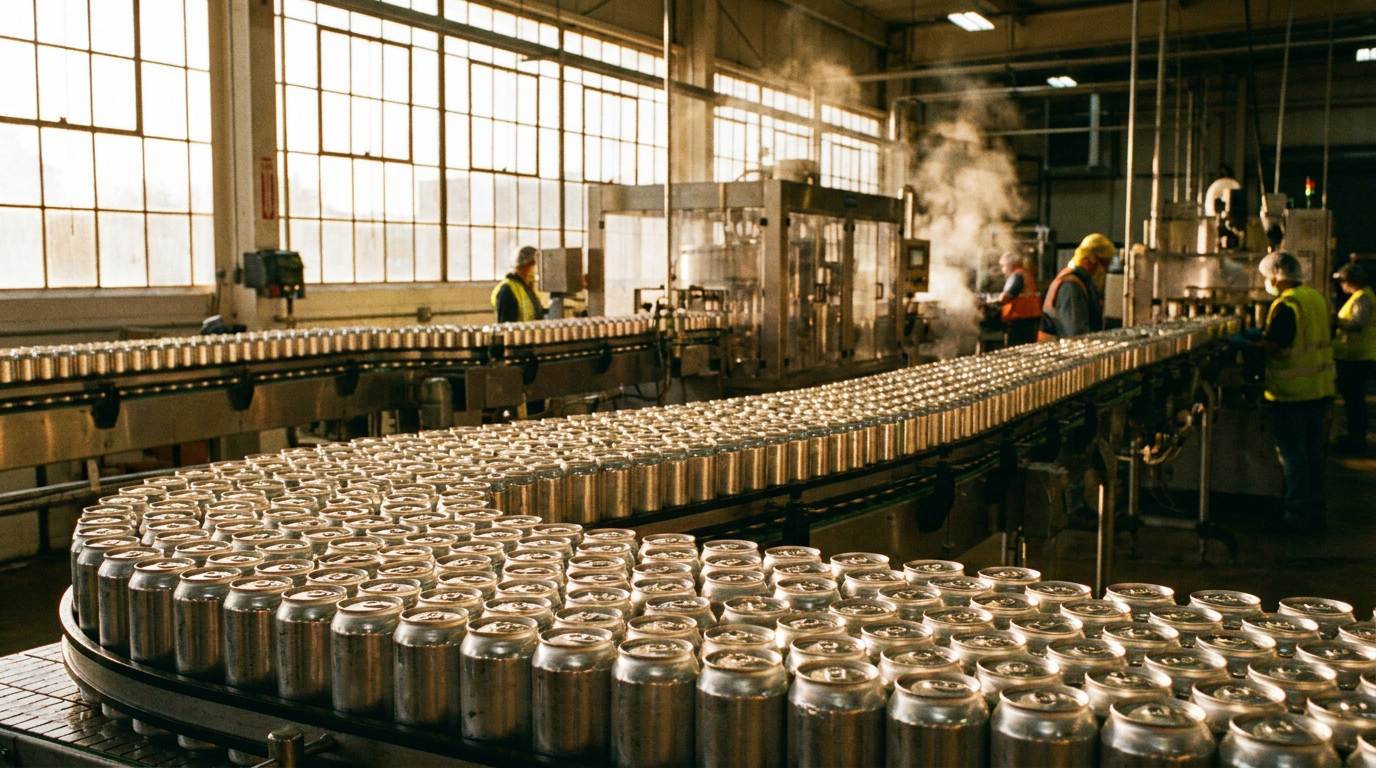
Step 1: Define Your Spec Before You Contact Anyone
The fix is not a better subject line. The fix is showing up with a specification.
That message costs the scheduler time and tells them almost nothing except that the sender has not done the work yet. Facilities triage their inbox the same way an emergency room triages a waiting room, and the unprepared founder is not the emergency. Your inquiry is not being rejected. It is being deprioritized, which feels identical from where you are sitting.
Picture the other side of that email. A scheduler at a contract packing facility opens their inbox on a Monday and finds forty messages. Some are from established brands booking their Q4 windows. Some are from ingredient suppliers. And some say, in various forms, "Hi, I have a great drink idea, what are your rates?"
The single most common reason a founder gets no response from a beverage co-packer is a vague inquiry.
The One-Page Co-Packer Brief
Everything below fits on a single page. Attach it to a short email. Do not write the brief inside the email body, because a long email reads as noise and an attached spec reads as a project.
Format. 12 oz sleek can, 12 oz standard can, 16 oz can, glass bottle, PET bottle, pouch, or bag-in-box. Name the exact container, not the category.
Process. Carbonated or still. Hot fill, cold fill, aseptic, tunnel pasteurization, HPP, or retort. If you are not sure, say so plainly and ask for a feasibility read.
Volume. Your target first-run volume and your realistic annual volume, stated separately. These are different numbers and conflating them creates confusion immediately.
Target cost per unit. A range is fine. Silence here invites a quote you cannot use.
Required shelf life. In days or months, and state whether that is a marketing preference or a retailer requirement.
Storage condition. Ambient, refrigerated, or frozen. This single line eliminates or qualifies entire categories of facility.
Certifications needed. Organic, kosher, halal, gluten free, non-GMO, or none.
Finished pH and Brix. If you know them. If you do not, we will get to why you need to.
Send that with three sentences of context and one clear ask, and your response rate changes materially. You have transformed yourself from a risk into a project with defined parameters.
Why You Cannot Brief a Facility Without a Defined Specification
A co-packer manufactures to a specification. That sentence sounds obvious and it is routinely ignored.
If you have not defined your Gold Standard, meaning the documented benchmark for exactly what the finished beverage should be in flavor, appearance, format, and operational terms, then you are asking a factory to make product decisions on your behalf. Factories are extraordinarily good at repeatability. They are not in the business of interpreting your intent. A production-ready formula is a different artifact from a great bench sample, and understanding This is how founders end up with a run that is technically in-spec and commercially wrong. The plant hit every number they were given. Nobody had defined the numbers that mattered.
how a beverage gets designed, developed, and delivered
is what closes that gap before the first conversation.
The Documentation Package
Beyond the one-page brief, assemble the following. You will not send all of it in the first email, but you should have it ready when a facility asks, because the gap between "let me pull that together" and "attached" is the gap between a serious founder and a hopeful one.
- Formula sheet with percentages. Not a recipe in cups and spoons. Percentages by weight.
- Ingredient list with supplier names and specifications. Including whether each supplier can meet volume.
- Allergen statement. Explicit, including shared-line concerns.
- Process flow. Step by step, in order, with temperatures and hold times where known.
- Target nutritional panel. Even a draft version.
- Artwork status. Concept, in progress, or print-ready. Be honest, because labeling obligations exist before your first run, not after it, and a facility that discovers your artwork is imaginary on scheduling day will not forget it.
- Any existing lab or stability data. Even limited data is better than none, and it signals rigor.
A complete brief only helps if you send it to facilities that can physically and legally run your product. That comes down to chemistry.
One practical note on tone. Keep the email short and the attachment tight. State what you want from the call, which at this stage is two things only: a feasibility read on whether they can physically run your product, and an indicative minimum order quantity. Asking for a full quote in the first message is premature and slows everything down.
Step 2: Co-Packer Types and Why pH 4.6 Decides Your Shortlist
Beverage contract packaging is not one industry. It is a collection of specialized processing categories, and the differences between them are not marketing distinctions. They are equipment, capital, and regulatory distinctions that determine whether a facility can run your drink at all.
The Main Processing Categories, In Plain Language
Hot fill. Product is heated and filled hot into the container, and the heat of the product sanitizes the package. Common for juices, teas, and high-acid still drinks. Requires containers that tolerate heat, which shapes your packaging options.
Cold fill. Product is filled at ambient or chilled temperature, usually paired with preservatives, refrigeration, or a naturally hostile pH. Lower thermal impact on flavor, with more dependence on other hurdles for stability.
Tunnel pasteurization. The sealed package travels through a heated tunnel and the product is pasteurized inside its final container. Very common for carbonated beverages and alcoholic ready-to-drink products, where you cannot easily hot fill a carbonated liquid.
Aseptic. Product and package are sterilized separately and combined in a sterile environment. Excellent shelf life outcomes and excellent flavor retention, with high capital cost and typically high minimums to match.
HPP, or high pressure processing. Sealed packages are subjected to extreme cold pressure that inactivates microorganisms without heat. Popular for cold-pressed juices and functional shots because it supports clean label claims, with the trade-off that product usually stays in the cold chain.
Retort. Heat applied to the sealed package at temperatures high enough to achieve commercial sterility. The standard route for dairy-based and low-acid shelf-stable products.
Layer format on top of process. Carbonated versus still changes the filler entirely. Cans versus glass versus PET changes both the filler and, consequently, your entire list of candidate facilities. A plant that runs beautiful glass hot-fill tea may have no path at all to a carbonated sleek can.
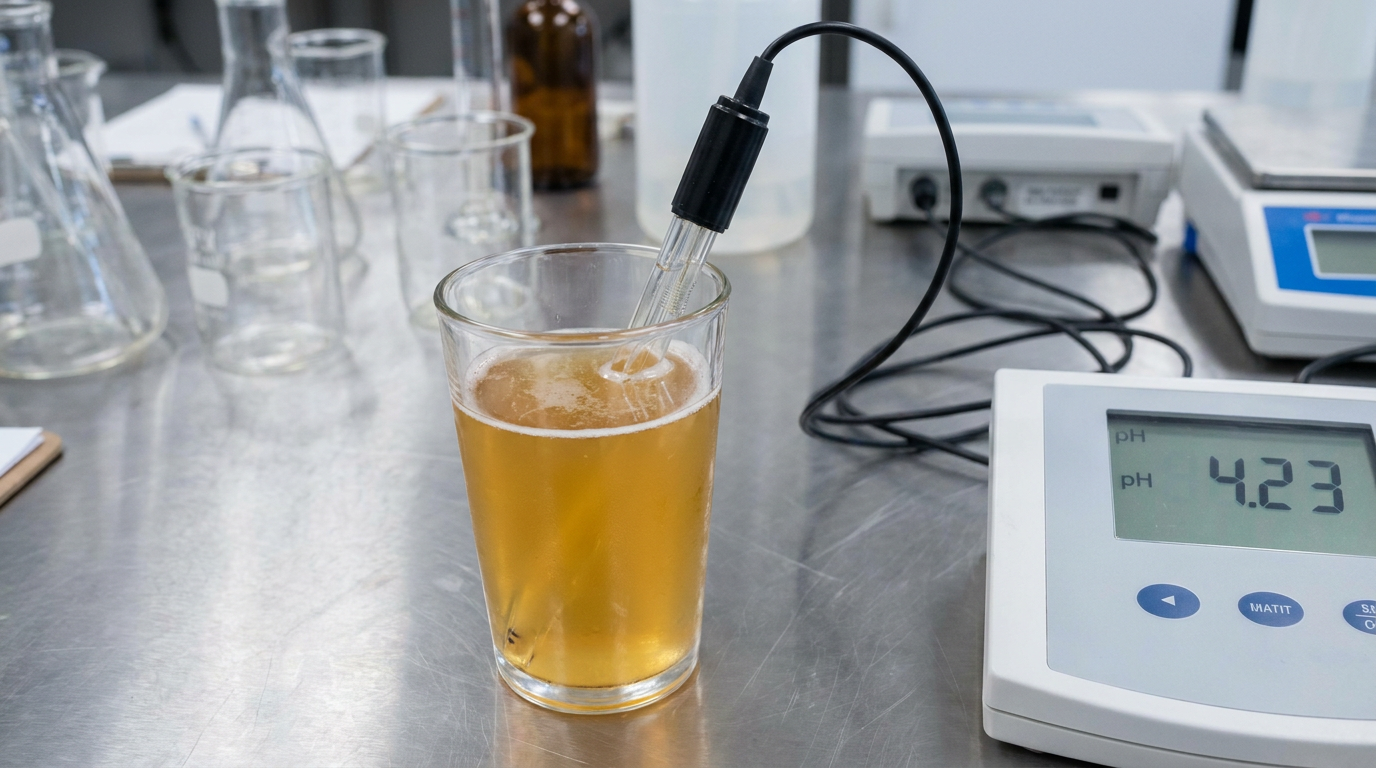
The pH 4.6 Threshold, and Why It Quietly Eliminates Most of Your Options
This is the part of the article most worth understanding, because it explains a frustration that thousands of founders experience without ever learning its cause.
Under , a product with a finished equilibrium pH above 4.6 and a water activity above 0.85, packed in a hermetically sealed container and sold shelf stable, is a . A product that starts low-acid and is deliberately acidified so its finished equilibrium pH lands at or below 4.6 is an .
FDA rules governing acidified and low-acid canned foods
That number, 4.6, is not arbitrary. It is the line below which Clostridium botulinumCrossing that line changes who can legally run your product. Not who wants to. Who can.
cannot produce toxin, which is why the entire regulatory architecture pivots on it.
What a Facility Needs In Order To Run Your Low-Acid or Acidified Product
If your beverage is shelf stable and falls into either category above, the facility must have three things in place before your product can be made:
- Registration as a Food Canning Establishment. The plant registers via Form FDA 2541 and receives an FCE number tied to that physical location.
- A filed scheduled process. For each product, each container size, and each processing method, a qualified process authority must establish a validated process and the facility must file it with FDA. A scheduled process specifies every critical factor: time, temperature, initial temperature, container type, fill weight, and for acidified products the acidification steps and pH controls.
- Supervisors trained through a recognized Better Process Control School. FDA requires that critical operations be supervised by personnel who have completed an approved course covering thermal processing, acidification, and container closure integrity. Inspectors ask to see those certificates. So should you.
Here is a detail that matters more than it appears: a scheduled process is tied to your specific formulation and container. If you reformulate in a way that affects safety, or change container size, that process may need to be re-evaluated by a process authority and refiled. A recipe tweak in a low-acid product is not just a flavor decision. It can be a regulatory event with a timeline attached.
What This Means For You, Specifically
If your product is low-acid and shelf stable, your list of eligible beverage co-packers shrinks dramatically. The facilities that remain have made significant capital and compliance investments, and they tend to carry higher minimums to justify them. This is very often the real, unspoken reason a founder cannot find anyone to run their drink. It is not the concept. It is the chemistry meeting the capital structure of the industry.
A horchata is a different regulatory animal from a lemonade. So is an oat milk latte, a protein shake, a mushroom coffee, and most creamy or plant-based drinks. These products tend to sit above pH 4.6, which places them squarely in low-acid territory when sold shelf stable. A citrus seltzer or a lemonade sits comfortably below the line and opens up a far wider field of facilities.
Process capability genuinely varies by product type, and you can see that in practice. An brings together coffee, carbonation, and alcohol, three sets of process demands that most single facilities do not handle equally well. An sits in a different processing world again, with its own filler requirements and its own regulatory overlay.
upscale hard seltzerRTD cold brew shandy
The practical instruction is simple and cheap. Get your finished equilibrium pH measured before you shortlist anyone. It is an inexpensive test, and it determines the shape of your entire search. Walking into this process without knowing your pH is like house hunting without knowing your budget.
Once you know which facilities can run your product, the next question is whether you can afford the volume those facilities require. This is where most first-time brands come undone.
Step 3: The Beverage MOQ Math That Breaks New Brands
Let us be direct about this, because it is the most important section in this guide.
A minimum order quantity is not a purchase order. It is a sales commitment on a clock.
Your product has a finite shelf life. The moment it is filled, the clock starts running, and it does not pause while you build distribution, negotiate with buyers, or figure out your sampling strategy. Every day that inventory sits, its commercial value decays.
"If your co-packer's minimum is 100,000 units, you have not ordered a production run. You have committed to selling 100,000 units before they expire."
Your Selling Window Is Shorter Than Your Shelf Life
The consequence is straightforward arithmetic. If your product has a twelve month shelf life and a buyer will not accept it past a meaningful portion of that life, your genuine selling window is materially shorter than twelve months. You must plan against the sellable window, not the printed one.
Retailers and distributors will not accept inbound product that has already consumed too much of its life. Buyers commonly enforce a freshness cutoff, rejecting product past a certain proportion of its stated shelf life on arrival. The specific threshold varies by retailer, by category, and by how much they want your product, so treat this as a directional principle to confirm with each buyer rather than a fixed rule.
Founders plan against total shelf life. That is the first error.
Packaging Minimums: The First Wall
Custom-printed cans commonly carry minimums in the range of 80,000 to 100,000 units in the 2025 to 2026 market, and that is typically per design, per SKU. Three flavors means three designs. The math compounds fast and it compounds quietly.
There is a workaround that has genuinely changed the entry math for small brands: stock brite cans with applied pressure-sensitive labels or shrink sleeves.The trade-off is real and worth stating plainly. Sleeves and pressure-sensitive labels cost more per can than printed aluminum, and they limit certain finishes and effects that printed cans achieve beautifully. But they let you prove demand before you commit six figures to printed inventory. For a first run, that is almost always the right trade.
Instead of committing to a six-figure print run, you buy unprinted cans and apply your graphics. This lets a brand run a few thousand units instead of a hundred thousand.
Custom Glass: The Harder Wall
If you are considering a proprietary bottle, understand what you are signing up for. A custom mould typically means $15,000 to $50,000 or more in upfront tooling, with 6 to 12 month lead timesThe instruction here is blunt. Do not commission custom tooling before you have proven demand in a stock package. A distinctive bottle is a wonderful asset for a brand with velocity. It is an expensive monument for a brand without it.
, before you have sold a single unit.
First Run Economics and Why Per-Unit Cost Falls
In the current market, first production runs commonly land around $1.08 to $1.90 per unit at 10,000 units, falling to roughly $0.78 to $1.38 per unit at 50,000 units. Some contract canners will run smaller starter batches at approximately $0.45 to $0.65 per can where the formula and artwork are already finalized and the job is genuinely turnkey.
The driver is not mysterious. Every run carries fixed costs regardless of volume: line changeover, sanitation before and after, setup, QA sampling, and the labor to bring the line up and take it down. Those costs get spread across however many units you produce. Ten thousand units absorb the same fixed cost as fifty thousand, so the per-unit number falls as volume rises.
Treat all of these as directional 2025 to 2026 market ranges. They vary meaningfully by format, process, ingredient cost, region, and how much the facility wants your business.
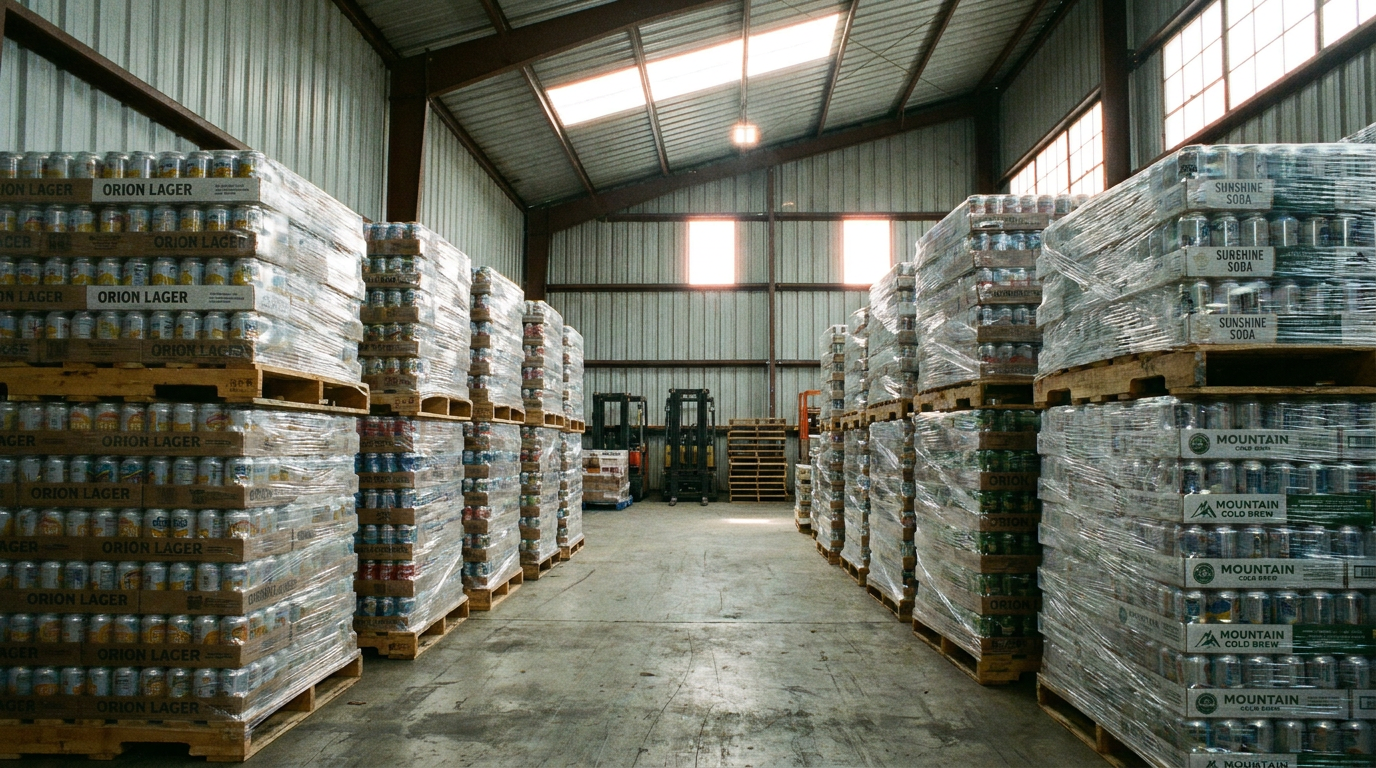
The Worked Example: Do This Arithmetic Before You Sign Anything
Here is the formula. Write it down.
MOQ ÷ realistic monthly velocity = months to sell through
If that number exceeds your remaining sellable shelf life after the retailer freshness cutoff, the deal is wrong. It does not matter how attractive the per-unit price looks.
Now let us run three scenarios for a founder with a twelve month shelf life product.
Scenario one: the overreaching custom print run.
You are quoted a 100,000 unit minimum with custom-printed cans. You have secured 40 doors, which is a genuinely good start for a new brand. Realistic early velocity for an unknown product is a handful of units per store per week. Call it five units per store per week, which is respectable for a new face on a crowded shelf.
Forty doors times five units times roughly four weeks gives you about 800 units per month. Now divide: 100,000 divided by 800 is 125 months. That is more than ten years to sell through a run on a twelve month shelf life. The run does not sell. It expires in a third-party warehouse while accruing storage fees every single month it sits there.
Scenario two: the stock can and sleeve run.
Same 40 doors, same velocity of roughly 800 units per month. You run 5,000 units in stock cans with applied sleeves at a higher per-unit cost. Five thousand divided by 800 is about six months to sell through, comfortably inside your sellable window even after a retailer freshness cutoff.
You paid more per can. You also sold your entire run, learned what your real velocity is, and kept your capital free. That is not a compromise. That is the correct decision.
Scenario three: the realistic middle case after traction.Notice what changed between scenarios two and three. Not the founder's ambition. The evidence.
You have proven the product, expanded to 200 doors, and velocity has improved to eight units per store per week as awareness builds. That is roughly 6,400 units per month. A 25,000 unit run divides out to about four months of sell-through. Now the volume price break is genuinely earned rather than aspirational, and moving toward printed cans starts to make sense.
The Costs Founders Leave Out
The per-unit quote is never the whole number. Budget for these too:
- Warehousing and cold storage on unsold inventory, charged per pallet per month, indefinitely, whether the product moves or not.
- Freight from plant to warehouse, warehouse to distributor, and sometimes distributor to retailer.
- Spoilage and write-offs on anything that ages out, which is a real line item, not a hypothetical one.
- Working capital locked in inventory, which is the most expensive item on this list because that money could have funded sampling, demos, and the marketing that actually creates velocity.
That last point deserves emphasis. Inventory sitting in a warehouse is capital that cannot buy the demand that would move it. Overordering does not just cost you money. It removes your ability to fix the problem it created.
Formulating with commercial reality in mind, rather than treating scale-up as an afterthought, is precisely why matters more than a perfect bench sample.
building for scalability from the start
The Reframe
The correct first question to a beverage co-packer is not "what is your price per unit."
It is: "What is the smallest run you will do, and what does it cost?"Having established what you can realistically commit to, the practical question becomes where suitable partners are actually found.
A higher per-unit cost on a run you can actually sell beats a cheap per-unit cost on a run that expires. Every time. Without exception.
Step 4: Where to Find Beverage Co-Packers and How to Vet Them
Search engines are the worst place to find a contract manufacturer and the first place everyone looks. The facilities with the best reputations and the fullest schedules have the least reason to invest in being findable. The ones optimizing hardest for your search terms are often the ones with capacity to fill, which is information worth noticing.
Where To Look, Ranked By Quality Of Lead
The best referrals come from people already inside your supply chain, because they carry reputational risk when they make an introduction. A supplier who sends you to a bad facility has to answer for it.
Ingredient suppliers and flavor houses. These are your highest-value contacts and the most underused. Flavor houses know exactly which facilities run their ingredients well and which ones generate complaints. They see the failures you never hear about. Ask them directly: who runs this kind of product well?
Packaging suppliers. Can manufacturers, closure vendors, and label suppliers know precisely which lines run which formats, because they sell into those lines. They can tell you which plant has the filler you need before you waste a week finding out yourself.
Industry trade shows. Walk the supplier halls, not just the brand halls. The brand halls are for looking at competitors. The supplier halls are where you meet the people who build things. Bring your one-page brief, printed.
Industry associations and process authorities. Process authorities in particular have visibility across many facilities and no incentive to flatter any of them.
Your bank, insurer, or logistics provider. Anyone who underwrites risk in this category has opinions about which facilities are stable and which are not.
Other founders in non-competing categories.Set your expectations on response rates honestly. You should expect to contact many facilities and hear back from a minority of them. That is normal, it is not a referendum on your product, and it is exactly why the Step 1 brief matters so much.
Usually the most candid source you will ever find. A founder making a functional tea has no reason to protect information from a founder making a hard seltzer, and they will tell you things no supplier will put in writing.
Where sourcing gets genuinely difficult, having a team that already holds supplier and distributor relationships changes the timeline considerably, which is part of what exist to provide.
beverage development services

The Vetting Checklist
Work through this list for every facility on your shortlist. Ask for documentation, not assurances.
- FDA food facility registration, current and correct for the activity types they will perform for you. Start with FDA's guidance on starting a food business to understand what you are looking at.
- FSMA compliance, including a documented hazard analysis and risk-based preventive controls plan, plus a HACCP plan where applicable. The Preventive Controls for Human Food rule is the standard to hold them to, and it also requires a written recall plan. Ask to see it.
- GFSI-benchmarked certification such as SQF or BRCGS, with a current certificate and a recent audit score you are permitted to see. Critically, check that the scope of the certificate covers beverage production, not just that a certificate exists. Scope is where this check usually fails.
- FCE number and filed scheduled processes if your product is acidified or low-acid shelf stable, along with Better Process Control School certificates for the relevant supervisors.
- Specialty certifications as applicable: USDA Organic handler certification, kosher, halal, gluten free, non-GMO. If you are pursuing organic, the Guide for Organic Processors is worth reading before the conversation.
- Allergen control program, including segregation and changeover sanitation. This is critical if they run dairy, nuts, or soy on shared lines, and it is not a box to tick. Ask how they validate it.
- TTB permitting and formula experience if you are producing an alcoholic RTD. Formula approval is required when you add flavors, colors, or non-traditional ingredients, and production should not begin before that approval is in hand. Your label approval references the approved formula, so the two are linked.
- Insurance: product liability limits, recall insurance, and whether you can be named as an additional insured on their policy.
- Financial stability. A co-packer that fails mid-contract takes your inventory, your ingredients, and your production schedule with it. This is not a comfortable question to ask. Ask it anyway.
- Whether they run competitor brands, and how they manage confidentiality and line scheduling if they do.
Always Visit
Then ask the plant manager a technical question about your product and watch what happens. If they answer it, you are talking to a manufacturer. If they defer to the sales contact, note it.
Look at housekeeping first, because it is the fastest proxy for discipline. Look at the condition of the lines. Watch how staff handle a changeover, which is where corners get cut when nobody is looking. Ask to see records and check whether they are current or whether someone is filling them in as you stand there.
A site visit tells you more in two hours than three months of email.
One subtle warning worth internalizing: be wary of a facility that says yes to everything.A shortlisted, certified facility still needs to be interrogated on commercial terms, and the right questions surface deal-breakers early.
A good partner will tell you what they cannot do, where your formula will fight their equipment, and which parts of your spec need to change. Unqualified enthusiasm at the sales stage frequently becomes a difficult conversation at the production stage.
Step 5: Questions to Ask and How to Read a Co-Packer Quote
Bring this list to the call. Ask every question, write down every answer, and ask the same questions of every facility so you are comparing like with like.
The Question List
- What is your MOQ per SKU and per run, and does it change by format or by flavor?
- What are your changeover fees, and how are they allocated across a multi-SKU run?
- What are your lead times, and how far ahead must I book a scheduling window?
- Who sources ingredients, you or me, and who owns them until they are consumed?
- What are your storage and warehousing terms, and how long will you hold finished goods before fees begin?
- What is your QA protocol, and what is your retention sample policy?
- What happens to a failed batch, and who pays? Push for specifics on out-of-spec product, contamination events, and packaging defects. Do not accept a general answer here.
- What is your overrun and underrun tolerance, and am I billed for units produced or units ordered?
- What are your payment terms, deposit schedule, and terms on the balance?
- What are the exit terms, and what happens to my formula, my ingredients, and my packaging inventory if I leave?
Overrun and Underrun: The Clause Everyone Skips
Ask which side of the tolerance you are billed on. Ask whether the tolerance is negotiable at your volume. Then plan your purchase orders against the low end and your cash against the high end.
A tolerance of plus or minus ten percent on a 50,000 unit run is a swing of 10,000 units in either direction. At a dollar a unit, that is a $10,000 variance you did not plan for, and it can arrive as either a surprise invoice or a shortfall against orders you have already promised to fill.
Founders consistently miss this one, so let us make it concrete.
Reading the Quote: Landed Cost, Not Headline Price
The per-unit co-packing fee is one line in a much longer equation. Build a landed cost worksheet and fill in every line for every facility you are comparing:
- Ingredient cost per unit
- Packaging components per unit, including cans or bottles, closures, labels, cartons, and trays
- Inbound freight to the plant
- The co-packing fee itself
- Changeover and setup charges, divided by your run size
- QA and lab testing costs
- Outbound freight from plant to warehouse
- Warehousing, per pallet per month
- Per-pallet handling charges
- Expected shrinkage and waste allowance
Total those lines, divide by units, and compare facilities on that single number alone.
"Compare facilities on landed cost, never on the headline per-unit fee. The cheapest quote on paper is frequently the most expensive run you will ever pay for."
Tolling Versus Turnkey
Two structures dominate beverage contract packaging, and the difference matters enormously for your cash position.
Tolling. You buy and supply the ingredients and the packaging. The co-packer charges you for the run itself.
- Who buys ingredients: you
- Who carries inventory risk: you
- Cost visibility: complete, you see every component price
- Working capital impact: heavy and early, you pay for materials well before production
- Best suited to: brands with volume, procurement capability, and supplier relationships
Turnkey. The co-packer procures everything and quotes you an all-in price per unit.
- Who buys ingredients: the co-packer
- Who carries inventory risk: largely the co-packer
- Cost visibility: limited, components are bundled into one number
- Working capital impact: lighter at the start, though you pay a margin on every component
- Best suited to: first runs, smaller volumes, and founders without a procurement function
Most first-time founders should start closer to turnkey and migrate toward tolling as volume justifies the effort. Turnkey costs more per unit and buys you speed, simplicity, and fewer ways to fail on your first attempt. That is a reasonable price. As you scale, the margin you are paying on components becomes large enough to justify taking procurement in-house.
The are a useful reference point when you are weighing which structure fits where you are now.
FAQs on ingredient sourcing
Working Capital Is The Hidden Variable
A typical deposit structure is fifty percent on order and fifty percent before release. That means the entire production run is paid for before a single unit generates a dollar of revenue. Now add distributor payment terms of net 30 to net 60 on top. Add the time between production and the product physically reaching shelves. Add the time between shelf placement and sell-through.
Here is the failure mode that closes new beverage brands, and it has nothing to do with product quality.
You may be four to six months from cash outlay to cash receipt. That gap is where new brands actually fail, and it fails brands whose product is selling well. Model the gap, not just the cost. Ask what your business needs to survive the interval, and understand that your route to market and payment terms are as much a part of production planning as the run itself, which is why One item on that question list deserves far more than a bullet point, because it is the one founders most often get wrong and cannot undo.
the delivery stage
has to be mapped alongside the manufacturing one.
Step 6: Who Owns Your Formula in a Co-Packing Agreement
INSERT IMAGE HERE: Close-up of a contract and pen on a desk beside a sample beverage bottle and a formulation spec sheet.
At that moment they learn that leaving means starting the formulation over.
They almost never discover this at signing. They discover it at the worst possible moment: when the relationship has soured, when minimums have been raised, when quality has slipped, when the plant has been acquired by a larger group with different priorities, or when a scheduling conflict has cost them a retail window they cannot get back.
Founders routinely sign co-packing agreements that leave them unable to take their own formulation elsewhere.
Confidentiality Is Table Stakes, Not Protection
Founders conflate these two constantly. Signing an NDA feels protective, and it produces a document, and documents feel like safety. But an NDA that says "we will not tell anyone your formula" is silent on the question of whether you can take that formula and manufacture it somewhere else. Those are separate questions requiring separate contract language.
A mutual NDA signed before you send your formula is the floor, not the ceiling. It restricts disclosure. It does not, by itself, establish who owns anything.
Own the Formula in Writing
Your co-packing agreement should state, unambiguously and without room for interpretation:
- The formulation, specifications, and recipe are your property
- They were disclosed in confidence for a specific and limited purpose
- The co-packer's rights are limited to manufacturing on your behalf for the term of the agreement, and nothing further
If the agreement is silent on any of these, it is not neutral. Silence in a contract is not a blank space. It is an argument waiting to be had at the moment you have the least leverage.
The Scale-Up Improvement Trap
You own the original bench formula. The co-packer owns the version that actually runs on a production line. You are legally entitled to walk away with a recipe that has never successfully been manufactured, while the facility retains the only version that works. That is not a hypothetical edge case. It is a routine outcome of ordinary contract drafting.
Now consider what happens if your contract is silent on who owns improvements developed during scale-up.
Bench formulas almost always change during scale-up. They have to. Ratios shift when you move from a five gallon batch to a five thousand gallon batch. A stabilizer gets added because the product separates in a way it never did in a small container. Process parameters get tuned. Sometimes an ingredient is swapped for a functionally equivalent one that performs better at industrial shear rates.
This is the crux of the entire section, and it is the specific mechanism by which founders lose control of their own product.
Insist on language that assigns all modifications, improvements, and process adaptations relating to your product to you. Not shared ownership. Not a license back. Assignment.
Exit Rights
You must be able to leave and take everything with you: your formula, your specifications, your process documentation, and your production records.
Ask this question directly, in these words: "On termination, will you provide the full manufacturing specification and process parameters as run?"A genuine partner says yes without hesitation, because they intend to keep your business by performing well rather than by holding your product hostage. Hesitation, qualification, or a redirect to the sales contact is diagnostic. That single question tells you more about the relationship you are entering than an entire day of facility tours.
Red Flag Clauses
Stop before signing if you see any of the following:
- Indefinite exclusivity. A clause binding you to one facility with no volume trigger, no performance standard, and no end date.
- Automatic renewal with a long notice period. A twelve month notice requirement on an auto-renewing term can trap you for two years.
- Premises-based ownership claims. Language claiming the facility owns any formula developed on their site. This swallows the scale-up improvement problem whole.
- Permission to manufacture similar products for others. Vague enough to permit a near-copy of your product for a competitor.
- Silence on termination deliverables. No obligation to hand back specifications, records, or remaining inventory.
Trade Secrets Versus Patents
That means your protection depends almost completely on two things: the confidentiality and ownership terms you negotiate, and your own internal handling discipline. A trade secret stops being a trade secret the moment it stops being treated like one. Sloppy contracts, unrestricted email attachments, and formulas shared with facilities you never signed with all erode the legal basis for claiming the information was secret in the first place.
Most beverage formulas are protected as trade secrets rather than patents. Patenting a formula requires publishing it, which for most drinks defeats the purpose entirely.
If you are producing an alcoholic RTD, note that a is a regulatory artifact and not a statement of commercial ownership. Founders conflate the two regularly. TTB approving your formula for production and labeling says nothing whatsoever about who owns the intellectual property in a contractual dispute.
TTB-approved formula
Have an Attorney Review It
The cost of a review is trivial against the cost of losing your formula, and food and beverage specialists have seen these exact clauses hundreds of times. They know which terms are standard, which are aggressive, and which are negotiable in practice regardless of how the facility presents them.
Have a food and beverage attorney review your co-packing agreement. Not a general commercial attorney, and not a template.
One Note On How This Gets Avoided Entirely
When a formula is developed collaboratively and the specification is documented properly from the outset, ownership is clear long before a co-packer is ever approached. There is no ambiguity to negotiate because the documented Gold Standard specification already exists as the founder's asset, complete with the process parameters that make it manufacturable.
That is the practical value of rather than as a handoff. When you Now we move from paperwork to the plant floor, where the agreement meets reality on your first production day.
build with a founder rather than for thembuilding the specification as a documented asset
, the paperwork follows the reality instead of contradicting it.
Step 7: Trial Runs, Production Day, and Costly First-Run Mistakes
Run a Trial Before You Run Production
Every one of those is cheap to fix during a trial and expensive to fix after you have filled 25,000 units.
Bench samples cannot tell you how your product behaves at line speed. A trial surfaces the things that only appear under industrial conditions: fill issues, foaming that slows the line to a crawl, carbonation loss during filling, seaming and closure problems, label application faults on a container that is slightly damp, and flavor shifts caused by thermal processing that your kitchen version never experienced.
A short trial or pilot run costs money. It is almost always worth it.
Complex formulations make this non-negotiable. A involves emulsion stability, dose accuracy, and processing sensitivities where a good recipe is genuinely not sufficient. Process validation is the difference between a product and a liability.
cannabis beverage formulation project
Attend the Run. In Person.
Founders who show up get better outcomes, and the reasons are entirely unglamorous.
You can approve or reject in real time rather than by email eighteen hours later. The line crew treats a present owner's product with more care, which is human nature and not a criticism of anyone. You learn how your product actually behaves at speed, which is knowledge you will use on every subsequent run. And you can say stop while stopping is still cheap.
"Founders who show up on production day get better product. That is not sentiment, it is scheduling, attention, and the ability to say stop while it still costs nothing."
The Production Day Checklist
Save this. Bring it printed.
- First-article approval before the line goes to full speed. Nothing runs at volume until you have signed off on the first units.
- Fill levels and headspace, checked at intervals rather than once.
- Seam or closure integrity checks, documented, with teardown inspections where applicable.
- Carbonation volumes against spec, if applicable.
- Finished pH and Brix measured against your specification, not assumed.
- Label placement, orientation, and date coding. Check the date code format is what your retailers require.
- Case pack accuracy and correct carton markings.
- Pallet configuration matching what your warehouse and distributor expect.
- Taste product off the line at intervals, not just at the start. Flavor can drift through a long run.
- Take your own retention samples and start your own stability clock. Do not rely solely on the plant's retention program. Store them properly, log the date, and taste them on a schedule.
The Mistakes That Sink New Brands
Choosing on price alone. The lowest per-unit quote frequently comes from the facility with the least QA rigor. One failed batch, one contamination event, one recall, and years of per-unit savings evaporate along with your retailer relationships.
Choosing a facility whose sweet spot is far above yours. If their typical run is ten times your run, you will always be the smallest and least prioritized account on the schedule. When a large client needs the line, your run is the one that moves. Find a facility where you are a meaningful customer, not a rounding error. Being a valued small account beats being an ignored one at a prestigious plant.
Having no second source. Single-sourcing your manufacturing is a single point of failure for your entire business. A fire, an acquisition, a lost certification, an equipment failure, or a scheduling crisis can end a brand that has no alternative. Qualify a backup facility before you need one, because qualifying one during a crisis is not a plan, it is a hope.
Committing to custom tooling before proving demand. Return to the numbers: $15,000 to $50,000 or more for a custom mould, with 6 to 12 month lead times, spent before you know whether anyone reorders. Prove the product sells in a stock package first. The distinctive bottle will still be available when you have velocity to justify it.
Ordering to hit a price break rather than to match velocity. The per-unit price at 50,000 units is genuinely better than at 10,000 units. It is only better if you sell the 50,000. A price break on unsold inventory is not a saving. It is a slower, more expensive way to lose money, and it comes with warehousing fees attached.
Treating the co-packer as a vendor rather than a partner. The facilities that solve problems for you at 2am, that squeeze you into a cancelled slot, that flag an ingredient issue before it becomes a batch failure, are the ones whose schedulers and QA leads know your name. Relationships are not a soft factor in manufacturing. They are operational capacity.
Look closely at that list and you will notice something. Nearly every mistake on it traces back to the same root cause: committing to volume before validating demand. Price-break overordering, custom tooling, oversized facilities, and single-sourcing are all versions of the same error, which is treating an assumption as a fact and paying for it in inventory.
What a Good Co-Packer Relationship Makes Possible
And the right partner behaves like a collaborator. Someone who builds alongside you, who tells you what will not work before you pay to find out, and who is honest about the run you should be doing rather than the run they would like to sell you.
None of this is meant to discourage you. Learning how to find a co-packer for your beverage is difficult, and it is entirely doable. Thousands of brands have done it, including plenty who knew less than you know now, having read this far. The ones who do it well share a single trait: they treat the search as a diligence exercise rather than a shopping trip.
Return to where we started, because it is the one thing worth carrying away. The formulation fee is a known, budgetable, one-time number. The minimum order quantity is the commitment that quietly determines whether your brand survives its first year. Do the arithmetic before you sign, not after the pallets arrive.
Here is the whole sequence in one breath. Define your specification before you contact anyone. Understand your process category and where your product falls against pH 4.6. Run the MOQ math before you do anything else. Source through your supply chain rather than through search results. Vet on certifications, capability, and financial stability rather than on price. Ask the full question list and write down the answers. Own your formula in writing, including every improvement made during scale-up. Read the quote as a landed cost, never as a headline number. Show up on production day.
Let's Talk About Your Beverage
If your formula is not yet production-ready, the next step is a documented Gold Standard specification, the benchmark you need before approaching any facility. If you already have a spec and need help with scale-up, process capability, and getting to market, that is a conversation worth having now rather than after the first quote lands.
Menu Collective is a beverage development company that designs, develops, and delivers. We work with founders, not for them, from first concept through commercialization. Any base, any format, start-ups through global brands.
, or if you would like to understand the scope first.
explore our beverage development servicesContact us for a free consult