Pop the tab on a cold prebiotic soda and it hisses like any great cola should. It looks like a treat. It tastes like a treat, bright, fizzy, a little nostalgic. Then it quietly goes to work in your gut. A few feet down the cooler, a two-ounce wellness shot waits in a tiny glass bottle, tart and concentrated, a hit of function you can throw back at the register. Beside it, a bottle of pourable kefir sits creamy and tangy, the kind of drink your grandmother might recognize and your microbiome definitely does.
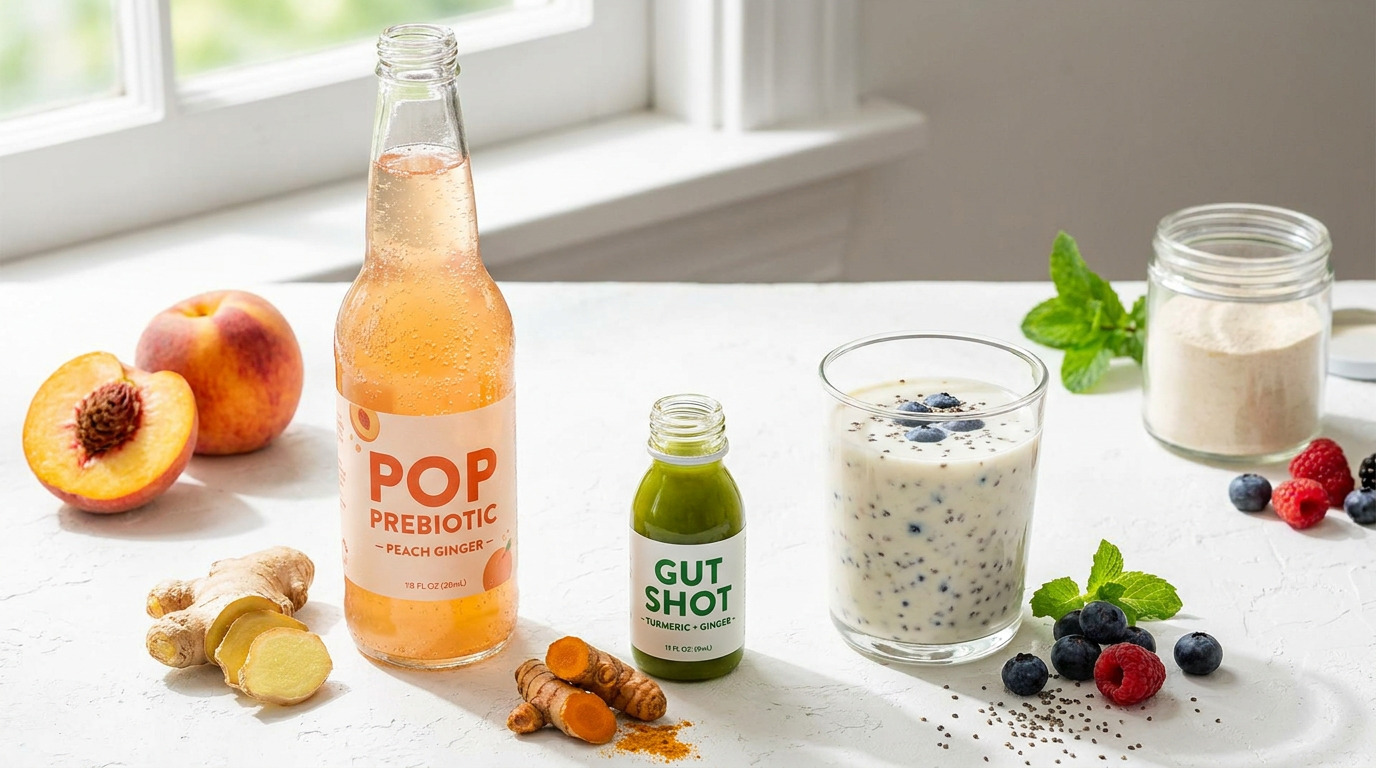
These drinks are the fastest-moving stars of the functional beverage world, and they are also some of the hardest to get right. Here is the uncomfortable truth that most decks and pitch meetings skip over: "just add some fiber and a probiotic" is exactly where the majority of gut-health projects quietly fall apart. They fail on taste, because a heavy fiber load turns earthy and thin. They fail on tolerance, because someone pushed the dose too high and gave early drinkers a stomachache. They fail on viability, because the live culture that looked great on the spec sheet was mostly dead by the time the can hit the shelf. And they fail on compliance, because the word "prebiotic" on the front of the pack turned into a headache the brand never saw coming.
This guide is for the founder, the brand manager, and the product developer who want to do it properly. We are going to walk through how to formulate a gut-health drink that actually works in the real world, not just in a beaker on a good day. We will cover how to add prebiotics to a beverage step by step and format by format, how to pick probiotic strains that survive manufacturing and shelf life, how to solve the sensory and stability problems that sink so many launches, and how to keep your label claims honest and defensible.
A quick word on who is writing this. We are , a Chicago beverage development company, and we build gut-health drinks alongside our clients, from the first formulation on the bench to the first real production run. We are not here to hand you a theory. We are here to help you make a drink you can sell. So let's make the beverage the hero, and let's get to work.
Menu Collective
The Gut-Health Boom: Why Prebiotic and Probiotic Drinks Are Everywhere
Walk into almost any grocery store today and the cooler tells the story. Where you once found a wall of the same three soft drinks, you now find a rainbow of prebiotic sodas, kombuchas, kefirs, functional waters, and wellness shots jostling for eye level. Gut health has moved from the supplement aisle into the beverage set, and it has done so fast.
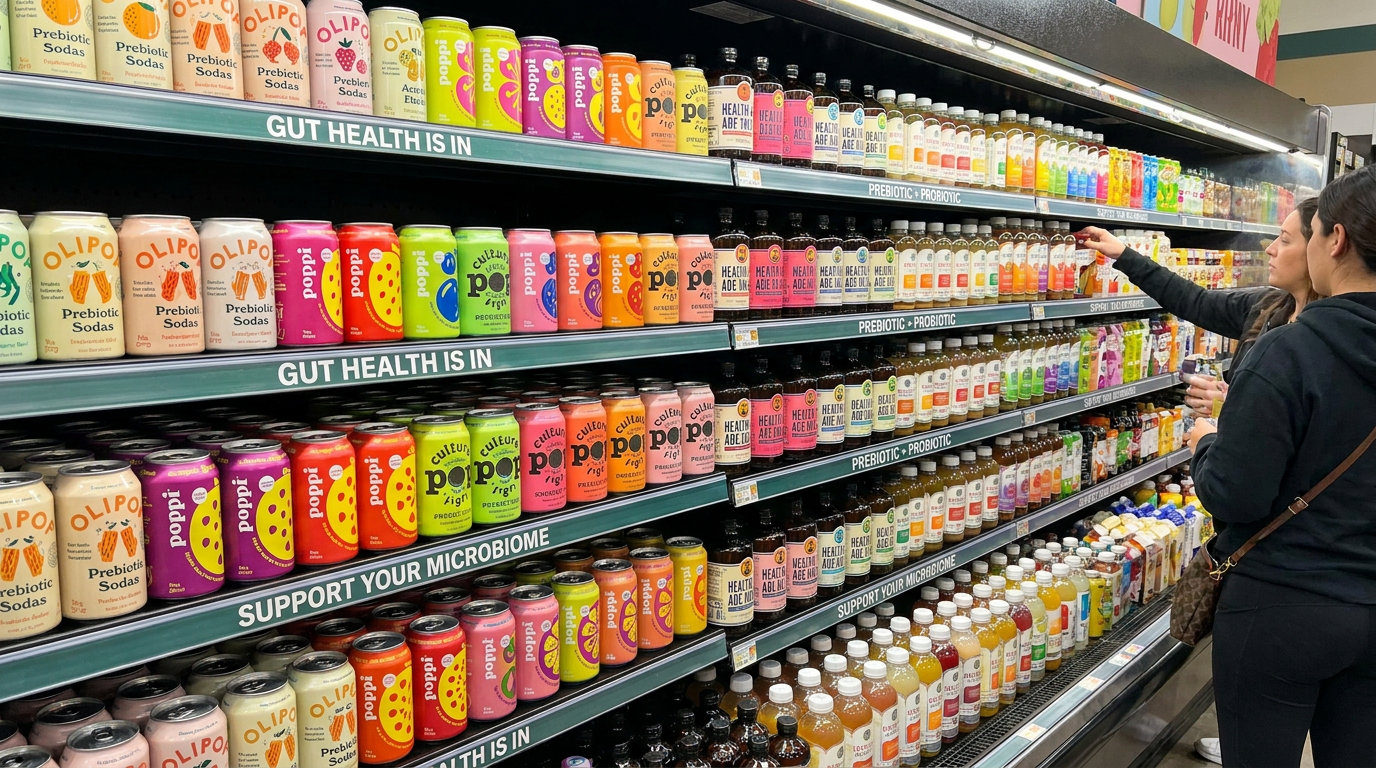
The numbers behind that shelf are worth understanding, because they explain why this category is worth the formulation effort in the first place. Functional beverages have become one of the most dynamic segments in all of food and drink, and gut health sits right at the front of the pack as a demand driver, alongside energy, cognition, and the broader hunt for better-for-you soda alternatives. A frames the category as both large and still climbing, with digestive wellness a leading reason shoppers reach past the traditional soft drink. Zoom in on the specific slice that is prebiotic and probiotic soda and the trajectory sharpens further. A projects sustained, aggressive growth through the early 2030s, driven by exactly the kind of consumer who wants their can of pop to do something for them.
market analysis of the probiotic and prebiotic soda segmentcurrent view of the U.S. functional beverages market
What changed? Consumer expectations, mostly. Not long ago, a "healthy" drink was something you tolerated. It came with a chalky texture, a medicinal aftertaste, and the unspoken understanding that anything good for you probably would not taste good. That bargain is dead. Today's shopper wants a drink that tastes like a treat and delivers a real functional benefit at the same time. They do not want a supplement dissolved in a bottle. They want the experience first and the function baked in so smoothly that they almost forget it is there.
That shift raises the bar for everyone building in this space. From where we sit as developers, the brands that win in gut health tend to get three things right all at once. Miss any one of them and the whole thing wobbles.
- Efficacy. The benefit has to be real and substantiated. A drink that gestures vaguely at "gut support" with a token pinch of fiber will not earn repeat purchase, and it will not survive scrutiny from an increasingly savvy audience.
- Experience. Taste, mouthfeel, aroma, and finish have to be genuinely enjoyable. In a crowded cooler, the second sip decides everything. If the drink is a chore, it does not matter how good the science is.
- Execution. The formula has to be stable, the cultures have to stay viable, and the whole thing has to be compliant and reproducible at commercial scale. A drink that works perfectly in a one-liter batch and collapses at ten thousand cans is not a product. It is a lesson.
A gut-health drink is a three-legged stool. Efficacy, experience, and execution all have to hold weight. Nail two and skip the third, and it still tips over.
This trio is the throughline for everything that follows, and it maps neatly onto the way we work at Menu Collective. We think in three moves: Design, where we shape the concept and the sensory target; Develop, where we formulate, test, and solve; and DeliverBefore you can formulate anything, though, you need to speak the language precisely. So let's start by untangling the four terms that your customers, your marketing team, and your regulators all care about, often for very different reasons.
, where we scale up, validate, and get you to a real production run. You will see those three ideas woven through every section of this guide, because a gut-health drink is never one decision. It is a chain of connected choices, and the strength of the chain is set by its weakest link.
Prebiotics, Probiotics, Postbiotics, and Synbiotics: What Each One Actually Means
The most respected reference point in this space is the set of consensus definitions published by the International Scientific Association for Probiotics and Prebiotics, known as ISAPP. These are the definitions that regulators, researchers, and serious formulators lean on, and they are worth knowing cold.
Here is a scene that plays out more often than you would think. A brand builds a drink, adds a spoonful of fiber, prints "prebiotic" across the front in a friendly rounded font, and ships it. Somewhere down the line, someone asks a simple question: is that actually a prebiotic? And the honest answer turns out to be "not necessarily." The gap between what a word means to a shopper and what it means to a scientist is where a lot of gut-health products get into trouble. So let's close that gap.
A probiotic is defined as a live microorganism that, when administered in adequate amounts, confers a health benefit on the host. Read that carefully, because every clause does work. It has to be alive. It has to be present in a large enough dose to actually do something. And there has to be a demonstrated health benefit. A jar of live cultures with no evidence behind it and no meaningful dose is not, in the strict sense, a probiotic.
A prebiotic, in the ISAPP framing, is a substrate that is selectively used by host microorganisms to confer a health benefit. The key word there is selectively"A prebiotic is a substrate that is selectively utilized by host microorganisms conferring a health benefit."
. A prebiotic is not simply any fiber. It is a compound that your beneficial gut microbes preferentially feed on, in a way that produces a benefit for you.
— The ISAPP consensus definition
That single italic clause, selectively utilized, is why fiber and prebiotic are not synonyms.
Then there are the two terms that trip up even experienced teams. A postbiotic is a preparation of inactivated microorganisms, or their components, that confers a health benefit. In other words, the organisms are no longer alive, but the preparation still does something useful. This is a genuinely appealing category for beverage developers precisely because there is nothing to keep alive through processing and storage. And a synbiotic is a mixture of live microbes plus a substrate they use, designed to work together. The draws a useful distinction here. A complementary synbiotic is simply a probiotic and a prebiotic combined, each independently supported. A synergistic synbiotic is a pairing chosen specifically because the substrate feeds that particular microbe, so the two are engineered to amplify each other.
ISAPP consensus on synbiotics
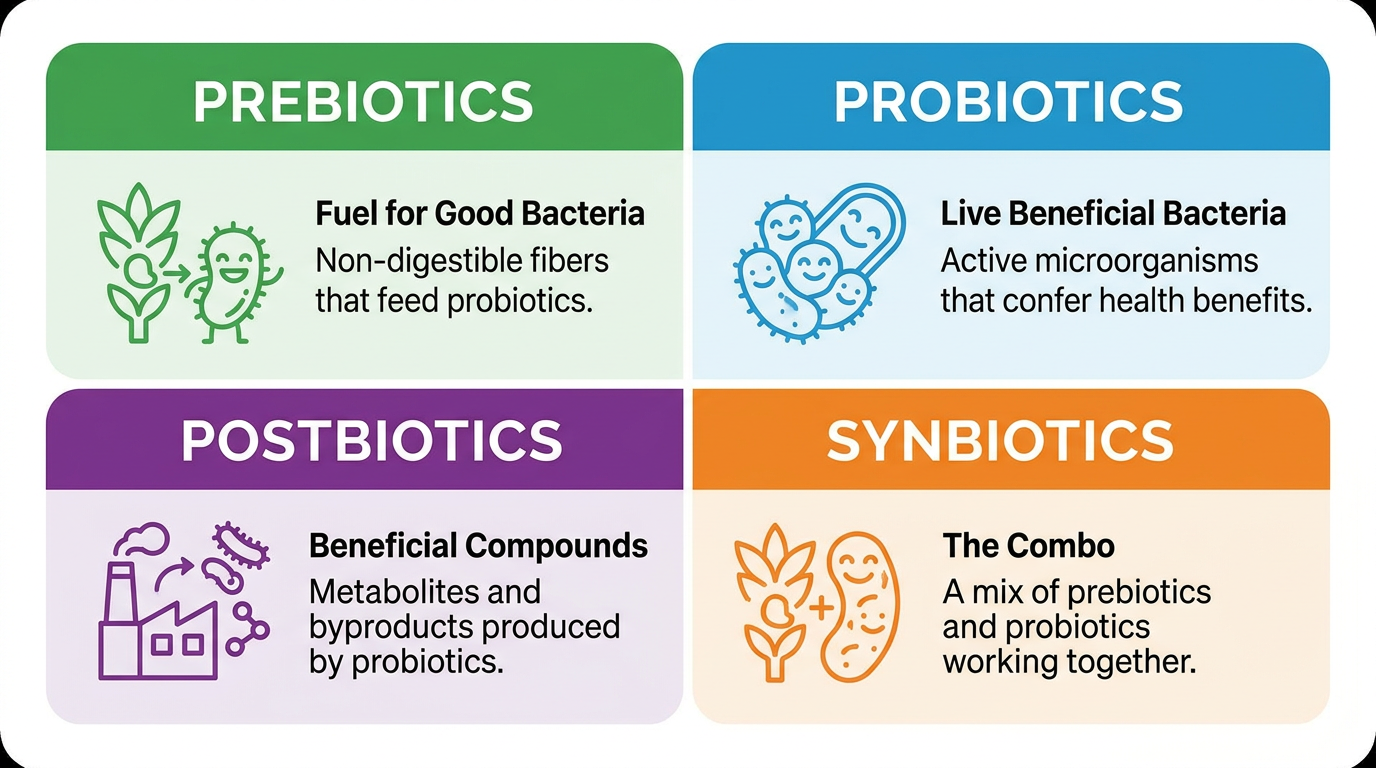
If you want the whole family laid out clearly, the ISAPP team has published a , and the underlying is the primary source worth bookmarking. Here is the same information as a quick mental cheat sheet:
peer-reviewed consensus statementreader-friendly roundup of all four consensus definitions
- Probiotic — a live microorganism, still alive, that must be dosed adequately and backed by a demonstrated benefit.
- Prebiotic — a substrate, not alive, that must be selectively used by beneficial microbes to produce a benefit.
- Postbiotic — inactivated microorganisms or their parts, not alive, that must still confer a benefit.
- Synbiotic — live microbes plus a substrate they use, alive in part, working together, ideally with the pairing justified.
With the vocabulary settled, the most common question we hear from founders is refreshingly practical: how do I actually get prebiotic fiber into my drink without wrecking it? Let's answer that directly.
Now here is the developer takeaway that ties it all together. The single most common mistake we see is treating an ingredient as if it automatically earns a label. Fiber in a drink is not automatically a prebiotic. A live culture in a bottle is not automatically a probiotic. Those words carry a burden of proof: the right identity, the right dose, and the right evidence. That matters for efficacy, because a drink built on the assumption that "fiber equals benefit" may not actually deliver one. And it matters enormously for the claims you are legally allowed to make later, which we will get to in depth.
How to Add Prebiotics to a Beverage: Choosing Fibers and Getting the Dose Right
If you strip away the jargon, the practical question of how to add prebiotics to a beverage comes down to four decisions made in concert: which fiber you choose, what dose you put in each serving, how that fiber behaves in solution, and what it does to the taste. Get those four aligned and you have a functional drink people enjoy. Get any one wrong and you have a science project.
Let's start with the fibers themselves, because they are not interchangeable. Each one has a personality at the bench.
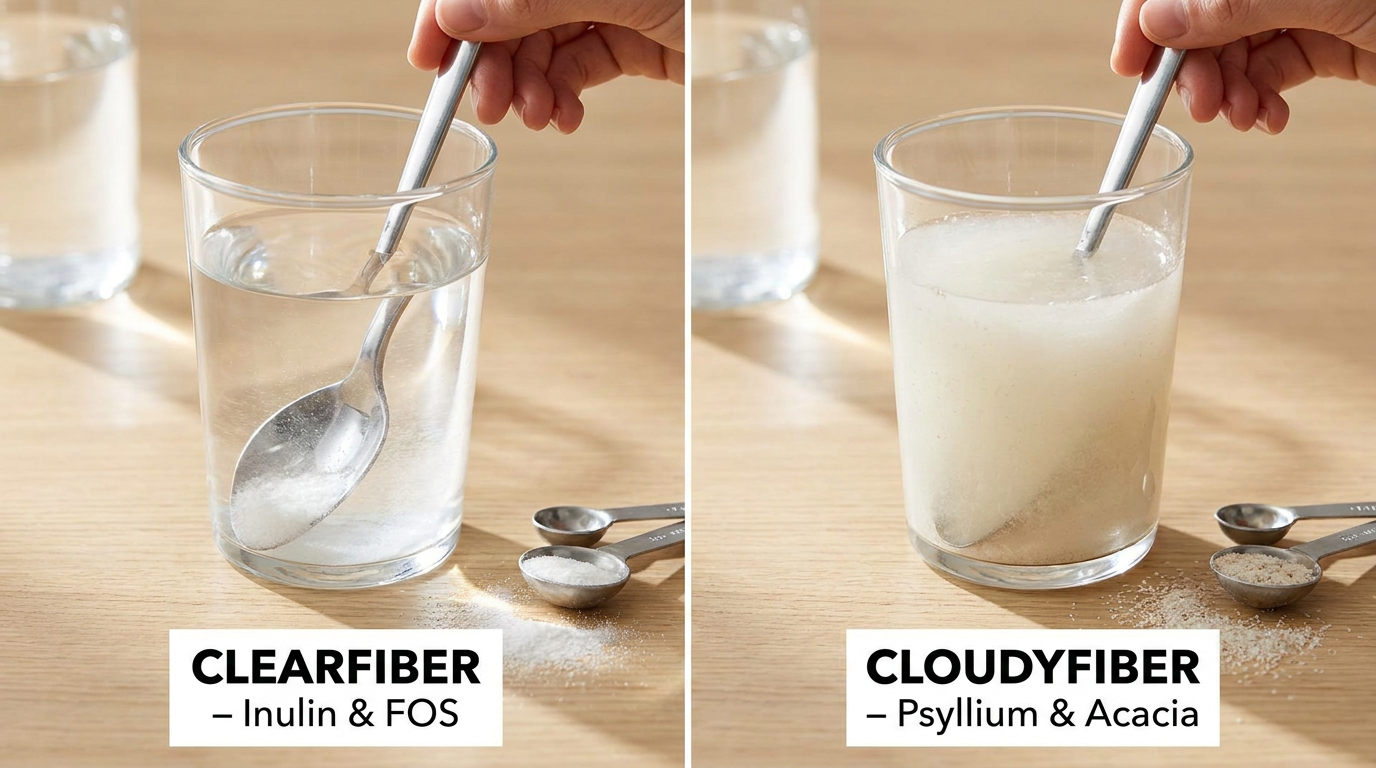
Inulin and chicory root fiber are the workhorses of the category. Inulin is highly soluble, dissolves cleanly, and brings a gentle sweetness that can offset some sugar. It is a proven, well-studied prebiotic. Its limitation is tolerance: push the dose too high and it can announce itself with gas and bloating, a point we will return to shortly. Fructooligosaccharides, or FOS, are close relatives, shorter-chain, quite soluble, mildly sweet, and effective, but they share inulin's tendency to cause discomfort at higher intakes. Galactooligosaccharides, or GOS, are another well-supported option, soluble and effective, often chosen for their strong prebiotic track record.
Then there are the fibers that behave differently in the glass. Resistant starch brings prebiotic function but can cloud a beverage and add a slightly starchy body, which makes it a better fit for opaque or textured formats than for a crystal-clear water. And acacia, also known as gum arabic, is a bit of a quiet hero. It is highly soluble, contributes very little flavor, adds a smooth touch of body without turning gummy, and, crucially, tends to be gentle on the gut.
That last point about gentleness leads to the most important lesson in this entire section: more is not better. There is a persistent temptation to load a drink with fiber so the label number looks impressive. Resist it. Nondigestible carbohydrates are fermented in the gut, and above certain intakes that fermentation produces gas, bloating, and abdominal distension. A lays out how tolerance varies by fiber type and dose, and it is the backbone reference for thinking about this trade-off. Research on inulin specifically shows that while it is beneficial and generally well tolerated at moderate doses, . The , noting that digestive complaints are usually dose-dependent rather than a reason to avoid prebiotics altogether.
Global Prebiotic Association has addressed this directlyadverse digestive effects tend to appear above higher daily intakespeer-reviewed review of the gastrointestinal effects and tolerance of nondigestible carbohydrates
This is where tolerance differences between fibers become a business decision, not just a scientific footnote. Acacia stands out for its comfort. Both the and an highlight its high digestive tolerance and low tendency to cause discomfort, thanks to a slower, gentler fermentation. Contrast that with the lower tolerance thresholds of some FOS and inulin doses. Why does this matter so much? Because gut-health drinks live and die on repeat purchase. A customer who feels bloated after their first can does not buy a second. The most functional formula in the world is worthless if it makes people uncomfortable.
ingredient-supplier analysis of the acacia soluble fiber marketGlobal Prebiotic Association's profile of acacia fiber
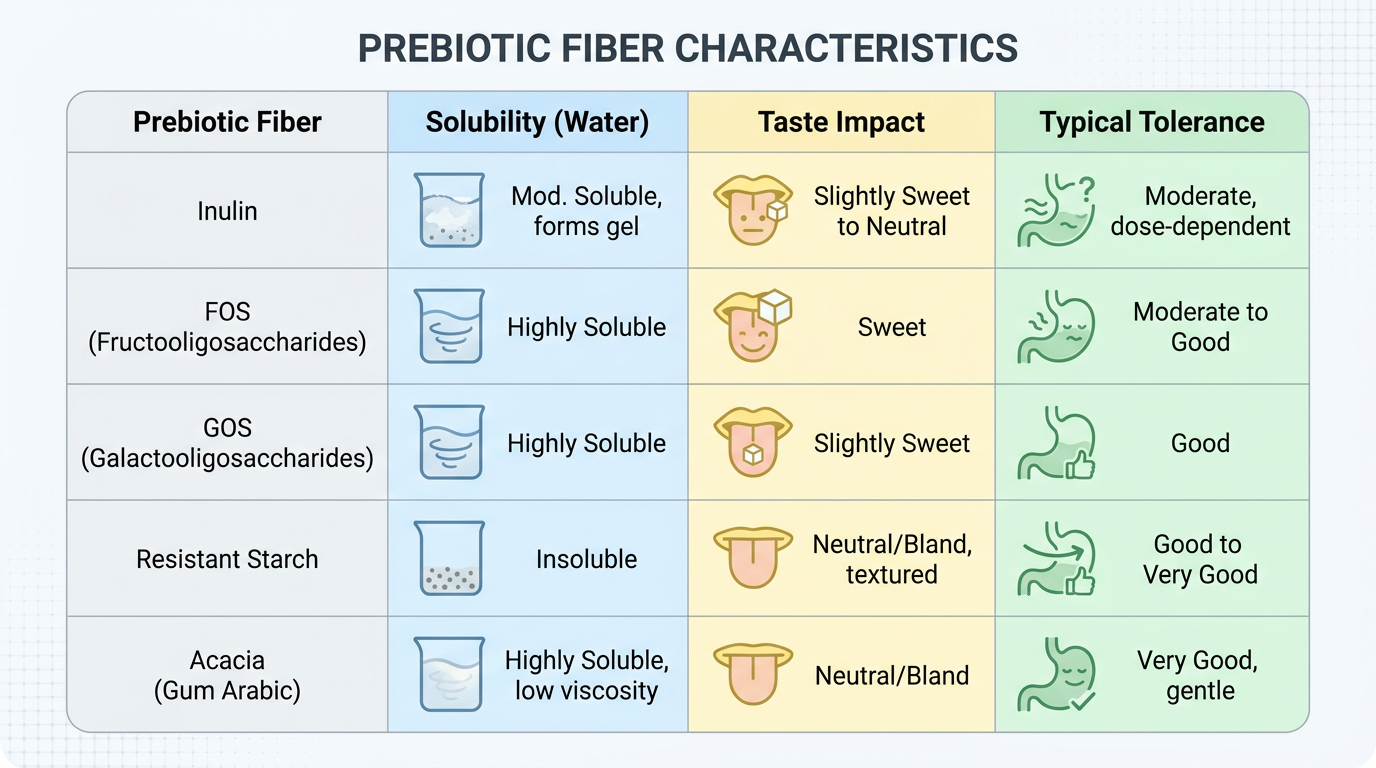
Here is a quick-scan summary of the shortlist to keep at the bench:
- Inulin / chicory root fiber — high solubility, mild sweetness, clean in clear liquids, tolerance ceiling at higher doses. Great all-rounder, mind the dose.
- FOS — high solubility, mildly sweet, effective, similar tolerance caution to inulin. Best in measured amounts.
- GOS — soluble, well-supported prebiotic, versatile across formats. A reliable choice.
- Resistant starch — prebiotic function, can cloud and add starchy body. Best in opaque or textured drinks.
- Acacia (gum arabic) — very high solubility, near-neutral flavor, smooth body, standout digestive tolerance. Excellent for clear waters and comfort-first formulas.
That dose decision also has a direct line to your label, since hitting a "good source of fiber" threshold is a claim, and claims come with rules. We will return to that. But fiber is only half the story for most gut-health formulas. The other half is far harder to engineer, because it is alive.
So how do you actually set the dose? Our rule of thumb runs in a specific order. First, establish the functional dose you need to clear whatever claim threshold you are aiming for, whether that is a meaningful prebiotic amount or a fiber content claim. Then pressure-test that number against three constraints at once: tolerance, so no one gets a stomachache; taste, so the fiber does not dominate; and cost, so the formula is viable at scale. Often the answer is not a single hero fiber at a heroic dose but a smart blend, perhaps a gentle acacia base carrying most of the load with a smaller, well-supported dose of inulin or GOS layered in for prebiotic punch. That "start low, build tolerance" philosophy, translated into a serving size a first-time drinker can handle comfortably, is what turns a one-time trial into a habit.
Probiotics That Survive: Strains, CFU Claims, and Viability Through Processing and Shelf Life
Fiber, for all its nuances, is a stable, forgiving ingredient. Probiotics are the opposite. They are living organisms, and living things die. The central engineering challenge of any probiotic beverage is keeping enough of them alive from the moment you dose the batch to the last day of shelf life, through heat, acid, oxygen, and time. This is where the most ambitious gut-health projects tend to break, and it is where getting the details right separates a real product from a hopeful one.
Start with a principle that surprises many first-time developers: benefits and claims are tied to specific strains, not just species. Saying your drink contains LactobacillusNext, understand what a CFU claim really promises. CFU stands for colony forming units, the standard way of counting viable, reproduction-capable microbes. When you see a number like ten billion CFU on a label, it is stating how many live organisms are present. But here is the distinction that trips up so many brands, and it deserves its own callout.
is like saying a car has an engine. Which one matters enormously. Two strains of the same species can behave completely differently in the body and in the bottle. So you document the exact strain, right down to its designation, and you rely on that strain's own clinical dossier for any benefit you intend to lean on. Borrowing another strain's research to support your strain's claim is a mistake that will not hold up.
The CFU on your label is a promise for the last day of shelf life, not the first.
Your count at the moment of manufacture will always be higher than your count months later, because viability declines over time. The number you print has to reflect what is guaranteed through the stated date, not the flattering figure you measured on day one. Which means you must formulate with overage: you dose in extra organisms up front, calibrated so that even after the expected decline, you still clear your labeled number at the end of shelf life. Getting that overage right is not guesswork. It is the product of stability testing.
What kills probiotics along the way? Several things, and a beverage tends to throw all of them at once. Heat is a major one, whether from pasteurization or hot-fill processing. Low pH and acidity, common in refreshing drinks, stress most organisms. Oxygen degrades many strains. Water activity and simple elapsed time do the rest. A walks through how acidity, storage conditions, and processing each chip away at viable counts, and it is essential reading for anyone serious about this category.
comprehensive overview of the factors affecting probiotic viability in food matrices
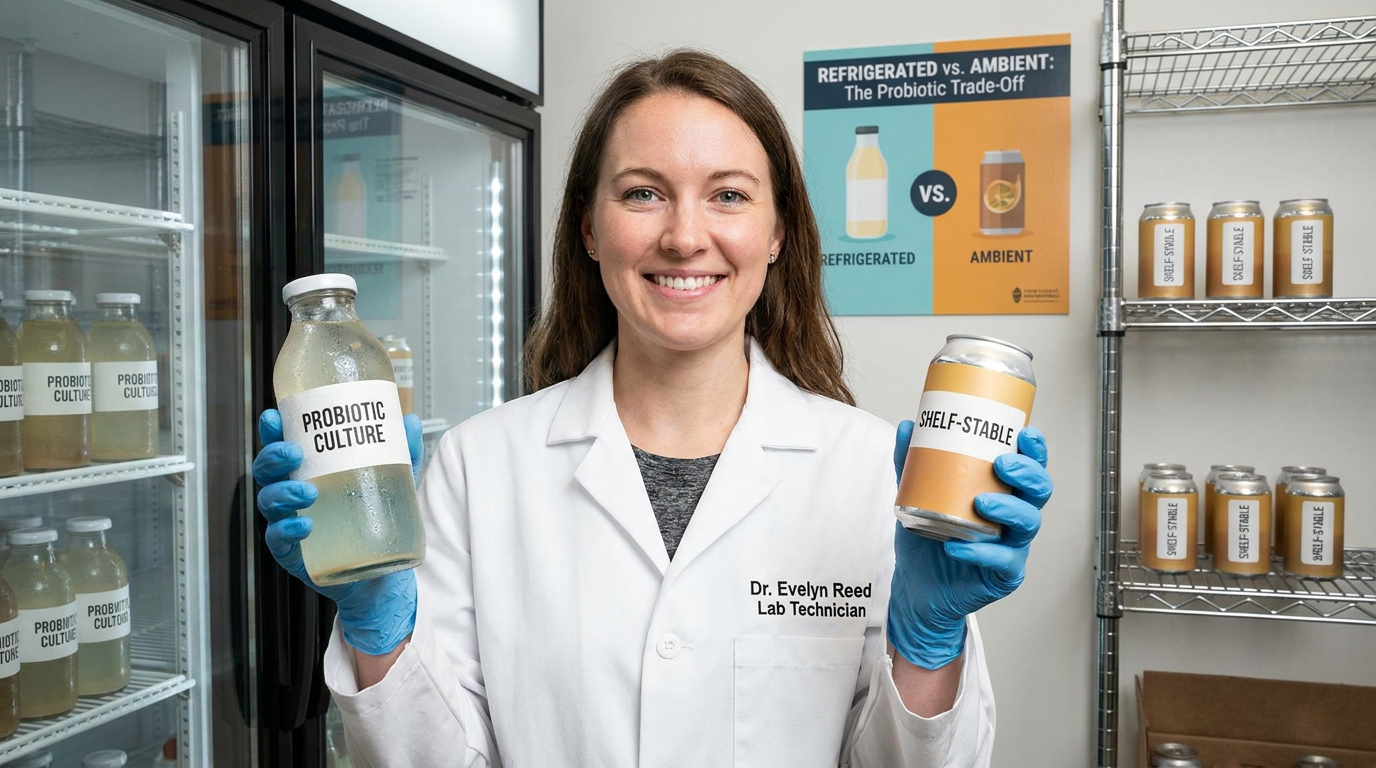
This is why one of the biggest decisions you will make is refrigerated versus shelf-stable. A refrigerated format is a protective environment. Cold storage slows the decline of fragile strains and buys viability, which is why so many delicate probiotic drinks live in the cooler. A shelf-stable format, by contrast, is a hostile one: ambient temperatures, longer transit, and time all conspire against your cultures. Research on underscores just how much the storage environment governs survival. Shelf-stable is enormously attractive commercially, because it opens up distribution and lowers cost, but it demands genuinely robust organisms and tighter process control.
storage temperature effects on probiotic viability
Which brings us to the most elegant solution in the shelf-stable toolkit: spore-forming probiotics. Strains like Bacillus coagulans protect themselves inside a durable spore coat that shrugs off conditions that would destroy more delicate organisms. The evidence here is compelling. One demonstrated high survival over extended room-temperature storage, and, remarkably, a showed meaningful retention even at brewing temperatures. For a shelf-stable drink, and even for a hot beverage application, spore-formers are often the difference between a formula that survives and one that dies in the warehouse.
study of the same strain in hot beverages
So here is the takeaway that should guide every probiotic decision you make: pick the strain to match the format and process, not the other way around.Strain and fiber choices, though, are never made in a vacuum. They depend entirely on the vehicle you are building. A kombucha and a functional water ask completely different things of the same ingredients. So let's break it down format by format.
If you have fallen in love with a shelf-stable can, do not force a delicate refrigerated strain into it and hope. Choose an organism built for the journey. And whatever you choose, do not assume it will survive. Validate it. Run accelerated and real-time stability testing, measure the actual decline curve, and set your overage from data rather than optimism.
Format by Format: Kombucha, Functional Sodas, Shots, Waters, and Dairy or Kefir
The format you choose is not just a packaging decision. It reshapes every formulation choice upstream, from which fibers behave well to whether your probiotics stand a chance. A brilliant strain-and-fiber combination in the wrong vehicle is still a failure. So let's look at how gut-health formulation shifts across the five most common formats, with a developer's note on each.
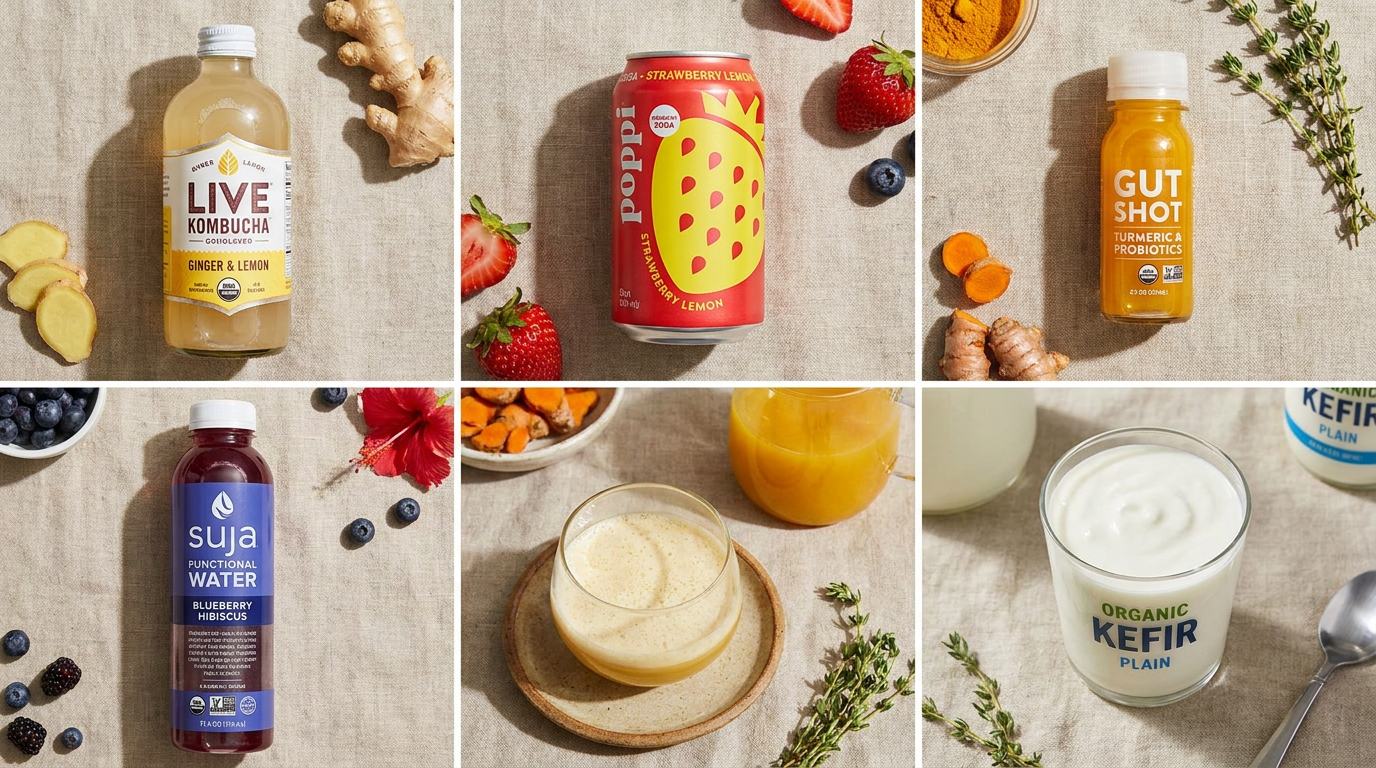
Kombucha and Fermented Drinks
Kombucha is gut health with heritage. It arrives with live culture built in, a natural acidity that shoppers associate with authenticity, and a flavor complexity that a lab cannot fully fake. But that same living complexity is its challenge. Fermentation is a moving target: alcohol can creep up and must be managed to stay within category limits, acidity can swing batch to batch, and the actual live-culture content varies far more than most people assume. A found wide variation in live counts across brands, which is a sobering reminder that "fermented" does not automatically mean "high in viable probiotics."
study of the viability and diversity of cultures in commercial kombucha
Developer note: embrace the fermentation, but control it. Consistency across batches is the real prize, and it comes from disciplined process design, not luck.
Functional and Prebiotic Sodas
This is the format that defined the modern gut-health boom. Prebiotic soda is fiber-forward, carbonated, and unapologetically flavor-driven. It is the "treat that treats you" archetype, and it leans hardest on prebiotics rather than live cultures, which sidesteps a lot of viability drama. The whole game here is delivering a meaningful fiber dose inside a genuinely craveable, soda-like experience.
Developer note: your fiber choice is your foundation. Pick fibers that stay clear under carbonation, keep the dose inside comfortable tolerance, and let flavor do the heavy lifting.
Wellness Shots
Small but mighty. A wellness shot packs high functional density into two or three ounces, which is both its advantage and its constraint. The tiny volume means every milliliter counts, but it also means bold, concentrated flavors, ginger, citrus, turmeric, apple cider vinegar, that can mask the earthiness of fiber or the sourness of a live culture. Shots are ideal when you want to deliver a concentrated, once-a-day dose.
Developer note: use the intensity to your advantage. A shot's strong flavor profile is a fantastic hiding place for functional ingredients that would stick out in a subtler drink.
Functional Waters
Clarity and clean taste are non-negotiable here. A functional water promises purity, so anything that clouds the liquid or adds an off-note is disqualified on sight. That narrows the field to highly soluble, near-flavorless fibers, and it is exactly where acacia shines, along with clear-dissolving inulin at a controlled dose.
Developer note: transparency, literally, is the brief. Test every ingredient for clarity and neutrality before it earns a place in the formula.
Dairy and Kefir
Dairy is the original home of live cultures, and kefir is one of the most recognizable gut-health cues in the entire cooler. The matrix is naturally hospitable to probiotics, and the creamy body carries flavor beautifully. Fiber fits in well too; work on shows how cleanly soluble prebiotics integrate into a dairy base. The considerations here are protein interactions, which can affect texture and stability, and the near-certainty of refrigeration.
prebiotic acacia fiber in dairy foods
Developer note: dairy does a lot of the heavy lifting for you on culture survival and mouthfeel, so use that freedom to push flavor and function further.
For the fermented formats especially, complexity compounds. Even the seemingly simple water kefir has real technical hurdles, as a review of the makes clear, from managing acidity to keeping the fermentation predictable.
challenges in water kefir production
The meta-lesson across all five is a matching exercise. Is your concept fiber-led or culture-led? Refrigerated or shelf-stable? Indulgent or clinical? Answer those honestly and the right format usually reveals itself. This is the kind of range we work across every day, and our No matter which vehicle you pick, though, the same stubborn set of sensory and stability problems keeps showing up at the bench. Those are the problems that decide whether a drink is merely functional or actually good. Let's solve them.
beverage case studies
span coffee-based drinks, low-ABV formats, functional wellness blends, and sparkling formats, because the right home for a gut-health idea genuinely can be almost any base, any format.
Solving the Hard Part: Taste, Mouthfeel, Sweetness, Acidity, and Stability
Anyone can make a drink that is good for you. The hard part, the part that earns the second sip and the repeat purchase, is making a drink that is good for you and a genuine pleasure to drink, and keeping it that way for its entire shelf life. This is the heart of beverage development, and it is where a formula either comes alive or quietly dies. Let's take the challenges one at a time.
Taste and off-notes. High fiber loads and live cultures do not arrive flavor-neutral. Fiber can bring earthy, "green," or vegetal notes. Cultures and fermentation can add sourness that ranges from pleasant tang to unwelcome funk. The solution is not to bury these notes under sugar. It is to build a flavor system that balances and integrates them, using complementary flavors, carefully chosen acids to brighten, and targeted masking where needed. The goal is harmony, a drink where you taste the treat, not the technology.
Mouthfeel. This is the most underrated lever in the entire category. Fibers behave very differently in the mouth. Some, like acacia, add a pleasant, rounded body that makes a drink feel substantial and premium. Others can feel thin and watery, or, at the opposite extreme, slick or gummy if overdone. Mouthfeel is where fiber choice and clever combinations pay off: you can dial in exactly the texture your concept needs, a soda that feels full and satisfying or a water that stays crisp and light, without sliding into that heavy, syrupy quality that screams "supplement."
Sweetness strategy. Modern shoppers want low sugar, but they still want the drink to taste good, and those two desires are in constant tension. The nuance here is that many prebiotic fibers, inulin and FOS especially, contribute a mild natural sweetness of their own. A smart formulator treats that as a sweetness ingredient, not a footnote, and builds the sugar profile around it, layering a small amount of real sugar or a natural sweetener on top of the fiber-derived sweetness to land a clean, contemporary, low-sugar taste. Done well, the fiber is pulling double duty: function and flavor at once.
Acidity and pH. Here is one of the genuine tensions of the category. A low pH is often your friend for flavor and safety, delivering refreshing brightness and helping guard against spoilage. But a low pH is hard on many probiotics, accelerating their decline. So you are hunting for a window, a pH that balances a pleasant, safe, stable flavor against culture survival. Sometimes that means choosing acid-tolerant strains, like the spore-formers we discussed. Sometimes it means protective formulation strategies. A covers exactly these acidity and protection questions, and it is a valuable map of the trade-offs.
review of the challenges and technological strategies for incorporating probiotics into non-dairy systems

Stability over shelf life.Underneath all of this sits a single organizing principle, one we lean on in every project.
A drink that is perfect on bottling day and a mess three months later is not a product. The failure modes are numerous: fibers can sediment and settle, clear liquids can lose their clarity, colors can shift and fade, carbonation can drift, and, as we have stressed, viable counts can decline. The only reliable defense is testing. You design for stability from the start, then you validate through both accelerated stability testing, which fast-forwards time under stress conditions, and real-time testing, which confirms performance under actual storage. You do not guess. You prove.
Define the Gold Standard sensory target first, then formulate backward to protect it through scale-up and shelf life.
In other words, decide precisely what perfect tastes and feels like before you start solving for cost, stability, and viability. That Gold Standard becomes your north star. Every trade-off you make afterward is measured against it, so you protect the experience the customer will actually have rather than drifting away from it one compromise at a time. And here is the reframe that matters most: none of these problems have to be solved alone. This is the exact work we do shoulder to shoulder with clients, and our A drink that tastes wonderful, feels premium, and holds up on the shelf is a triumph. But it still cannot ship if you get the words on the pack wrong. So let's close the technical arc where it has to close, with claims that hold up.
beverage development and formulation process
is built to carry a concept from the first taste all the way through scale-up and commercialization without losing the magic along the way.
Claims That Hold Up: Regulatory and Label Guidance for Gut-Health Drinks
You can build the best-tasting, most viable, most beautifully stable gut-health drink in the cooler and still sink the whole project with a single sentence on the label. Compliance is not the boring afterthought of beverage development. Handled early, it is a competitive advantage, because a claim you can actually defend is a claim your competitors who cut corners cannot safely make. Let's walk through what you can and cannot say, in plain language.
The very first fork in the road is category: conventional food versus dietary supplement. These are two different regulatory paths with different rules and different allowable claims, and the decision shapes everything downstream. A grab-and-go beverage most often lives as a conventional food, but the choice deserves deliberate thought, not a default, because it determines the language, the format of your claims, and the review requirements you will face. The distinction is laid out clearly in the FDA's overview of .
label claims for conventional foods and dietary supplements
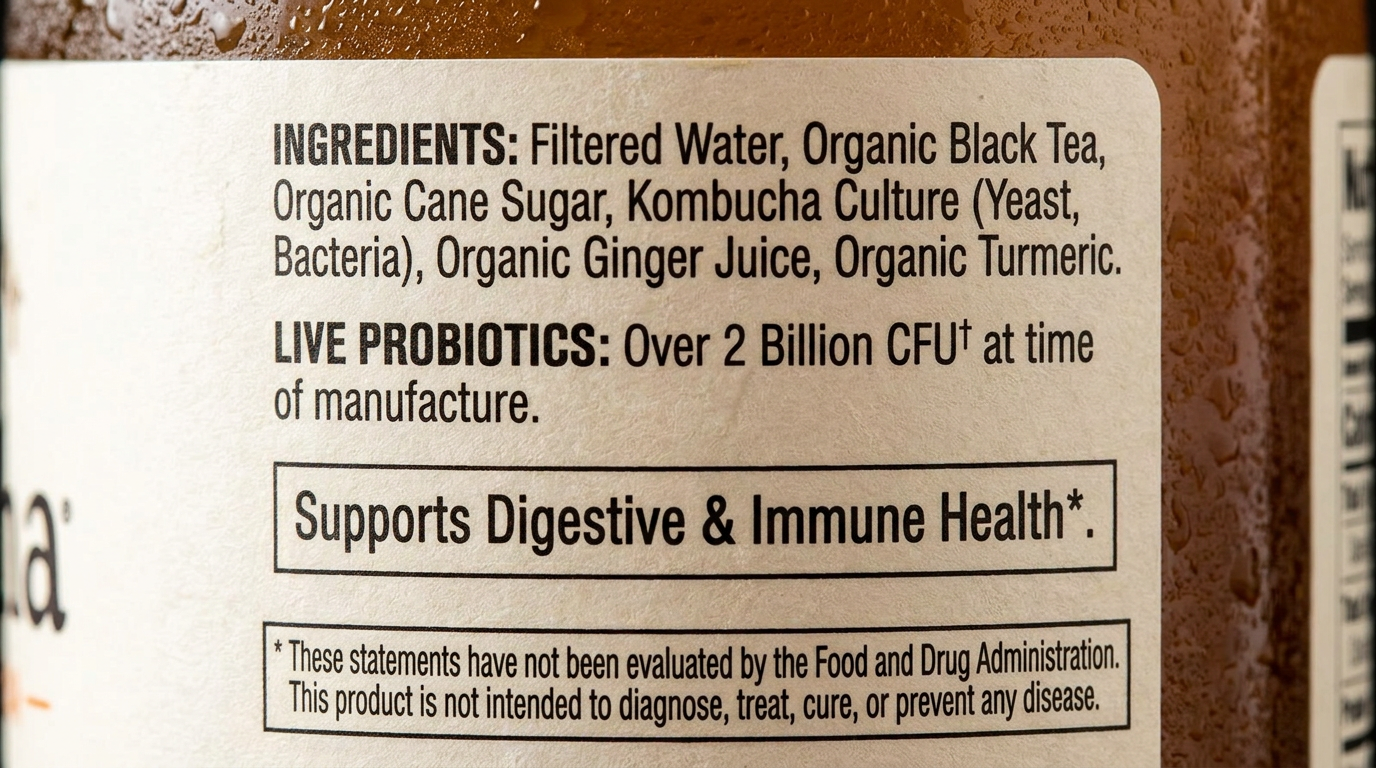
Next, understand the line that matters more than any other: structure/function claims versus disease claims. You are permitted to describe how an ingredient supports the normal structure or function of the body. You are not permitted to claim that your drink treats, cures, prevents, or mitigates a disease. That is the bright line, and crossing it turns your beverage into an unapproved drug in the eyes of regulators.
Consider the difference:
- Allowed (structure/function): language along the lines of "supports digestive health" or "helps maintain a healthy gut," describing normal function, often accompanied by the required disclaimer.
- Not allowed (disease): anything suggesting the product "treats," "cures," or "prevents" a specific condition or disease.
The FDA's guidance on is the authoritative reference here, including where disclaimers are required. It is worth reading closely, because the wording matters right down to the verb.
structure/function claims
Then comes substantiation, the backbone of any honest claim. Every claim you make must be truthful and not misleading, and it must be supported by evidence. For gut-health drinks, the strongest position is evidence that is specific to what you are actually selling: strain-specific human data for a probiotic claim, and fiber-specific support for a prebiotic claim. This connects directly back to earlier sections. Remember that a benefit is tied to a specific strain, and that a fiber only earns the word "prebiotic" when it meets the definition and has support. Those are not just scientific niceties. They are the foundation of a defensible label.
This is exactly why the words "prebiotic" and "probiotic" on the front of your pack carry weight. Using them responsibly means meeting the underlying definition and holding the support to back it up, not simply adding an ingredient and borrowing the halo of a trendy term. Industry bodies have published useful, category-specific guidance on this: the International Probiotics Association covers the , and the Global Prebiotic Association maintains a that walks through claims and substantiation for prebiotics specifically. Both are worth keeping close as you build your claims strategy.
U.S. prebiotic regulatory guideregulation of probiotics in U.S. food
A few practical labeling notes bring this down to the panel itself. Your CFU declaration should reflect the guaranteed count through the end of shelf life, which loops straight back to the overage and stability testing we covered. If you are pursuing a fiber content claim such as "good source of fiber," you have to actually hit the defined threshold per serving, which is one more reason to set your fiber dose deliberately rather than by feel. And where disclaimers are required, they belong on the pack, formatted correctly.
The single most valuable habit we can leave you with here is one of timing. Build your claims strategy in parallel with formulation, not after it. If you decide late in the game that you want to say "good source of fiber," but your dose was set for taste and comes up short, you are back at the bench. If you want to make a specific probiotic claim but chose a strain without the matching human data, you are stuck. When the claim, the dose, and the evidence are designed together from day one, the on-pack story writes itself, honestly and defensibly.
With formulation, format, and claims all pulling in the same direction, it is time to bring the threads together into a clear path forward.

Bringing It Together: From Gut-Health Concept to Shelf-Ready Drink
Step back and the whole picture snaps into focus. A successful gut-health drink is not one great decision. It is a chain of connected choices, each one dependent on the last, all of them balancing the same three forces: efficacy, experience, and execution.Just as important is knowing what will sink you. Three risks show up again and again, and all three are avoidable. The first is mislabeling the terminology, treating any fiber as a prebiotic or any live culture as a probiotic without meeting the definition and holding the evidence. The second is over-dosing fiber past the point of comfort in pursuit of a bigger number, and losing the repeat customer to a stomachache. The third is choosing a probiotic strain that simply cannot survive your process or your shelf life, and shipping a promise you cannot keep. Sidestep those three and you are already ahead of most of the category.
For the reader who came here with a direct question, here is the direct answer, distilled. Adding prebiotics to a beverage is fundamentally a matching exercise: you match the right fiber and the right dose to your format, your tolerance target, and the claim you want to make, and then you fight hard to protect taste and stability all the way through scale-up. Lead with acacia or a gentle blend when comfort and clarity matter most. Layer in well-supported fibers like inulin or GOS to hit your functional and label targets. Keep the dose inside the tolerance window so the second can gets bought. That is the practical core of it.
The fiber you choose shapes the taste. The dose you set shapes both tolerance and your fiber claim. The strain you pick has to survive the format, and the format you commit to determines whether you even need to keep a culture alive. The pH that protects your flavor might threaten your probiotic. And the claim you want to make reaches all the way back to the dose and the data you built in on day one. Pull any single thread and the others move.
That, in the end, is how we think about this work at Menu Collective: Design, Develop, Deliver. We shape the concept, we solve the hard problems at the bench, and we get you to a real production run, with the beverage itself always the hero of the story. We build with you, not merely for you, because the best gut-health drinks come from tight collaboration between a founder's vision and a developer's craft.
So if you have a gut-health idea, whether it is a crisp prebiotic soda, a punchy wellness shot, a creamy kefir, or something the cooler has not seen yet, let's turn it into a real, shelf-ready product, from the first formulation to the first production run. Let's build your gut-health drink together. You can and simply tell us what you are dreaming up, and if you want to see the range of what is possible first, browse our to see how far a great idea can travel.
beverage case studiesbook a free beverage development consultation
Great gut-health drinks are not an accident. They are engineered, tasted, tested, and built with care. Let's talk.