
That single shopper represents one of the most significant reframings the beverage industry has faced in a generation. The scale of the GLP-1 shift is not a passing curiosity. It is a durable change in how millions of people eat, drink, and shop. And it lands squarely on beverages, because when solid food becomes a smaller part of someone's day, liquids step forward as a primary way to deliver nutrition, hydration, and comfort.
Picture a shopper standing in the beverage aisle on a Tuesday evening. A few months ago, she would have grabbed a large bottle of something cold, sweet, and forgettable, drunk half of it, and moved on. Tonight she is different. She is on a GLP-1 medication, one of the names you already know, such as Ozempic, Wegovy, or Zepbound. Her appetite has quieted to a whisper. She eats far less than she used to, and she drinks less too. But her body still needs everything it needed before, and in some ways it needs more. Every ounce she chooses now has to work harder. It has to earn its place.
Here is the core tension that defines the work ahead. Reduced appetite and smaller portions collide with higher needs for protein, fiber, hydration, and nutrient density. The old playbook does not solve for this. Diet drinks were built to remove calories from big volumes. This consumer is not chasing emptiness. She is chasing density inside a smaller footprint. This is the moment for the industry to get serious about GLP-1 friendly beverages, and to design them with intention rather than relabeling what already sits on the shelf.
This is not a think piece. It is a working design brief, written from the point of view of a team that takes . At Menu Collective, we build with brands, not for them, and we have taken enough drinks from a bench sample to a first production run to know where the real challenges live. Grounding the opening in the science, federal research from the confirms that GLP-1 receptor agonists reduce food intake, which changes the entire calculus of what people buy and why.
National Institute of Diabetes and Digestive and Kidney Diseasesbeverages from concept to commercialization
Over the next several sections, you will get a builder's roadmap. We will define who this consumer actually is, break down the new nutritional brief in concrete terms, map formats and fortification strategies, tackle the sensory reality of flavor and texture, rethink portion sizing and pack architecture, and lay out how to position responsibly without ever crossing into medical claims. Let's start with why the better-for-you brief just changed, and why it changed permanently.
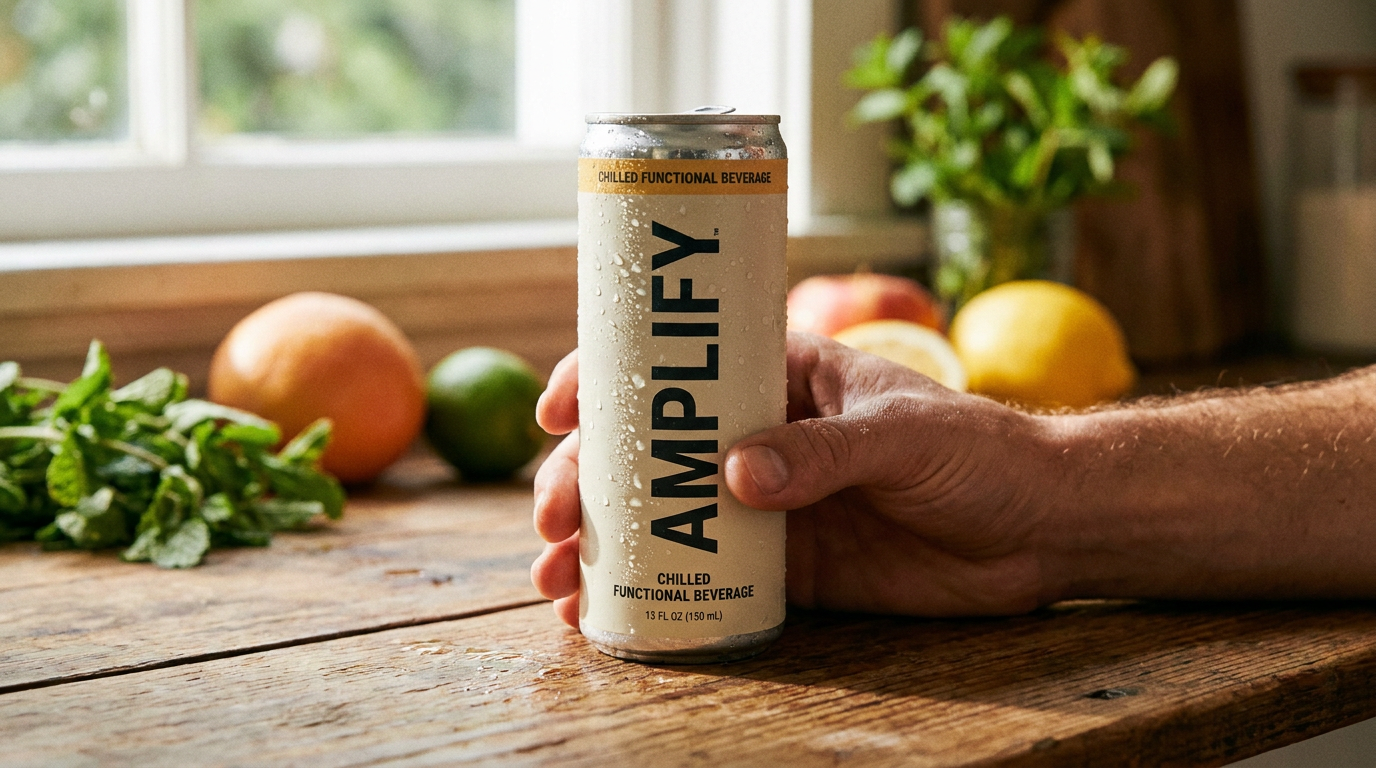
The GLP-1 Shift: Why the Better-for-You Brief Just Changed
To design for this consumer, you first have to understand what is happening inside her body, and then translate that into commercial reality. GLP-1 medications work by mimicking a hormone the body already produces. In plain language, they suppress appetite, slow the rate at which the stomach empties, and reduce spontaneous food intake. The result is that people simply feel full sooner and stay full longer, so they eat less without the constant effort of white-knuckle willpower. The physiology of satiety, gastric emptying, and portion control is well documented in the medical literature, including the detailed review in .
NCBI Endotext on the control of food intake in humans
The magnitude matters here, because it is what separates a fad from a segment. Caloric intake often drops substantially for people on these medications. When you cut that much food from a daily routine, you do not just cut calories. You also cut the protein, the fiber, and the fluids that used to come along for the ride. The underscores that reduced intake is exactly what these medications are designed to produce, which means the nutritional gaps are not an edge case. They are the predictable outcome for a large and growing group of people.
NIDDK research on obesity
Now connect the dots to the aisle. When someone eats less solid food, liquids stop being a nice-to-have refreshment and become a serious delivery vehicle for nutrition. A smoothie is no longer a treat. It might be lunch. An electrolyte drink is no longer just a workout companion. It might be how someone stays hydrated on a day when a full glass of water feels like too much. The drink moves from the periphery of the diet to the center of it. That is a profound change in the job a beverage is being hired to do.
The old brief chased fewer calories. The new brief earns every sip.So the trend is big, it is real, and it is here to stay. The next question is the practical one that every developer has to answer before touching an ingredient. What, precisely, does this consumer's body need, and how do we turn that into a nutritional target we can build against?
There is one more reason this is durable rather than fleeting. These medications are increasingly part of long-term care, not a two-week crash diet. People stay on them. Their habits reset. Their pantries and refrigerators reorganize around smaller, denser, gentler foods and drinks. A consumer base that reshapes its purchasing for months and years is a consumer base worth designing for deliberately, with real research and real formulation rigor. This is not a limited-time flavor drop. It is a category redefinition.
For developers and brand teams, the mindset shift is the most important takeaway of this entire piece. The old better-for-you brief optimized for subtraction. The new brief optimizes for concentration. Instead of asking how few calories you can deliver, you ask how much genuine nutrition you can build into every ounce while keeping the drink light and enjoyable. That is a harder engineering problem, and it is also a more rewarding one, because it rewards craft over gimmickry.
This is where the commercial opportunity comes into focus, and where the legacy category is caught flat-footed. Decades of better-for-you innovation optimized for one thing above all others, which was fewer calories in bigger volumes. Diet sodas, zero-calorie waters, and light everything were engineered for people who wanted to drink a lot while consuming little. The GLP-1 consumer is the mirror image of that shopper. She drinks a little and needs a lot. A product built to strip calories out of volume has almost nothing to offer someone who needs to pack nutrition into a smaller serving. That mismatch is the whole game, and it is why so much of the existing shelf feels irrelevant to this new buyer.
Inside the New Brief: What the GLP-1 Consumer Actually Needs
The first priority is nutrient density. This is the foundation on which everything else rests. With smaller portions, every serving has to deliver more nutrition per ounce than it used to. That means designing for density, not dilution. A watery product that tastes clean but delivers little is a wasted opportunity for someone whose total intake is limited. Density is the lens through which every other decision gets evaluated, because a serving this consumer actually finishes might be all the nutrition that beverage occasion will provide.
Physiology is interesting. A design brief is useful. The goal of this section is to translate one into the other, so you walk away knowing the specific nutritional targets a GLP-1 friendly beverage should hit. When you distill everything the research points to, the brief organizes itself into five clear priorities, and each one carries direct product implications.
The second priority is protein, and it deserves special attention because of what happens during rapid weight loss. When people lose weight quickly, some of that loss can come from lean muscle mass rather than fat alone. That makes protein a priority nutrient, not a bonus feature. Cleveland Clinic's discussion of explains why preserving muscle matters during medically supported weight loss, and why adequate protein intake becomes central to doing that well. There is also a distribution angle worth designing for. Guidance around GLP-1 use frequently emphasizes not just total protein but protein spread across the day, a point reinforced in Cleveland Clinic's coverage of . A well-formulated protein beverage can slot neatly into that distribution, delivering a meaningful dose at a moment when a full meal feels like too much.
why exercise is important while taking GLP-1sOzempic and muscle loss
The third priority is fiber. When food intake drops and fluids drop with it, digestion can slow and regularity can suffer. Fiber helps support GI regularity and adds to the feeling of satiety, and it does so in a format that is easy to consume even when appetite is low. Cleveland Clinic's overview of a The fourth priority is hydration and electrolytes. Smaller intake volumes mean less fluid overall, and some people experience GI side effects that further challenge fluid and electrolyte balance, especially early in treatment. That makes thoughtful hydration formats genuinely valuable. This is not about dumping salt into water. It is about balancing electrolytes for real function while keeping the drink pleasant to sip in the modest volumes this consumer will actually manage.
GLP-1 diet
highlights the pairing of fiber with adequate fluids, which is a useful reminder that fiber and hydration are not separate concerns. They work together, and a smart beverage can address both at once.
The fifth priority is tolerability, and it may be the most underrated of the five. Nausea and general digestive sensitivity are common, particularly in the early weeks of treatment. Mayo Clinic's Q&A on points to smaller portions and smoother textures for GI comfort. In beverage terms, that favors smooth, easy-to-digest liquids such as gentle smoothies and clean, light sipping formats over anything heavy, rich, or aggressively flavored. A drink that is nutritionally perfect but sits uneasily in a queasy stomach will not get finished, and a drink that does not get finished delivers nothing.
supporting weight-loss medications with tailored nutrition
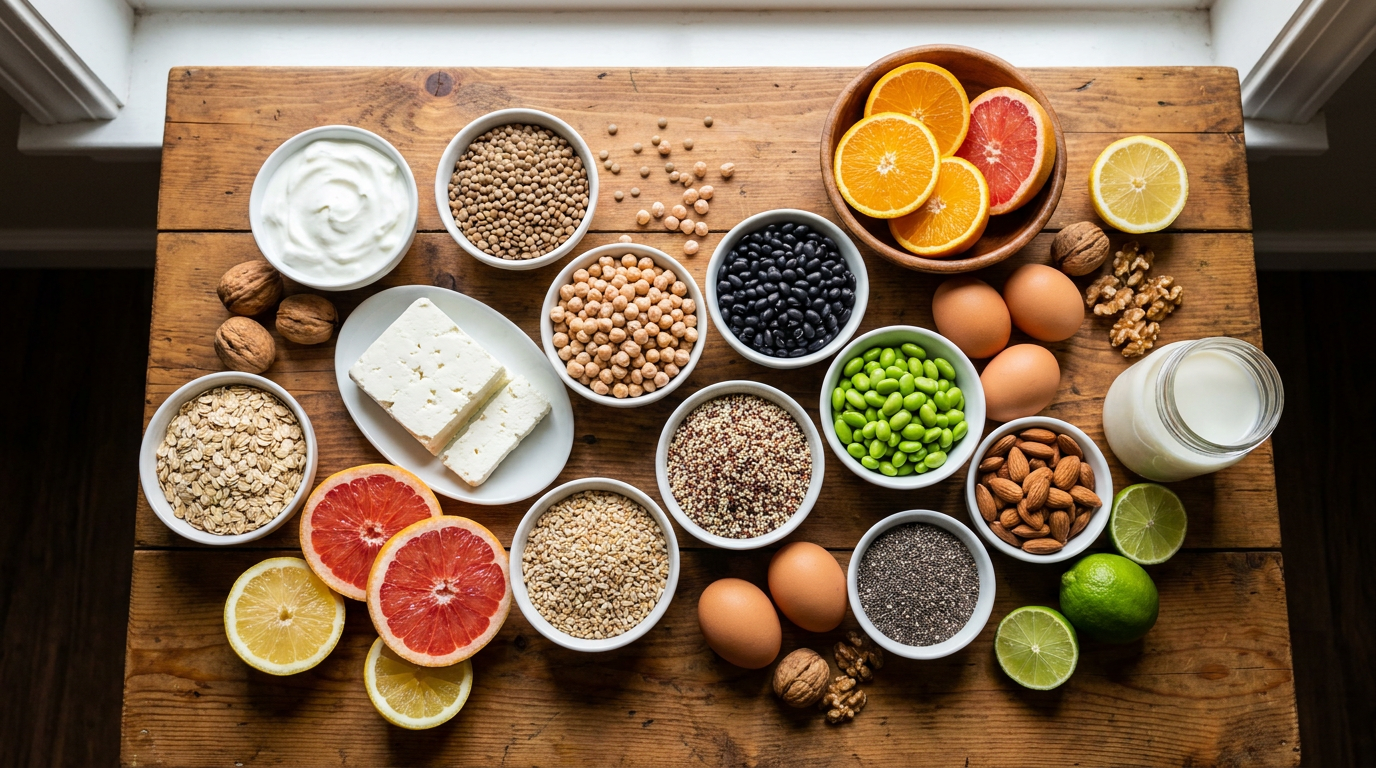
Put together, here is the brief in a form you can pin to the wall of a development kitchen:
- Density. Maximize nutrition per ounce, because portions are small and every serving counts.
- Protein. Prioritize high-quality protein to help preserve lean muscle, and design it to fit a spread-across-the-day pattern.
- Fiber. Support digestive regularity and satiety, paired with adequate fluid.
- Hydration and electrolytes. Balance fluid and minerals for real function in smaller volumes.
- Tolerability. Keep textures smooth and profiles gentle so the drink is welcome even on a sensitive day.
None of these targets is difficult to state. All of them are difficult to hit at once, in a single drink, that also tastes good and survives a production run. That is the craft of it. And it means the next challenge is turning these five targets into an actual drinkable product, which starts with choosing the right format and building density into the formulation itself.
Formats and Fortification: Building Density Into Every Sip
Consider the format landscape. Ready-to-drink protein shakes and smoothies fit the meal-replacement moments, the times when a full meal is too much but the body still needs substance. Electrolyte and hydration formats serve the fluid-balance need, ideal for days when plain water feels like a chore or when side effects make hydration harder. Smaller functional shots deliver concentrated nutrition in a format that respects a limited appetite, useful when even a modest can feels like a lot. And lighter sipping formats, clean and gently flavored, are often the right answer for early-treatment days when tolerability is the top concern. One consumer might reach for three of these in a single week depending on how she feels. Designing the range is as important as designing any single drink.
A brief is only as good as the product it produces, so this section is a working map. The right delivery format depends on the occasion and the consumer's tolerability, and matching those thoughtfully is the first real design decision. Not every GLP-1 friendly beverage should be the same drink in a different flavor. The category needs a range, each format tuned to a specific moment in this consumer's day.
Now to the harder part, which is fortification. Protein is where many well-intentioned beverages stumble. It is easy to put a big number on the front of a pack. It is much harder to make that protein soluble, smooth, and pleasant to drink. Protein sources differ dramatically in solubility, mouthfeel, and flavor impact, and the wrong choice turns a promising drink chalky, gritty, or bitter. The discipline is to design for protein quality, not just grams on the label. Quality is a defined concept in labeling, not marketing language. The way protein content is expressed on-pack depends on protein digestibility, as set out in the labeling rule at , which incorporates protein quality considerations such as PDCAAS. In practical terms, a higher-quality protein can support a stronger on-pack story and a better body experience, so the ingredient decision and the label decision are the same decision.
21 CFR 101.9
Fiber fortification has its own traps. Fiber can support the brief beautifully, but the wrong fiber, or too much of it, brings grittiness or a thick, gluey viscosity that fights everything you want this drink to be. The goal is to select fibers that dissolve cleanly and contribute to a pleasant texture without turning the drink heavy. For a reduced-appetite consumer, heaviness is the enemy. A drink that feels like a meal before she has finished half of it will get set down and forgotten.
Electrolyte systems require balance in both directions, function and taste. Sodium, potassium, and other electrolytes need to be present in meaningful amounts to do their job, but minerals carry flavor consequences. Too heavy a hand and the drink develops a metallic or salty bite that undercuts drinkability. The craft is dialing in a system that hydrates effectively while tasting clean and inviting, because a hydration drink that is unpleasant to sip defeats its own purpose.
This brings us to the central engineering challenge that ties the whole section together, which is density without heaviness. It is not enough to cram nutrition into an ounce. You have to make that dense ounce feel light and drinkable, because the consumer's appetite is exactly what limits how much she will consume. A formulation that delivers serious protein, fiber, and electrolytes but drinks like a milkshake will lose to a lighter competitor that this consumer can actually finish. Engineering that lightness into a nutritionally dense base is one of the defining technical problems of the category, and it is where real formulation expertise pays off.

Finally, a word on discipline. Every fortification decision has to survive scale-up and a first production run, not just a beautiful bench sample. A drink that works in a lab beaker but separates, sediments, or develops off-notes at production volume is not a product. It is a lesson. This is precisely where Design, Develop, Deliver earns its keep, because the value of a developer is proven not at the tasting table but at the filler, when the hundredth case looks and tastes exactly like the first. Our exists to close that gap between a promising idea and a shelf-ready reality, and how fortification amounts translate into on-pack context, such as the protein Daily Reference Value, is spelled out in the A drink can hit every nutritional target and still fail, though, for a reason that has nothing to do with grams or milligrams. It can simply taste like a compromise. So the next challenge is the one that decides whether any of this matters, which is flavor, texture, and genuine palatability.
FDA Food Labeling Guidebeverage formulation and scale-up work
.
Flavor, Texture, and Palatability: Designing Around Aversions
Start with the taste changes themselves. Some people on GLP-1 medications report shifts in preference and sensitivity. Foods and drinks they once loved can suddenly feel too sweet, too rich, or somehow off. That has direct design consequences. Overly sweet, heavy, or artificial-tasting profiles that might have worked for a general audience can actively backfire with this consumer. What reads as indulgent to one shopper reads as cloying to someone whose palate has recalibrated. The instinct to make a health drink taste like dessert, a common move in the protein category, can be exactly the wrong call here.
Here is a truth the spec sheet never tells you. A nutritionally perfect drink that nobody wants to finish fails the brief completely. Palatability is not the finishing touch on a GLP-1 friendly beverage. It is the whole point, because this consumer has both a smaller appetite and, frequently, a changed relationship with taste. Designing around that reality is where a beverage-first sensibility separates a product people love from a product they endure.
Then there is nausea, especially early in treatment. When someone feels queasy, the drinks that help are lighter, cleaner, and gently flavored, often served cool. Mayo Clinic's guidance on points toward smoother textures and manageable portions for GI comfort, and that principle translates directly into flavor design. A bright, clean profile with a cool serving temperature is far more welcoming to an unsettled stomach than something warm, heavy, or intensely flavored. Nausea-aware design is not a niche concern. For a large share of this consumer base, at least some of the time, it is the deciding factor in whether a drink gets finished.
tailored nutrition for weight-loss medications
Texture and mouthfeel sit right alongside flavor, and they are where fortification and sensory experience collide. Protein and fiber both add body, and if you are not careful, that body tips into thickness, chalkiness, or a coating, syrupy feel. The physiology reinforces why this matters. Because GLP-1 medications slow gastric emptying, as detailed in the , tolerance for volume and richness is genuinely reduced. A thick drink amplifies the sensation of fullness before the consumer has taken in the nutrition you worked so hard to build in. The craft is managing viscosity so the drink feels smooth and light, gliding rather than sitting.
NCBI Endotext review on food intake
Sweetness deserves its own strategy, and it is more delicate than it looks. You are balancing on a narrow ledge. Enough sweetness to be pleasant and inviting, but not so much that it triggers the aversion this consumer may now have to sweet things, all while staying aligned with the broader trend toward less sugar. Sweetener choice is not a detail to be settled at the end. It is a foundational decision, because different sweeteners carry different off-notes, lingering aftertastes, and cooling or bitter sensations that a sensitized palate will notice immediately. Being deliberate here, testing carefully, and respecting how this specific consumer perceives sweetness is the difference between a clean finish and a drink she puts down after two sips.
Nutrition earns the first sip. Flavor earns the last one.
Finally, the flavor system has to carry the fortification, not just coexist with it. Minerals bring a metallic edge. Protein brings its own vegetal or dairy notes. Fiber can mute or muddy a profile. A well-built flavor system masks those notes cleanly while tasting real, not artificial, which is exactly the trap to avoid with a taste-sensitive audience. This is meticulous, iterative work, and it is where the idea of a Gold Standard productGet palatability right and you have a drink people genuinely want. That raises the next practical question, one that connects taste directly to commercial design. Given that this consumer drinks less, how much of it should you actually give her, and in what kind of pack? That is the question of portion sizing and nutrient density.
becomes practical rather than aspirational. A Gold Standard beverage is one where the experience is defined before it is engineered, so that flavor and texture are goals the formulation is built to achieve rather than problems discovered at the end. You decide what the last sip should feel like, and then you build backward to make it inevitable.
Portion Sizing and Nutrient Density: Right-Sizing the Serving
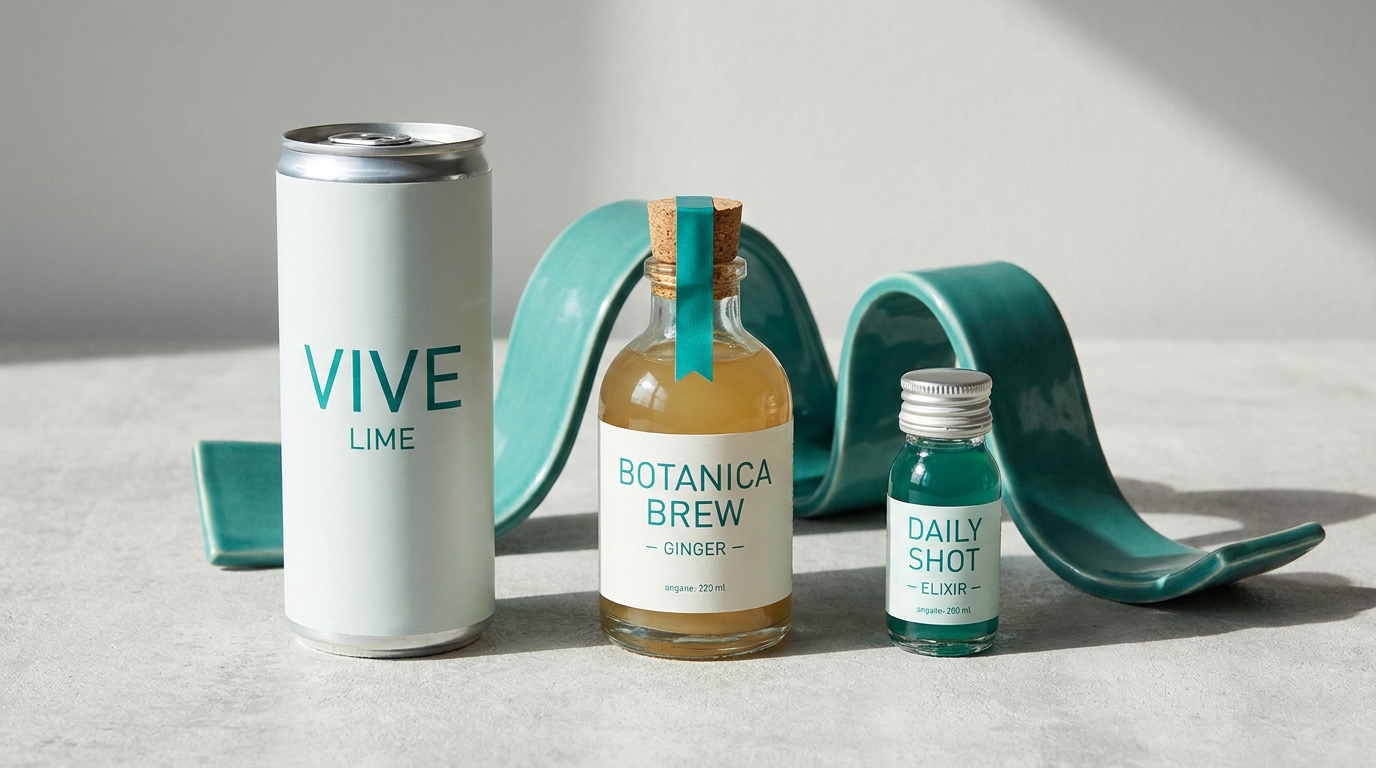
That reframing drives pack architecture. Smaller cans and bottles suddenly make sense not as a premium tax but as a genuine fit for the consumer's reality. Resealable formats respect the shopper who wants to sip across a longer window rather than commit to finishing in one sitting. Single-serve concentrates offer concentrated nutrition without asking someone to drink through a large volume of water they do not want. Each of these choices communicates something important to the consumer, which is that the product understands how she actually consumes. Pack architecture becomes a form of empathy expressed in aluminum and glass.
Begin with the serving itself. A smaller, nutrient-dense serving can genuinely outperform a large-volume format for a reduced-appetite consumer, and that is a liberating idea once you accept it. When someone can only comfortably drink a modest amount, a large bottle is not generous. It is intimidating, and often wasteful, because the last third goes down the drain. A right-sized serving that she finishes delivers more real nutrition than a large one she abandons. The measure of value flips from how much liquid is in the container to how much nutrition makes it into the person.
Most beverage design starts from an assumption so old it is invisible, which is that bigger is better and more volume signals more value. For the GLP-1 consumer, that assumption is not just outdated. It is counterproductive. This shopper drinks less but needs more, and that inversion demands a rethink of serving size and pack architecture from the ground up. Right-sizing is not a minor packaging tweak. It is a core product decision that shapes formulation, cost, and shelf presence all at once.
Density per ounce is the North Star that keeps all of this honest. When servings shrink, the discipline is to ensure a modest serving still delivers meaningful protein, fiber, and electrolytes. This is where portion strategy and formulation become inseparable, and where the labeling rules become a design input rather than a compliance afterthought. Nutrient content claims are earned against defined thresholds. Under the framework in , a "good source" claim requires 10 to 19 percent of the Daily Value, while "high" or "excellent source" requires 20 percent or more, measured per reference amount. That directly shapes how small a serving can be while still earning the language a brand wants to use. If you want to say "high in protein" honestly, the density has to be there in the serving you actually sell. The reinforces how serving size and reference amounts interact with what you can declare, which is why serving size is a decision to make early, with the claims and the formulation, not late.
FDA Food Labeling Guide21 CFR 101.54
It is worth naming the trap directly, because it is where good instincts go wrong. The low-calorie trap is the habit of treating this consumer as if she simply wants fewer calories, and then shrinking a serving to shrink the number. That misreads her entirely. She is not chasing emptiness in a smaller container. She is chasing more nutrition inside a smaller footprint. A tiny serving that also happens to be nutritionally thin gives her nothing. The goal of right-sizing is concentration, not subtraction, and confusing the two produces a product that looks modern but fails the brief.
Real-world execution keeps all of this grounded, because a clever format on a slide deck is not the same as a product that ships. Right-sized formats have to hold up across shelf life, so the dense formulation stays stable and appealing in a smaller pack where surface-to-volume ratios and headspace behave differently. Fill accuracy matters more when servings are small, since a variance that is trivial in a large bottle becomes meaningful in a shot. And the production economics have to work, because smaller packs can change the math on materials, filling, and case configuration. This is where a partner who builds alongside you Once the product is dense, delicious, and right-sized, one challenge remains, and it is the most sensitive of all. You have to decide what you are allowed to say about it. That leads directly into positioning and the regulatory guardrails that protect both the brand and the consumer.
from concept to commercialization
proves its worth, catching the practical realities before they become expensive surprises. Design that ignores the filler is not design. It is a wish.
Positioning Without Medical Claims: Regulatory Caution for GLP-1 Beverages
Start with the bright line, because everything else follows from it. A conventional food or beverage must not imply that it treats, prevents, or is required for a medication or a disease. The moment a product suggests it is part of a medical treatment, that it is needed for a drug to work, or that it addresses a disease, it has stepped into health-claim and drug-claim territory, which carries strict requirements and serious risk. Naming the consumer context, such as acknowledging that people on GLP-1 medications have specific nutritional needs, is different from claiming your drink is a medical necessity for those people. The first describes an audience. The second makes a promise you are not permitted to make. Keep that distinction sharp.
This is the section where enthusiasm meets reality, and where a great product can create real legal exposure if the marketing gets ahead of the rules. The opportunity to speak to GLP-1 consumers is significant, and precisely because it is significant, the temptation to overclaim is strong. The good news is that a clear framework exists. You can capture this opportunity fully while staying firmly on the right side of the line, and doing so is not a limitation on creativity. It is what makes the positioning credible and durable.
The productive space is structure/function language, done correctly. Structure/function claims describe the role a nutrient plays in the normal structure or function of the body, and the FDA's guidance on lays out what is permissible for conventional foods and beverages. You can describe how protein supports muscle or how fiber supports digestive regularity, provided the claims are truthful and not misleading. This is genuinely useful territory, because it lets you speak to exactly the benefits this consumer cares about without ever making a medical promise. The nutrient does the talking, and the language stays honest about what a nutrient does in the body generally, rather than what your product does for a disease.
structure/function claims
Health claims are a separate, higher bar. A claim that links a food or nutrient to reduced risk of a disease is a regulated health claim, and it must either meet the FDA's significant scientific agreement standard or qualify under FDA review. The FDA's explains when a claim crosses from structure/function into regulated health-claim territory, and the broader Nutrient content claims have to be earned, and this connects straight back to the portion-sizing work. Words such as "good source" or "high in" are not stylistic choices. They are regulated terms tied to the Daily Value thresholds discussed earlier. You only get to use them when the product actually meets the thresholds per reference amount, which is why serving size, formulation, and claims all have to be designed together rather than reconciled at the end.
overview of label claims for conventional foods and dietary supplementsQ&A on health claims in food labeling
is worth internalizing across a whole team. The practical rule is simple. Do not invent disease messaging on the fly. If a claim touches disease risk, it needs to clear the appropriate regulatory pathway first.
There is also a second regulator to keep in view. The Federal Trade Commission governs advertising, and its standard is substantiation. Every advertising claim needs competent and reliable scientific evidence behind it, regardless of how the FDA categorizes the claim on the label. The FTC's makes clear that what you say in a campaign, a social post, or a landing page must be backed by real evidence. A claim that is fine on a label can still create trouble if the surrounding advertising stretches it beyond what the science supports.
Health Products Compliance Guidance
To make this practical rather than abstract, here is a simple green light versus red light cheat sheet you can keep beside the creative brief:
Green Light (generally defensible when truthful and substantiated)
- "Protein supports muscle." (structure/function)
- "Fiber supports digestive regularity." (structure/function)
- "High in protein," used only when the serving meets the Daily Value threshold. (earned nutrient content claim)
- "Formulated with electrolytes to support hydration." (structure/function, if accurate)
- Lifestyle and audience framing that speaks to the consumer's goals without medical promises.
Red Light (avoid without proper authorization and strong evidence)
- "Designed to work with your GLP-1 medication." (implies a drug relationship)
- "Prevents muscle loss on Ozempic." (disease and drug claim, names a medication as endorsement)
- "Treats the side effects of weight-loss drugs." (drug claim)
- "Reduces your risk of disease." (unauthorized health claim)
- "Essential nutrition you need on GLP-1s." (implies medical necessity)
Within the green-light space, compliant positioning can still be warm, distinctive, and commercially astute. Companion-style lifestyle framing, nutrient-forward benefits, and audience-relevant language all speak to this consumer's real goals without a single medical promise. You can absolutely build a brand she feels is made for her life. You just build it on how the nutrients function and how the drink fits her day, not on what it does to a disease or a drug. And responsible messaging should always respect that consumers follow their own healthcare provider's guidance, which is both the ethical stance and the credible one.

The most important point about compliance is when it happens. Regulatory guardrails work best when they are built into development from the first formulation decision, not bolted on as a review at the end. When claims strategy, serving size, formulation, and evidence are designed together, the finished product and its marketing arrive already aligned. At Menu Collective, we build compliance in from day one, because retrofitting a claim onto a product that cannot support it is slow, expensive, and often impossible. With the framework in hand, it is time to lift back up to the bigger picture.
Conclusion: The New Better-for-You Belongs to Beverages
The most encouraging part is that the difficulty is the advantage. This is a genuinely hard problem to solve well, which means the brands willing to design intentionally will pull away from the ones that simply relabel yesterday's low-calorie products with today's language. A diet drink with a new front panel does not become a GLP-1 friendly beverage. Concentration is not subtraction. The consumer can tell the difference the moment she takes a sip, and she will reward the product that was actually built for her.
The brief that follows from that shift fits in one breath. Density, so every ounce works hard. Protein, to help preserve muscle through weight loss. Fiber, to support digestion and satiety. Hydration and electrolytes, to keep fluid balance right in smaller volumes. Tolerability, so the drink is welcome even on a sensitive day. Right-sized servings and pack architecture, built for someone who drinks less but needs more. And responsible positioning that speaks honestly to real benefits without ever crossing into medical claims. Every one of those is a design decision, and together they define what excellent looks like in this category.
Step back from the ingredient decks and the labeling rules, and the shape of the opportunity is remarkably clear. A large and growing group of people are eating less and drinking less, while needing more from everything they consume. That single fact places beverages at the center of a new nutrition-per-sip mandate. When solid food recedes, the glass steps forward. The brands that understand this are not chasing a trend. They are designing for a durable shift in how people feed themselves.
That is why the developer's point of view matters here more than almost anywhere else in beverage. Winning products in this space are engineered from concept to commercialization, with palatability and compliance built in from day one rather than discovered at the finish line. The craft lives in the tension between density and lightness, between fortification and flavor, between an ambitious claim and an honest one. Resolving those tensions is not something you improvise at the filler. It is something you design for from the very first formulation, and carry all the way through to the first production run. Designing GLP-1 friendly beverages that people genuinely want to drink, again and again, is the work, and it is work worth doing exactly right.
Let's Build Your GLP-1 Beverage Together
If you are ready to design for this consumer, we would love to build it with you. Not for you, with you. From defining a Gold Standard product and locking the experience before a single ingredient is chosen, through scalable, production-ready formulation, and on to a compliant, confident go-to-market, we partner at every step. Our approach is creative and commercially astute, grounded in the reality of the filler and the shelf, and we take real pride in taking drinks .
from first formulation to first production run
The GLP-1 consumer is standing in the aisle right now, looking for a drink that finally understands her. Let's make the one she reaches for.
Let's Talk
You can also and bring your GLP-1 beverage from idea to something real, drinkable, and ready to win.
see how we take beverages from concept to commercialization