Starting a beverage company means moving through three core phases: designing a product concept, developing a scalable formulation, and delivering it to market. That's the honest, stripped-down answer. But the real story — the one that determines whether your brand ends up on a retail shelf or in a storage unit — lives in the details of how you execute each of those phases. At
Every great beverage company started with one thing: a clear concept. That's exactly where we begin.
This guide changes that. We'll walk through real costs, real compliance requirements, real co-packer dynamics, and real distribution strategy — with no sugarcoating and no vague "contact us for details" placeholders. Because the best thing we can do for a founder is tell them the truth, give them a clear framework, and show them that — with the right partners — every step is achievable.
The beverage industry has never been more exciting — or more crowded. RTD (ready-to-drink) cocktails, functional wellness drinks, spirit-free alternatives, cannabis-infused beverages, and oat-milk-based innovations are flooding the market. Consumers are adventurous, curious, and loyal when a brand earns their trust. The opportunity is real. But so is the complexity lurking beneath every great idea. Many founders enter this world with enormous passion and hit walls at formulation, regulatory compliance, or distribution — not because they lacked ambition, but because nobody gave them a complete, honest picture of the journey ahead.
, we've guided everyone from first-time founders with nothing but a flavor idea to global brands expanding into new categories. We've seen what works, what doesn't, and where the costly gaps appear. This is the roadmap we wish every founder had from day one.
Start With Your Concept — Vision Before Recipe
Here's a hard truth that seasoned beverage developers know and most first-time founders learn the expensive way: the pre-development phase is the most underestimated step in the entire journey. It doesn't involve any lab equipment, any flavor drops, or any packaging design. It's the phase where you sit down — with a whiteboard, a market report, or a conversation with an expert — and get brutally honest about what you're building, who it's for, and why it's going to win.
Skipping this step doesn't just slow you down. It costs you money. Founders who jump straight into formulation without a clearly defined concept, target consumer, and market position almost always end up reformulating — sometimes two or three times — because the product wasn't anchored to a clear purpose. We've seen it happen, and the waste is painful: wasted months, wasted budget, and wasted momentum.
Start by defining your category. The beverage world is vast and segmented. Are you building a ready-to-drink (RTD) cocktail? A functional wellness drink with adaptogens or nootropics? A dairy-based coffee? A spirit-free alternative for the sober-curious movement? An energy drink targeting athletes? Each category has its own regulatory requirements, its own shelf placement logic, its own packaging conventions, and its own consumer expectations. Trying to straddle categories without intention is one of the fastest ways to confuse buyers — both retail buyers and the end consumer.
Once your category is defined, go deep on your target consumer. Who are they, really? Not just demographically — age, income, location — but behaviorally. When do they reach for your drink? Is it the 6am pre-workout moment, the 3pm afternoon slump, the Friday-night social occasion, or the post-yoga wind-down? The occasion of use shapes everything: your flavor profile, your packaging format, your channel strategy, and your brand personality. The founders who get this right early build products that feel intuitively designed for real moments in real people's lives.
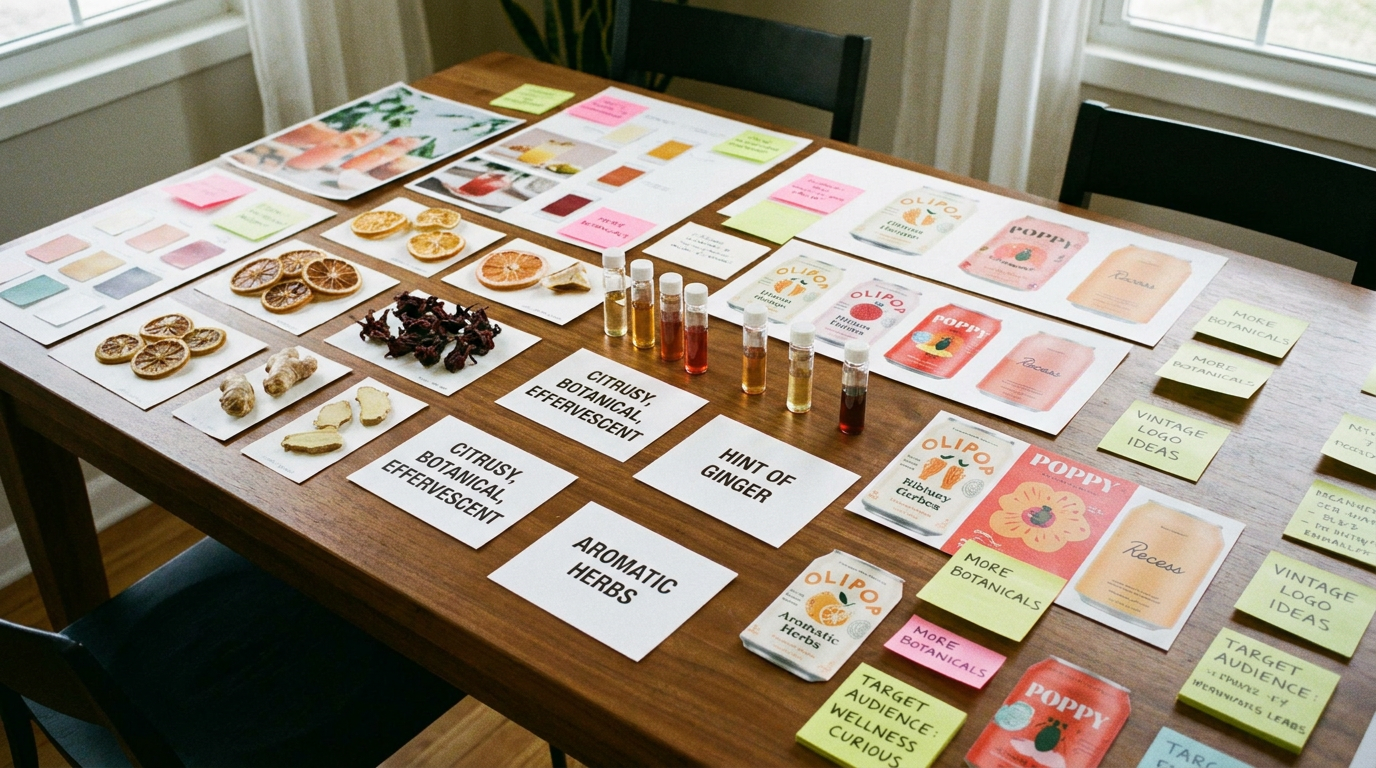
Now, conduct genuine market research. Walk the beverage aisle — literally. Pick up competitive products. Read the labels. Look at the price points. Ask yourself: what is already on shelf, and what gap does my product actually fill? "Better" isn't a gap. "More natural" isn't a gap. A gap is a specific consumer need that isn't being met by what's currently available. Maybe it's a cold brew format that tastes like craft bar quality but retails under $4. Maybe it's a zero-sugar mixer that doesn't taste medicinal. The gap has to be specific, real, and defensible.
Define your Gold Standard. This is a term we use deliberately at Menu Collective, and it's one of the most powerful tools in a founder's early toolkit. Your Gold Standard is the sensory benchmark your product must hit before it's ready for the world — the reference point that every formulation iteration is measured against. It might be a drink you've tasted somewhere that comes close to what you're envisioning. It might be a set of tasting notes you've written down after months of experimentation. Whatever form it takes, it becomes the north star of your development process. Every tweak, every ingredient swap, every reformulation is evaluated against a single question: does this get us closer to the Gold Standard?
From there, you need to do the business planning work that most creative founders resist — but that every successful beverage brand is built on. This means projecting your production volume at launch, at 6 months, and at 12 months. It means deciding on a pricing strategy (premium, mid-tier, value?) and a route to market (direct-to-consumer first, regional retail, food service?). It means honestly assessing how much startup capital you have and how much you'll need. The is an excellent starting point for founders who haven't been through this before.
U.S. Small Business Administration's guide to writing a business plan
"Working with established beverage companies and individuals wanting to learn how to start a beverage company, Menu Collective enlists classic design principles — executed with creative passion, practical experience, and new technologies." — Menu Collective
The concept phase is also where you begin to answer the big question that every serious investor, retail buyer, and manufacturing partner will eventually ask you: why does the world need this drink? Not what it tastes like. Not what the label looks like. Why it deserves space in a consumer's hand and a retailer's refrigerator case. The founders who can answer that question clearly and confidently — before they've spent a dollar on formulation — are the ones who move fastest through every phase that follows.
Learn more about how Menu Collective works with founders at every stage of this journey.
Once your concept is clear and your Gold Standard is defined, the real craft begins: turning that vision into a real, reproducible, scalable beverage formulation.
Design Your Beverage — Formulation and the Path to a Gold Standard Product
If the concept phase is about clarity, the formulation phase is about craft. This is where the science and artistry of beverage development intersect — and where most founders realize, quickly, that what they've been making in their kitchen and what they need on a production line are two fundamentally different things.
Let's start with what beverage formulation actually involves. At its core, formulation is the process of selecting and combining ingredients in specific proportions to achieve a target sensory profile — flavor, aroma, color, texture, mouthfeel — while also meeting the technical requirements of commercial production. That means managing pH levels to ensure stability and food safety. It means testing solubility so that your ingredients actually mix the way you expect them to at scale. It means running shelf-life stability testing — subjecting your product to accelerated aging conditions to determine how long it will maintain its flavor, color, and microbial safety before spoiling. It means sourcing ingredients from suppliers who can guarantee consistency across thousands of cases.
The gap between a kitchen recipe and a commercially scalable formulation is enormous. And it trips up even the most talented home brewers and culinary innovators. A flavor that tastes perfect in a hand-mixed sample often changes dramatically when it goes through a high-speed mixing system, a heat pasteurization process, or a high-pressure processing (HPP) treatment. A natural color that looks vibrant in a glass jar turns muddy at commercial volume. An herbal extract that performs beautifully in small batches becomes cost-prohibitive at scale. Every one of these variables has to be engineered for before the formula is considered truly ready.
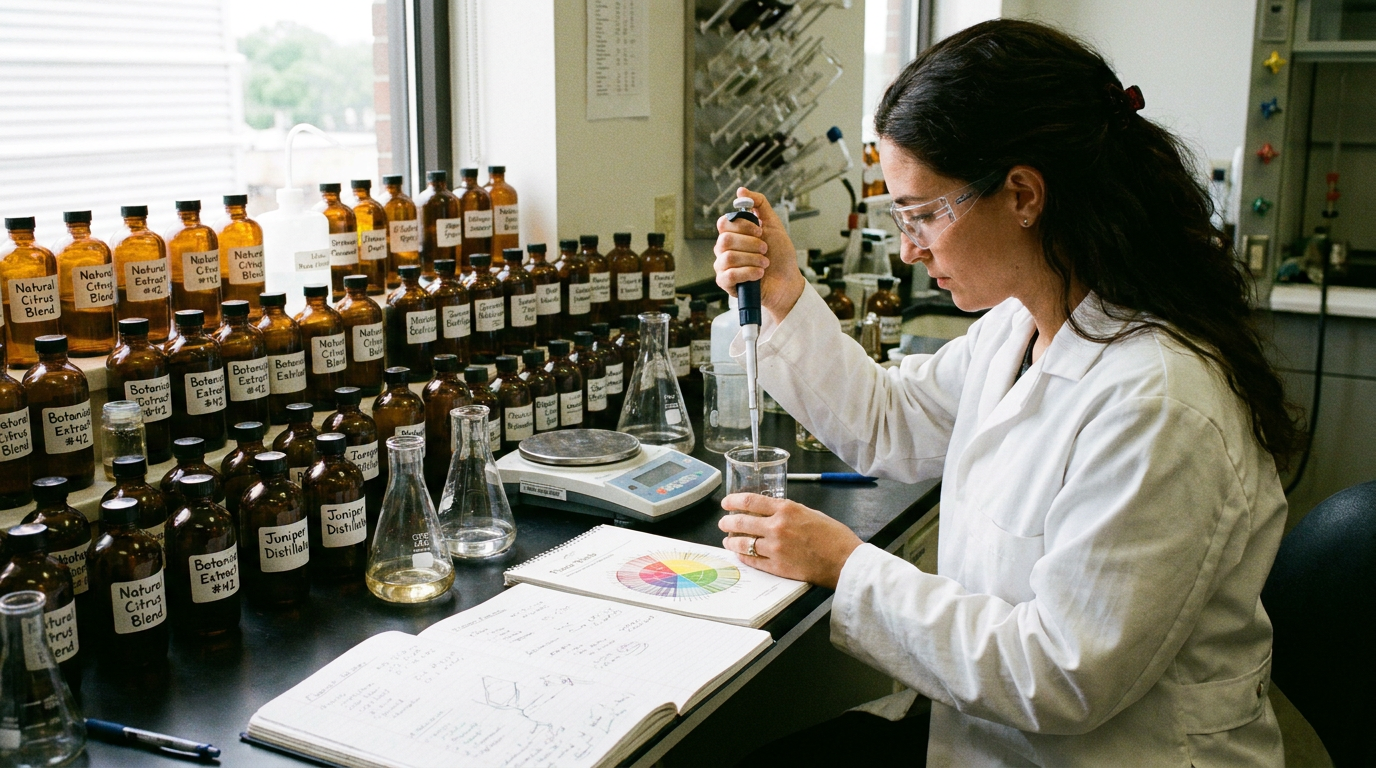
This is precisely why working with a beverage development company at this stage isn't a luxury — it's a structural advantage. A qualified development partner brings access to flavor houses and ingredient suppliers who work at commercial scale. They have lab infrastructure for stability testing, sensory panels for iterative tasting, and regulatory knowledge to ensure your formula meets compliance requirements before it reaches the co-packer. At , our Design phase is about selecting the right experts for your specific product category — whether that's a canned cocktail, an RTD coffee, a functional wellness drink, a spirit-free alternative, a dairy or non-dairy base, or a cannabis-infused beverage — and then defining your Gold Standard so that every formulation decision has a clear benchmark to work toward.
Menu Collective
The range of beverage types that require distinct formulation expertise is wide. A canned hard seltzer has very different technical requirements than an oat-milk cold brew coffee. A THC-infused sparkling water navigates an entirely different compliance landscape than a protein-enhanced energy drink. The category you're building in shapes every formulation decision, from ingredient sourcing to processing method to packaging format.
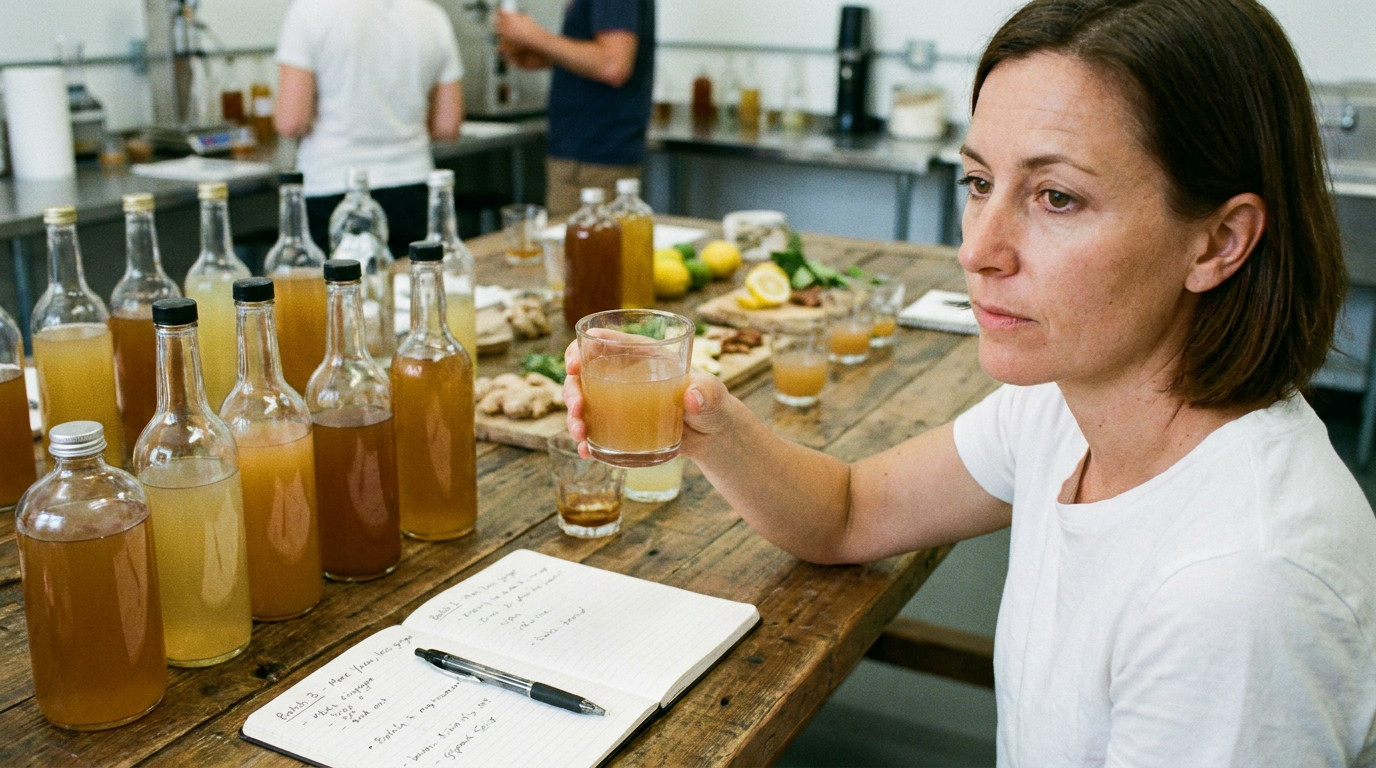
Sensory testing is the heartbeat of the formulation process. This is where the science is tasted, literally. A typical professional formulation process involves multiple rounds of iteration — sometimes as few as three, sometimes as many as ten or more — where samples are evaluated against the Gold Standard across a range of sensory attributes: flavor intensity, sweetness balance, finish length, carbonation level (for sparkling products), mouthfeel weight, and color. Each round of tasting generates specific feedback that drives the next reformulation. It's not guesswork — it's disciplined creative iteration, and it's what separates a product people reach for again from one they try once.
"When I was introduced to Menu Collective, they took the time to understand my needs and what I was trying to create. They demonstrated a ton of passion and empathy which confirmed I had found the right partners. It's been a pleasure working with Menu Collective and I'd recommend them to anyone who has a 'dream' they want to commercialize." — Hershel Perera, Saturday Beverage Company Inc.
One of the most illuminating examples of what the formulation journey looks like in practice is Menu Collective's work with Amani Coffee. The team helped develop the formula for a truly category-defying product: an RTD Sparkling Coffee Shandy that merged the richness of cold brew with the unexpected brightness of citrus — a formulation challenge that required precision in both flavor and carbonation engineering.
See how we helped Amani Coffee formulate their RTD Sparkling Coffee Shandy
With your formulation in hand, the next question most founders face is one of the most important — and most misunderstood: how much is all of this going to cost?
The formulation phase doesn't end when you like what you taste. It ends when your formula is documented to co-packer-ready specifications: exact ingredient percentages, sourcing requirements, processing parameters, and quality control benchmarks. That documentation is the handoff to everything that follows.
— and what it takes to bring a genuinely novel product to commercial reality.
The Real Cost of Starting a Beverage Company
Nobody likes to lead with the bill. But the founders who go into this process with clear financial eyes are the ones who make smart decisions, avoid dead ends, and actually get their product to market. The ones who don't tend to run out of money somewhere between formulation and their first production run — and that's one of the saddest outcomes in this industry, because the product was often great.
Costs in beverage development vary widely based on product complexity, packaging format, run size, category, and geography. What follows is an honest breakdown of the major cost stages every founder should anticipate:
- Concept & Strategy: $0–$5,000 if you're doing this work internally, or $5,000–$15,000 if you're engaging a development partner from the concept phase. This includes market research, competitive analysis, consumer persona development, and business planning. Investing here is almost always worth it — clarity at this stage prevents expensive rework downstream.
- Formulation & Lab Development: This is typically the largest single investment in the pre-launch phase. A professionally developed, co-packer-ready formula — including ingredient sourcing, iterative tasting, stability testing, and full documentation — typically runs $20,000–$45,000. More complex categories (cannabis-infused, functional with active ingredients, dairy-based) trend toward the higher end of that range.
- Regulatory & Compliance (labeling, testing, registration): Founders consistently underestimate this line item. Depending on your product category and the states you plan to sell in, compliance costs — including FDA food facility registration, label compliance review, allergen testing, and any state-specific requirements — can run $2,000–$10,000+. For alcoholic beverages with TTB involvement, or cannabis-infused products with state-level licensing, costs can be significantly higher.
- Packaging Design: A professional label or can design — the kind that actually competes on shelf — typically costs $3,000–$15,000. This includes brand identity work, dieline design, and print-ready file production. Trying to cut corners here is one of the most common and most visible mistakes a startup brand can make. Your packaging is your first salesperson.
- Packaging Materials (initial run): Glass bottles typically run approximately $0.40 per unit at small quantities. Aluminum cans vary significantly based on run size — the larger your order, the lower your per-unit cost. Factor in closures (caps, lids), labels, and outer carton/case packaging as well.
- Co-packer Minimum Production Runs: Most reputable co-packers require a minimum production run of 1,000–5,000 cases. Per-unit production costs vary widely — approximately $0.30–$1.80 per unit — depending on product complexity, format, and volume. Understanding your unit economics at this stage is critical: can your product be manufactured at a cost that supports your target retail price while still leaving healthy margin for distributor, retailer, and your own business?
- Marketing & Launch: This is where ranges blow out. A minimal grassroots launch might be executed for $10,000. A properly funded brand launch — with digital advertising, sampling programs, retailer support materials, PR, and social media — can run $50,000+ in year one alone.
"The cost of doing it right is significant. The cost of doing it wrong is always higher."
Adding it all up: a realistically budgeted first-year launch for a properly developed CPG beverage brand typically requires $50,000–$200,000+. That range is wide because the variables are wide. A simple, single-SKU non-alcoholic sparkling water in a well-understood format costs less to bring to market than a multi-SKU cannabis-infused functional drink with complex regulatory requirements. But the honest floor — for a product that is genuinely competitive, commercially compliant, and shelf-ready — is closer to $50,000 than to $5,000.
For a real-world example of what startup beverage development looks like in practice,
explore how Menu Collective worked with Che-Che on their upscale hard seltzer development
Understanding the financial landscape is essential — but there's a critical parallel track that many founders leave dangerously late: regulatory compliance. Get this wrong, and it doesn't matter how good the product tastes.
— a project that illustrates the intersection of product quality, brand positioning, and commercial economics.
FDA Requirements and Beverage Labeling Compliance — What You Need to Know
Regulatory compliance is the part of the beverage startup journey that most founders either ignore until it's too late or find so overwhelming that they avoid it entirely. Neither approach ends well. The good news is that compliance, when approached systematically and with the right expertise built in from the start, is manageable. The bad news is that discovered after the fact — after your label is printed, after your co-packer has scheduled your run — it is expensive, time-consuming, and potentially launch-blocking.
Here is what every beverage founder needs to understand about the regulatory landscape:
1. Food Facility Registration
Any facility manufacturing, processing, or packing food or beverages for U.S. interstate commerce must be registered with the FDA — unless it qualifies for a specific exemption. This includes your co-packer's facility. Before signing with any manufacturing partner, confirm that their facility is registered and in good standing. This is a non-negotiable baseline.
2. Good Manufacturing Practices (cGMP)
The FDA's Current Good Manufacturing Practices, codified under , establish the minimum standards for safe, sanitary beverage production. These cover everything from facility design and equipment maintenance to employee hygiene and pest control. Your co-packer is responsible for maintaining cGMP compliance — but as the brand owner, you are responsible for ensuring they do.
21 CFR Part 117
3. FSMA Preventive Controls
The Food Safety Modernization Act (FSMA) shifted the FDA's regulatory philosophy from reactive (responding to contamination events) to preventive (requiring manufacturers to identify and control hazards before they cause harm). Your co-packer must be FSMA compliant, with documented hazard analysis and risk-based preventive controls (HARPC) in place. Verify this before you sign anything.
4. Nutrition Facts Labeling
Every packaged beverage sold in U.S. interstate commerce must carry a properly formatted Nutrition Facts panel — with declared serving size, calories, total fat, sodium, total carbohydrates, total sugars, added sugars, protein, and any voluntarily declared vitamins and minerals. The is the definitive reference for formatting requirements.
FDA's comprehensive Food Labeling Guide
5. Ingredient List, Allergen Disclosures, and Net Weight
Your label must carry a full ingredient list in descending order of predominance, major allergen disclosures per FALCPA (2004) and the FASTER Act (2021) — which added sesame as the ninth major allergen — plus net weight and the name and address of the manufacturer, packer, or distributor. All required label information must appear in English.
6. Special Category Requirements
Not all beverages are regulated the same way. Juice products carry juice content labeling requirements. Low-acid canned beverages trigger additional processing controls. Functional beverages making health claims must navigate a careful line between food labeling and dietary supplement claims. And here's one of the most important nuances for founders in the canned cocktail, hard seltzer, or wine-based RTD space: alcoholic beverages are not regulated by the FDA — they fall under the jurisdiction of the Alcohol and Tobacco Tax and Trade Bureau (TTB). If your product contains alcohol, your regulatory compliance path looks very different from a non-alcoholic beverage.
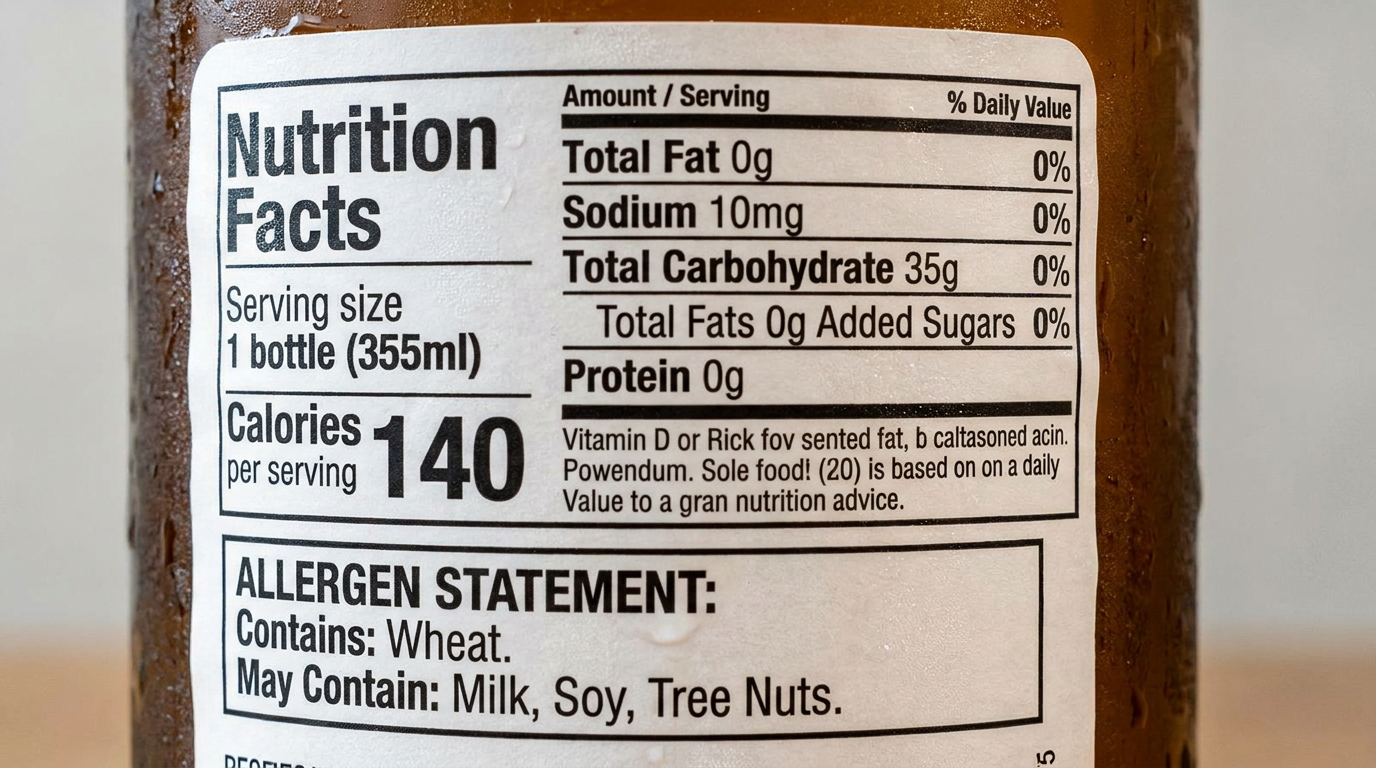
At Menu Collective, regulatory compliance isn't an afterthought — it's baked into our Develop phase from day one. We don't hand you a formula and wish you luck. We ensure your product is ready for real-world manufacturing and meets all applicable standards before a single label is printed or a single case is scheduled for production. For complex categories — like the cannabis-infused beverage work we've done for clients like Lyre's — navigating regulatory terrain isn't just important, it's what makes or breaks the project. The core message here is this: engage your compliance work early. Not after formulation is locked. Not after your packaging design is finalized. From the beginning — because every decision you make in the design and development phases has compliance implications that are far cheaper to address before the fact than after.
See how we formulated a cannabis and spirit-free blend
while managing compliance at every step.
The
FDA's official guide for starting a food business
With your formulation developed and your compliance roadmap clear, the next critical decision is one that will define your production economics: choosing the right co-packer.
is a comprehensive, authoritative starting point for founders who want to understand the full regulatory landscape before their first conversation with a co-packer.
Finding and Working With a Beverage Co-Packer
At some point in every beverage founder's journey, they arrive at the same crossroads: how do I actually manufacture this at scale? The answer, for the vast majority of emerging brands, is a co-packer — and understanding how to find the right one, and how to approach them effectively, is one of the highest-leverage skills a new founder can develop.
A co-packer (contract packer) is a third-party manufacturing facility that produces your beverage to your formula using their equipment, their staff, and their regulatory infrastructure. They mix, fill, seal, label, and package your product — you supply the formula, the ingredients (or they source them on your behalf), and the packaging specifications. The result is your product, produced at commercial scale, without you having to own or operate a manufacturing facility.
The reasons most startup brands use co-packers rather than building their own production facility are straightforward: capital cost (building a commercial beverage production facility can run into the millions), speed to market (a qualified co-packer can be producing your product in weeks rather than years), and regulatory infrastructure (established co-packers already have FDA registration, cGMP compliance, FSMA preventive controls, and quality systems in place).
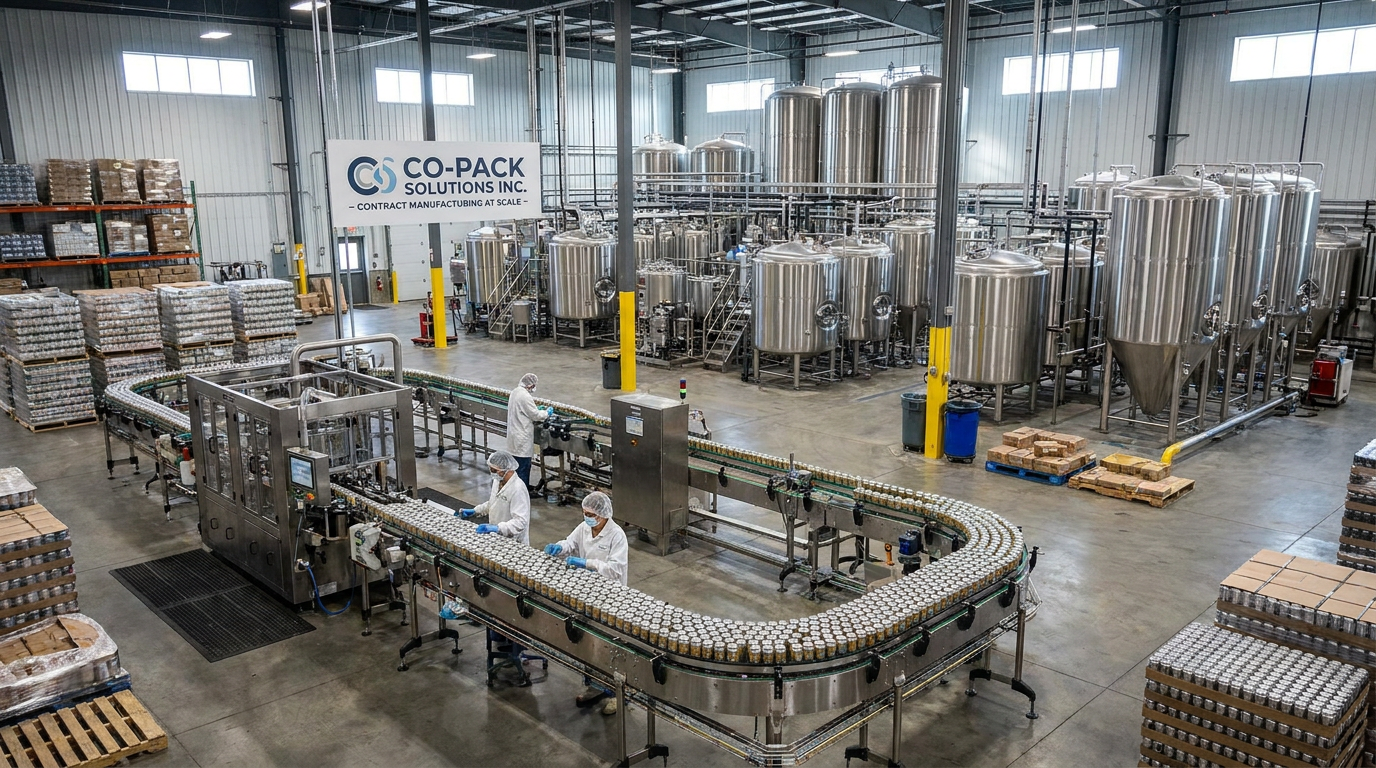
What you need before approaching a co-packer:
- A finalized, commercially scalable formula — not a kitchen recipe, not a concept brief, but a fully documented formulation with exact ingredient specifications, processing parameters, and quality benchmarks. Co-packers cannot work from a recipe card.
- Packaging specifications — the exact can or bottle size, closure type, label dimensions, and any secondary packaging requirements (cartons, shrink wrap, trays).
- Volume projections and desired minimum order quantity — co-packers need to assess whether your volume requirements are compatible with their line minimums and scheduling constraints.
- Regulatory and compliance documentation — or a development partner who can provide it. Your formula needs to be compliant before manufacturing begins.
- Target retail price point — co-packers are sophisticated enough to do a quick unit economics check. If your target retail price makes the co-packing economics impossible, better to know that before you've wasted both parties' time.
Approaching a co-packer before you have these elements in place is one of the most common mistakes first-time founders make — and it almost always results in being turned away or, worse, entering a manufacturing relationship that isn't a fit. can save founders significant time and money in the partner search.
Understanding the co-packing process before you begin
When evaluating co-packers, look beyond price. Certifications matter enormously: SQF (Safe Quality Food) and BRC (British Retail Consortium) certifications indicate that a facility has been independently audited against rigorous food safety standards. FSMA compliance is non-negotiable. Category experience is critical — a co-packer who specializes in dairy-based beverages is not necessarily the right partner for a canned hard seltzer, and vice versa. Geographic location affects your shipping costs, your ability to visit the facility during production runs, and your supply chain resilience.
Red flags to watch for:
- Co-packers who won't share their most recent audit results or facility inspection records
- Minimum run sizes that far exceed your realistic launch volume, locking you into inventory you can't move
- Unclear or unfavorable formula IP terms — your formula is your most valuable asset; make sure you own it
- Vague lead time commitments that don't map to your launch timeline
With your product manufactured and ready to ship, the final — and often most underestimated — challenge awaits: getting it into the hands of consumers through a smart distribution strategy.
At Menu Collective, connecting founders with the right co-packer for their product category and volume is a core part of what we do in our Develop phase. Because a mismatch here — the wrong manufacturing partner for your product, your volume, or your compliance requirements — can set your launch back by months, and sometimes kills a brand before it reaches the shelf.
Building Your Beverage Distribution Strategy — From Production to Retail
You've formulated your Gold Standard product. You've navigated compliance. You've partnered with the right co-packer. The first cases are rolling off the line, and they look — and taste — exactly the way you imagined. Now what?
Now comes the work that separates the brands that find shelf space from the brands that find storage space. Distribution is the bridge between your production facility and your consumer, and building it effectively is both an art and a science. It requires relationships, patience, data, and a realistic understanding of how the beverage trade actually works.
There are three primary distribution models available to a beverage startup, and each has a distinct risk-reward profile:
1. Direct Store Delivery (DSD)
In the DSD model, you work with a regional beverage distributor who takes ownership of your product, warehouses it, and delivers it directly to retail accounts — managing the relationships with store buyers and ensuring your product is in stock and properly placed. DSD is the dominant model in the beverage industry for good reason: distributors have existing relationships with retailers, delivery infrastructure, and market knowledge that would take a startup years to replicate. The trade-off is that distributors are selective — they want brands that demonstrate velocity and marketability — and they take a meaningful margin for their role in the supply chain. is foundational knowledge for any beverage founder pursuing retail distribution.
Understanding how DSD distribution works
2. The Food Broker Model
A beverage broker acts as your sales representative in the trade — pitching your product to retailers and distributors on your behalf, leveraging their existing relationships and category expertise. Brokers typically work on commission (a percentage of sales), which means lower upfront cost compared to hiring a full-time sales team. This model works particularly well for founders who have a strong product but lack established trade relationships. The key to success with a broker is finding one with genuine relationships in your target category and retail channels — a broker who sells snack foods but has never sold beverages is not a meaningful advantage.
3. Direct-to-Consumer (DTC) / E-commerce
Before approaching retail, many successful emerging brands build their foundation through direct-to-consumer channels — their own website, Amazon, or direct fulfillment. DTC gives you immediate market access, real consumer feedback, and the ability to build a data asset (email list, purchase behavior, demographic insights) that becomes enormously valuable when you eventually approach retail buyers. It's also the fastest way to generate the velocity data that retailers and distributors want to see before they commit to carrying your brand.
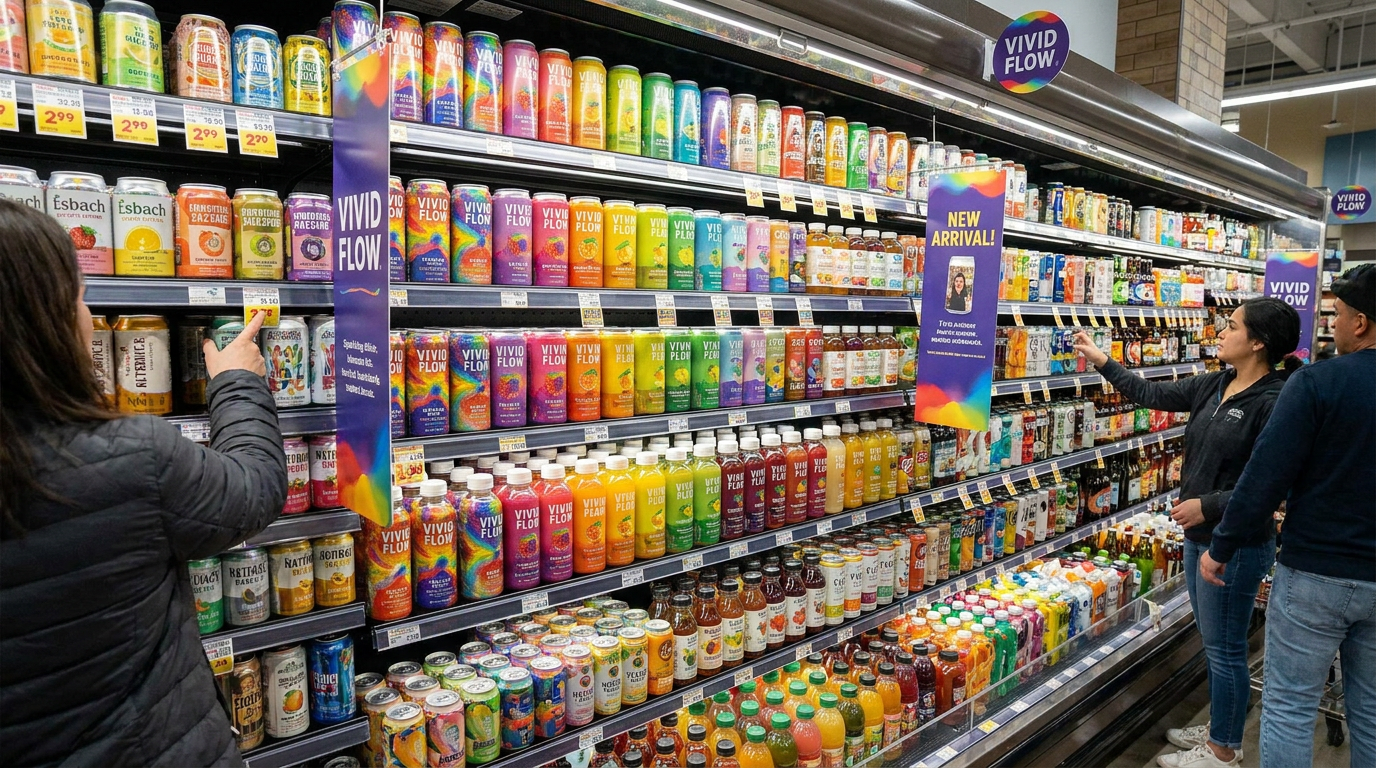
The "start local" principle is one of the most consistently validated strategic insights in the emerging beverage space. The brands that try to scale nationally before they've proven their model regionally almost always struggle — with inventory management, distributor relationships, and retail support. The brands that start in a tight geographic area, prove their velocity, build their story, and then expand have a fundamentally stronger foundation for every conversation they have with a larger distributor or a national retail buyer.
Speaking of retail buyers: understanding what they actually need to say yes is critical. Buyers are evaluating your product against dozens of alternatives for limited shelf space. They want to see velocity data — how fast does your product sell in the accounts where it's currently placed? They want a compelling brand story that their category manager can tell to the store team and that the packaging communicates on shelf without any help. They want proof of consumer demand — press coverage, social following, sell-through data. And they want margin that works — your pricing needs to leave enough room for distributor margin, retailer margin, and the inevitable promotional activity (TPRs, end cap fees) that comes with retail distribution.
One more financial reality to prepare for: slotting fees. Many grocery and convenience retailers charge upfront fees for shelf placement — essentially charging brands for the right to occupy a slot in their planogram. Slotting fees can range from a few hundred dollars per SKU in a small regional chain to many thousands of dollars per SKU in a national retailer. These fees need to be in your financial model from day one.
At Menu Collective, our Deliver phase isn't just about handing you a formula and sending you on your way. We help you build the sales, marketing, and distribution strategy to get your product to market with confidence — drawing on decades of experience that spans from first-time founders all the way to . That range — from startup to one of the most recognized hospitality brands in the world — is the proof point that the path from concept to commercial success is real. developing the full bar program for the Starbucks Reserve Roastery
Learn more about our team and our Design, Develop, Deliver methodology.
Before we close out this guide, let's tackle the questions we hear most often from founders at every stage of their beverage journey.
Beverage Startup Questions, Answered Directly
Q: How do I start a beverage company?
Start with a clearly defined product concept, a target consumer, and a market position — then work with a beverage development partner to formulate your Gold Standard product, navigate FDA compliance, secure a qualified co-packer for manufacturing, and build a distribution and sales strategy. The three phases are Design (concept + formulation), Develop (compliance + manufacturing), and Deliver (distribution + market launch). guides founders through all three phases, from first idea to first sale.
Menu Collective
Q: How much does it cost to develop a beverage product?
Costs vary significantly by product type, complexity, and scale. Professional formulation for a co-packer-ready formula typically runs $20,000–$45,000. Add packaging design ($3,000–$15,000), regulatory compliance ($2,000–$10,000+), and initial production runs, and a realistically budgeted first-year CPG beverage launch often requires $50,000–$200,000+. The range is wide because the variables are wide — but the honest floor for a product that is truly competitive and commercially ready is much higher than most founders expect.
Q: What are FDA requirements for beverage labeling?
The FDA requires all packaged beverages sold in U.S. interstate commerce to carry a properly formatted Nutrition Facts panel, a full ingredient list in descending order of predominance, major allergen disclosures (including sesame under the FASTER Act), net weight, and the name and address of the manufacturer or distributor — all in English. The manufacturing facility must also be registered with the FDA. Note that alcoholic beverages fall under TTB regulation rather than FDA, which changes the compliance landscape significantly. The is the authoritative reference for full formatting requirements.
FDA's Food Labeling Guide
Q: How do I find a co-packer for my beverage?
Before approaching a co-packer, have a finalized formula, packaging specifications, volume projections, and compliance documentation ready — or a development partner who can provide them. Evaluate co-packers on their certifications (SQF, BRC), minimum run sizes, category experience, geographic location, and FSMA compliance. Ask to see their most recent audit results. A beverage development partner like can connect you with the right manufacturing partner for your specific product category and volume requirements — and help you avoid the costly mismatch of the wrong co-packer relationship.
Menu Collective
Q: What are the steps to launch a beverage brand?The core steps are:
- Define your concept, target consumer, and Gold Standard product
- Develop a scalable formulation with regulatory compliance built in from day one
- Design packaging and labels that compete on shelf
- Partner with a qualified, certified co-packer for manufacturing
- Build your distribution and sales strategy before production begins
- Launch with a targeted marketing plan — start local, prove velocity, then scale
- Track sell-through data obsessively and use it to optimize and expand
Q: How do I get my drink into retail stores?
Start local. Build proof of concept through direct-to-consumer or local on-premise sales before approaching retail — and use that period to generate the velocity data that retail buyers need to say yes. Then approach regional distributors or engage a food broker to pitch to retail buyers on your behalf. Come to every buyer conversation with velocity data, a compelling brand story, strong margin economics, and a plan for in-store support. Budget for potential slotting fees in your financial model, and be prepared to support your product with sampling and promotional activity once it's on shelf.
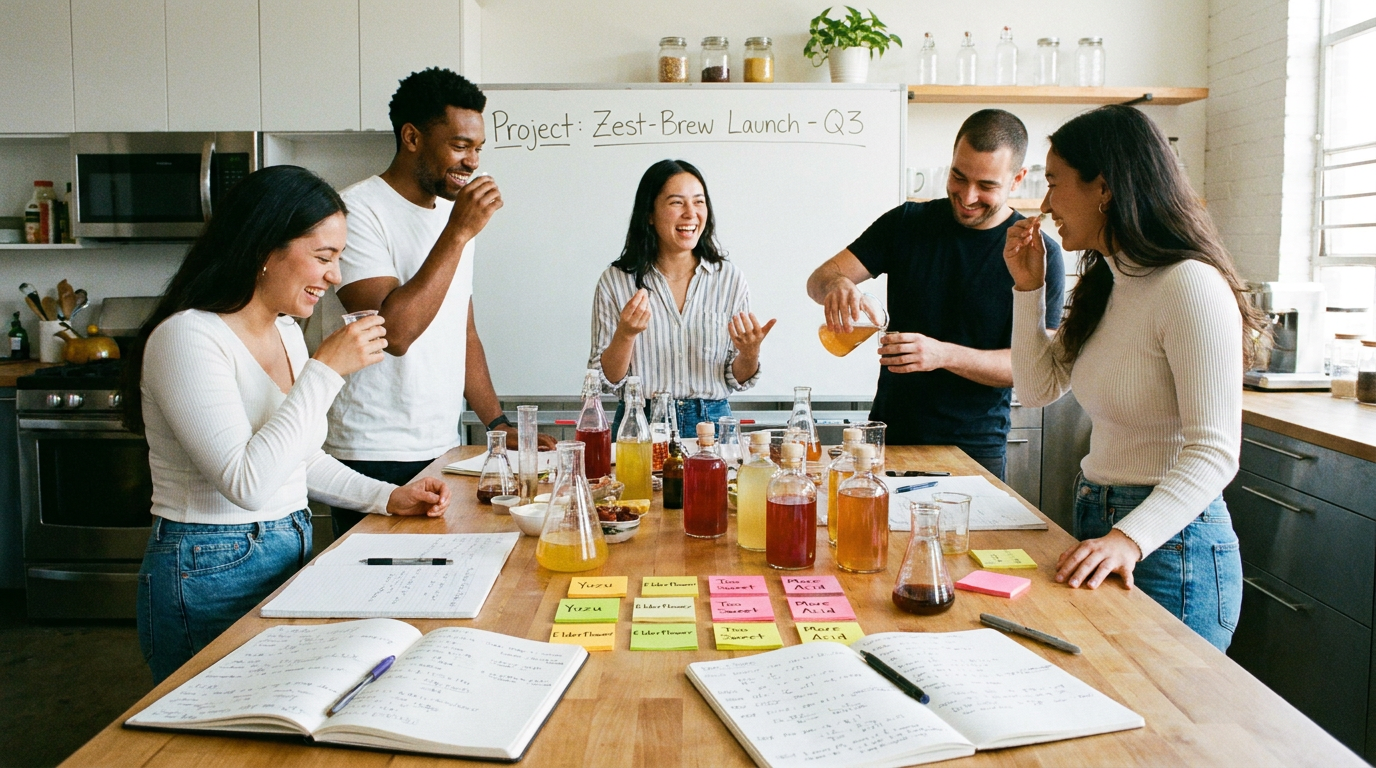
Every Great Drink Deserves a Great Partner
Starting a beverage company is genuinely one of the most complex entrepreneurial journeys in the consumer goods world. You're navigating science, regulation, manufacturing, sales, and marketing — often simultaneously, often with limited resources, and almost always with a timeline that feels shorter than the challenge requires. If this roadmap has communicated anything, it's that the complexity is real. But so is the achievability.
The Design, Develop, Deliver framework isn't just a process — it's a philosophy. It says: before you spend a dollar on ingredients, know exactly what you're building and who it's for. Before you schedule a production run, know that your formula is compliant, stable, and ready for scale. Before you print a single case, know where that case is going and who's going to buy what's in it. When each phase is done right, the next one is easier, faster, and more likely to succeed.
At Menu Collective, we've walked this path with brands at every scale — from first-time founders launching their first SKU to iconic names like Starbucks and 7-Eleven building new programs at global scale. That range is not accidental. It reflects a methodology that works regardless of where you're starting from — because the principles of great beverage development are the same whether you're producing 1,000 cases or 100,000.
"Working with Menu Collective helps transform our business by giving us industry insight beyond our knowledge. Together, they helped develop the formula for our line of Sparkling Coffee Shandy products, a truly unique product on the coffee market. Ultimately, our partnership helped grow our revenue exponentially." — James Parrelly, Founder/CEO, Amani Coffee
We are collaborators, not consultants. We work with you and alongside you — through the tasting sessions and the reformulations, through the compliance checklists and the co-packer conversations, through the first pitch to a retail buyer and the celebration when your product hits the shelf. Your beverage doesn't just deserve to exist. It deserves to be great. Let's build it together.
Ready to Start Your Beverage Company?
Whether you have a fully formed concept ready for development or just a passion and a flavor idea that won't leave you alone, Menu Collective is ready to collaborate. Our team of beverage development experts will help you design a Gold Standard product, navigate every compliance requirement, and deliver your drink to market — from concept to commercialization.
Book Your Free Consultation →
Explore our or browse our to see how we've helped founders like you turn passion into product.
case studiesbeverage development services